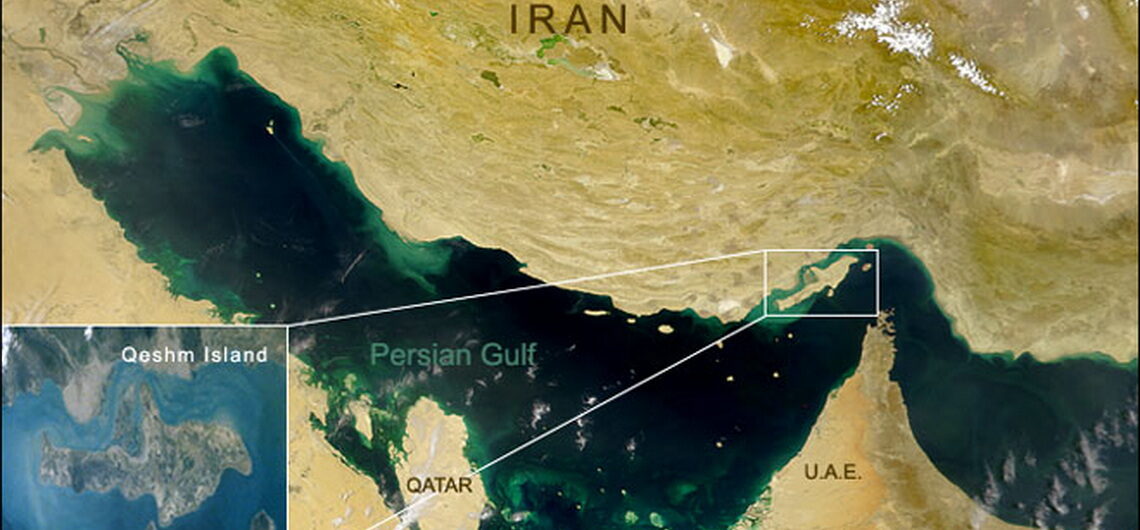
Qeshm Island in Iran Qeshm Island, in Hormozgan province, Iran, is the largest island in the waters of the Persian Gulf. We have always heard a lot about the unique beauties and features of this island. The countless attractions have made Qeshm one of the most important tourist destinations in Iran. It is located in the Strait of Hormuz and has long belonged to Iran. Its pristine and beautiful nature, together with its history dating back to the Sassanid era, has made this southern island a popular tourist destination for many Iranians and foreign tourists. Qeshm Island has an area of 460 square miles (1,200 square km). The beaches are generally rocky, except for the northwest coast, with its sandy bays and muddy plains. Irregular hills cover most of Qeshm. Several of them are more than 900 feet (270 meters) high, and one of them, Kish Kuh, reaches 1,331 feet (406 meters). Salt is extracted on the southeastern shores and there are springs of naphtha. The island is largely barren, but cereals, vegetables, melons, and dates are grown there. Fishing and weaving are common in this region. Shipbuilding is also one of the oldest indigenous industries of the people of Qeshm. On the 5th of May 2017, Qeshm Island was designated as a UNESCO Global Geopark. This Geopark has the shape of a dolphin. The world's longest salt cave is also situated on the island. It is 6,600 meters long. In addition to the formation of salt and complex, other sedimentary formations are located in various anticline structures on it. The island has rich wildlife; various birds, reptiles, dolphins, and turtles can be seen in this area. In Qeshm Island, zoo geographical areas of Palearctic and Oriental, and phytogeographical areas of Afro-tropical, Oriental and Eurasian face each
Qeshm Island in Iran Qeshm Island, in Hormozgan province, Iran, is the largest island in the waters of the Persian Gulf. We have always heard a lot about the unique beauties and features of this island. The countless attractions have made Qeshm one of the most important tourist destinations in Iran. It is located in
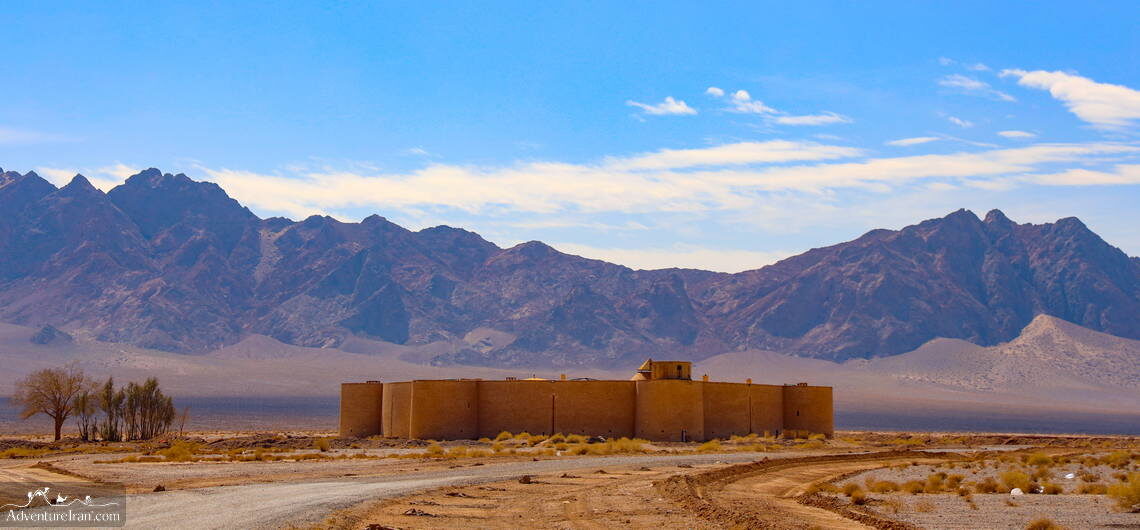
Iran Caravanserais Iran Caravanserais (UNESCO) were built during the Safavid dynasty on the Silk Road route of Persia. These were essential to service the needs of the influx of traders and travelers passing through. At that time, the country was massive and called Persia. During that dynasty, Iran had a main role in the Silk Road route from China to East Europe. The foremost purpose of a caravanserai on the ancient Silk Road was for accommodation and as a gathering place for caravans and travelers. A “Caravanserai” is basically a roadside dwelling similar to an “inn”, built to shelter men, camels, animals such as goats, goods, and other possessions of the caravans. This is how society during that period understood the usage of the caravanserai. Caravanserai was particularly valuable as a link to other trade routes along the former Silk Road. In addition, there was also a large network of caravanserais built along the whole trade path in the Middle East and Central Asia. Throughout the history of the various Muslim kingdoms in India, Asia, North Africa, and South-Eastern Europe, this network, most notably along the Silk Road, was vital to support the flow of information, commerce, pilgrims, and travelers from the 9th until the 19th centuries. The word caravanserai is a Westernized form of the Persian word, which merges “caravan” with “sarayi” or “serai”. This means a palace, a dwelling, or enclosed courts. It is also known as caravansary. “Caravan” has a similar meaning in English, which refers to a troop of soldiers, merchants, pilgrims, or other travelers participating in a long-distance journey. Although caravanserais were constructed in a vast geographical region covering Central Asia, Asia, India, Middle East, North Africa, and South-Eastern Europe, a substantial number of them were also located in the Middle East, Central
Iran Caravanserais Iran Caravanserais (UNESCO) were built during the Safavid dynasty on the Silk Road route of Persia. These were essential to service the needs of the influx of traders and travelers passing through. At that time, the country was massive and called Persia. During that dynasty, Iran had a main role in the
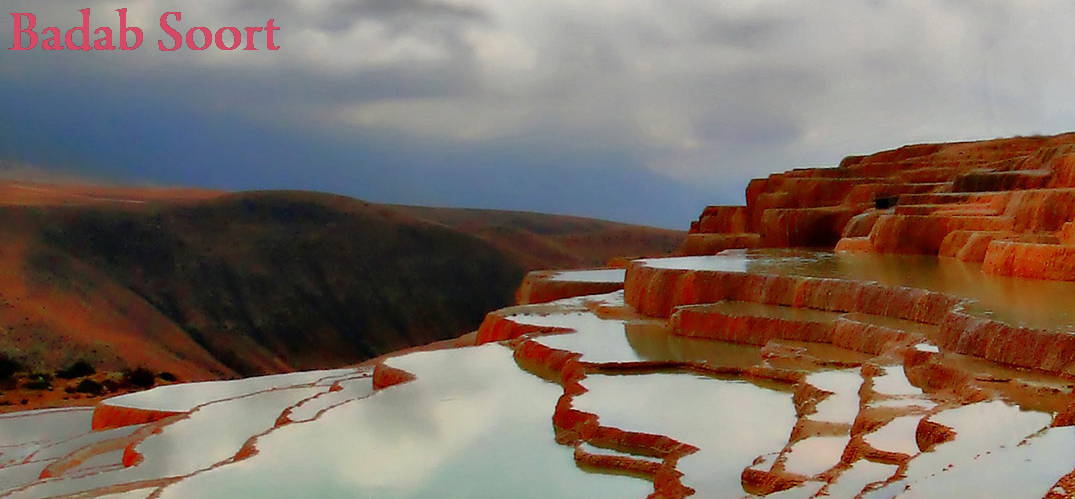
Badab-e Surt Natural Springs in Iran Consider a stepped spring, surrounded by wild trees and barberry bushes, where the color and fragrance of the water on each step is different from the previous one. Looking down from above the spring, you will see forests of coniferous trees. Isn't that fascinating? If you haven't guessed so far that we are talking about Badab-e Surt, you must read this article to the end to find out why this impressive and strange spring has been registered on the Iran National Heritage List. Mazandaran province in Iran is located between the magnificent Caspian Sea and the Alborz Mountain range. Due to its unique beauty and pleasant weather, this province hosts millions of Iranian and foreign tourists every year. Badab-e Surt Spring, Mazandaran province, is south of Sari city, and west of Orost village. It is considered to be one of the most breathtaking and unbelievable spectacles in the area. It is situated at a height of 1,841 meters above sea level. It is commonly assumed that the spring was formed during the Paleocene Era, simultaneously with the most recent folds in the Alborz Mountain range. Badab is the Persian combination of two words; Bad means ‘gas’ and ab means ‘water’. So, Badab means ‘gassed water’ which implies that the spring water is actually carbonated mineral water. Surt is a former name of the nearby Orost village. The Persian word means intensity. Badab-e Surt was created a few thousand years ago by a variety of stepped travertine terrace formations. Over the years, the running water from the two very warm mineral springs cooled and placed carbonate minerals on the mountainside. The Badab-e Surt Spring in Iran is made up of two detached springs with thoroughly contrasting colored and scented water. The first
Badab-e Surt Natural Springs in Iran Consider a stepped spring, surrounded by wild trees and barberry bushes, where the color and fragrance of the water on each step is different from the previous one. Looking down from above the spring, you will see forests of coniferous trees. Isn’t that fascinating? If you haven’t guessed
Jahan Nama Protected Area A small village of Jahan Nama by the Caspian Sea gave the name to the vast Jahan Nama Protected Area in the Golestan Province in Iran. With rich wildlife, including wild sheep and goats, wolfs, panthers, bears, weasels, owls, eagles, cuckoos, woodpeckers, and porcupines, Jahan Nama is also famous for its variety of plants and trees, including barberry, Sorkhdar, Kolah-e Mir Hassan, Bolandmaza Namdar, Borage Cowslip, Ras, Darmaneh, and many others. During the studies performed here between 1999 and 2008, 1,350 species were identified, including 607 vascular plant species from 85 families. There are also many seasonal birds in the park and a lot of rivers and springs. The highlands of Jahannama are the most suitable habitats for various hunting birds such as the golden eagles, as well as large partridges. Jahan Nama Park, with an area of about 38 ha, is the largest protected area in Mazandaran province, after Golestan National Park. It is part of the Hyrcanian forests (UNESCO), which are among the oldest forests in the world. The beauties and attractions of the Jahan Nama region are not only limited to its rich flora and fauna and intact nature. The 35-meter Radkan Tower, also known as Mil Radkan, is one of the main historical attractions in this area. It is a cylindrical brick tower dating back to the 13th century. Ziarat Waterfall is another natural attraction in the northeast of the region, located about 5km from Ziarat Village. The village is one of the most beautiful tourist villages in Iran. The pristine nature of the park makes it an ideal hiking destination and we, at Adventure Iran, have created a long hiking trail, which starts south of the Great Gorgan Wall and stretches all the way to the Jahan Nama National Park.
Jahan Nama Protected Area A small village of Jahan Nama by the Caspian Sea gave the name to the vast Jahan Nama Protected Area in the Golestan Province in Iran. With rich wildlife, including wild sheep and goats, wolfs, panthers, bears, weasels, owls, eagles, cuckoos, woodpeckers, and porcupines, Jahan Nama is also famous for its variety
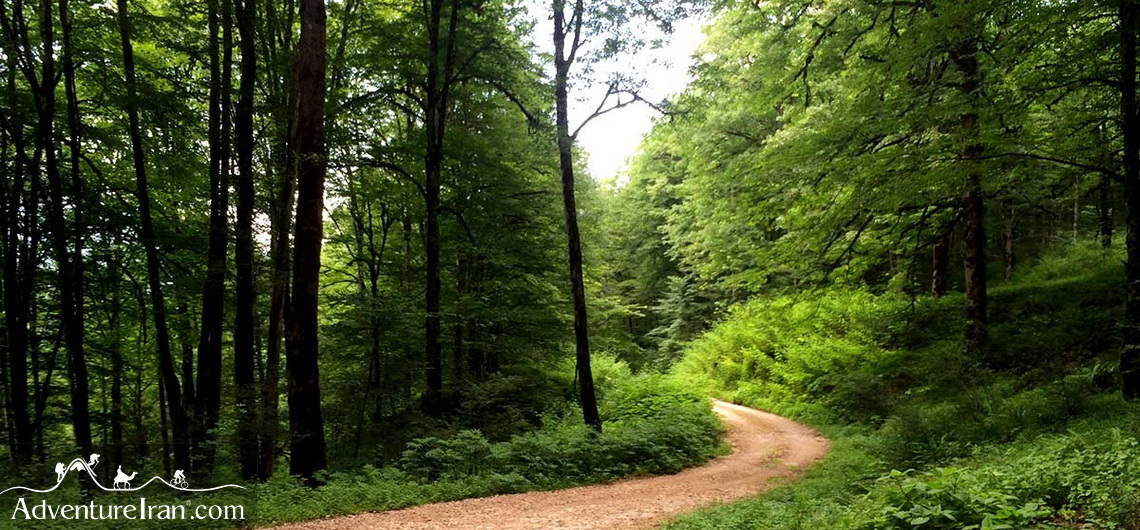
Hyrcanian Forests in Iran (UNESCO) Iran has a large number of national parks and protected areas, including two Natural UNESCO World Heritage Sites, one of which is the Caspian Hyrcanian Forests. Located in northern Iran along the southern coast of the Caspian Sea and the northern slopes of the Alborz Mountains, the forest covers an area of 850km and, from a historical perspective, dates back to 25 to 50 million years ago. Hyrcanian Forests in Iran were registered as the second natural site of Iran on UNESCO World Heritage List in 2019. The forests are named after the ancient region of Hyrcania, a historical region extended from southeast of the Caspian Sea in Iran and Turkmenistan. Hyrcanian Forest represent one of the planet’s oldest and most ecologically significant temperate forests. These lush woodlands of Hyrcanian forests survived the Ice Age, creating a living museum of biodiversity. Hyrcanian forests are home to 180 species of birds including Steppe Eagle, European Turtle Dove, Eastern Imperial Eagle, and Caspian Tit, as well as 58 species of mammals, including Panthera pardus tulliana (Persian leopard), and Wild Goat, while they only cover 7% of the country. The forest is extended across three Provinces of Gilan, Mazandaran, and Golestan, and part of that covers the southeast part of the country of Azerbaijan. One of the habitats of this rare species is Jahan Nama protected area, that Adventure Iran’s “The Red Snake Wall and the Turkoman Plain” tour lies through. Why Are They Unique? Primeval Ecosystem: Home to 1,800+ plant species (including Persian ironwood and Caspian beech) and rare wildlife like the Caspian tiger (extinct) and Persian leopard (critically endangered). Climate Resilience: Their layered canopies and humidity trap moisture, forming a "green belt" that cools the region. Cultural Ties: Local communities, like the
Hyrcanian Forests in Iran (UNESCO) Iran has a large number of national parks and protected areas, including two Natural UNESCO World Heritage Sites, one of which is the Caspian Hyrcanian Forests. Located in northern Iran along the southern coast of the Caspian Sea and the northern slopes of the Alborz Mountains, the forest covers
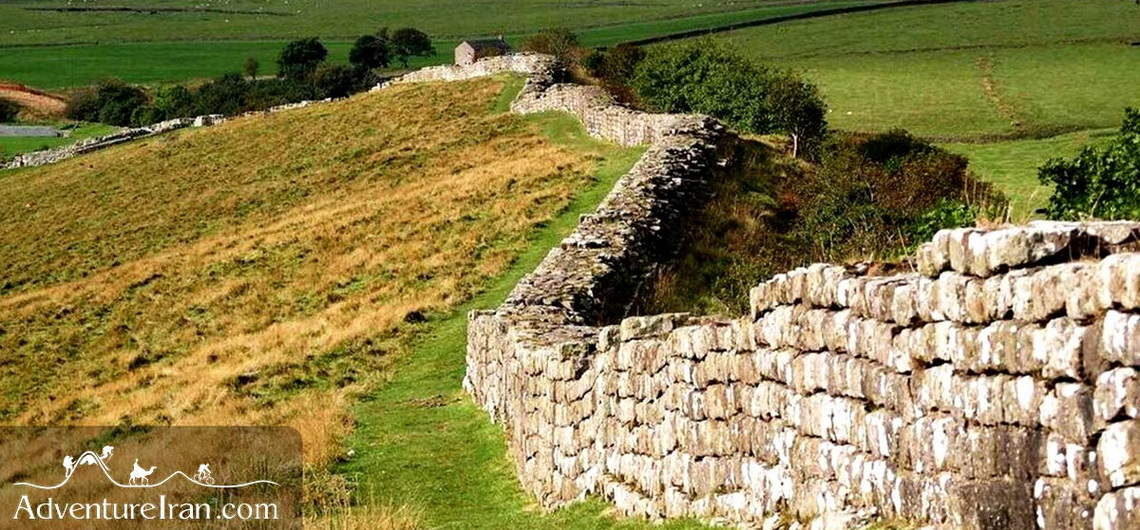
Great Wall of Gorgan The remains of the Great Wall of Gorgan, also known as “The Red Snake Wall” due to the color of its bricks, are located in northern Iran in the Golestan Province. Dating back to the Sasanid dynasty, the wall was originally built in approx. 420-530AD, which makes it 1,000 years older than the Great Wall of China. It has the remains of 38 fortifications and stretches for almost 200km. The Wall is believed by some to be the longest manmade ancient barrier between Central Europe and China and even longer than the Hadrian’s Wall and the Antonine Wall put together. Since there was not any stone or timber in the area, the wall was constructed with bricks. Substantial sections of the Great Wall of Gorgan appear, however, to be buried under the Caspian Sea. Together with the Tammisheh Wall, a shorter defensive barrier of similar design, also dating from the Sasanid time, both walls were part of the same defense system and were built of large fired bricks of similar shape and size and lined by an earth bank and ditch supplied with water by the canals. The canals bridged the Gorgan River via qanats. The Wall and the canals prove the hydraulic engineering skills of the Iranians in the Sassanid era. https://www.adventureiran.com/golestan-province-and-turkmen-plain-tourist-highlights/ https://www.adventureiran.com/golestan-national-park/
Great Wall of Gorgan The remains of the Great Wall of Gorgan, also known as “The Red Snake Wall” due to the color of its bricks, are located in northern Iran in the Golestan Province. Dating back to the Sasanid dynasty, the wall was originally built in approx. 420-530AD, which makes it 1,000 years older
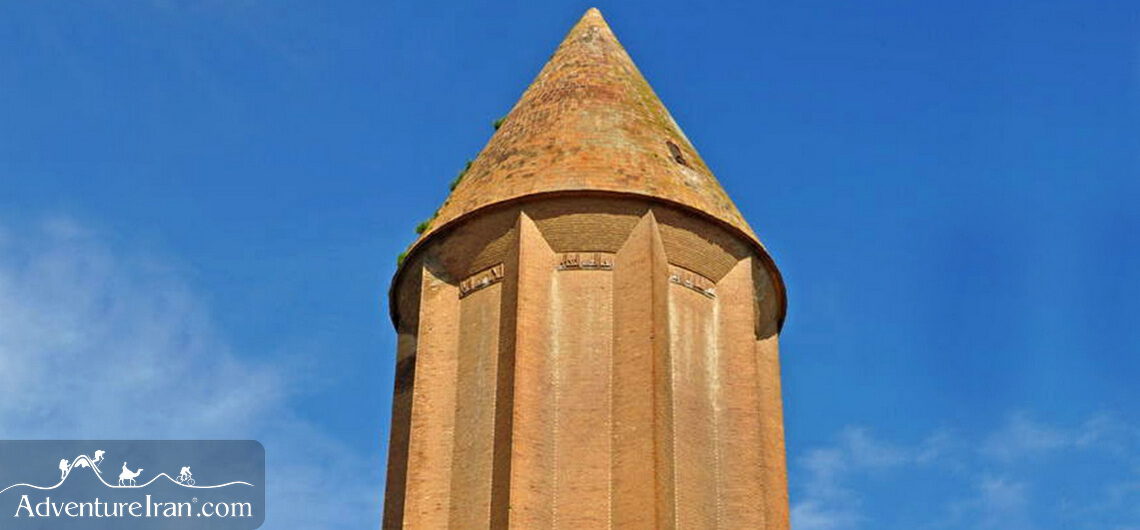
Gonbad-e Qabus Iran’s Towering UNESCO Masterpiece of Architecture Rising 52 meters above the skyline of Golestan Province, the Gonbad-e Qabus (also pronounced Gonbad-e Kavoos or Gonbad-e Kavus) is a striking brick tower and UNESCO World Heritage Site (inscribed in 2012) that has dominated the northeastern Iranian plains for over a millennium. Built in 1006 AD for Qabus ibn Voshmgir, the Ziyarid ruler and scholar, this cylindrical tomb is a testament to Persian innovation in mathematics, astronomy, and early Islamic architecture. Why It’s Remarkable Architectural Marvel: The world’s tallest pure-brick tower, with a conical roof that defies gravity. Its design encodes geometric precision—10 triangular buttresses symbolize the 10 stars of Qabus’ zodiac sign (Capricorn). Acoustic Mystery: Whisper at the base, and your voice echoes unnaturally at the top—a feat still unexplained by engineers. Silk Road Legacy: Once a navigation beacon for caravans crossing the Karakum Desert toward Central Asia. Visiting Tips Best Time: Sunrise or sunset, when the brick glows gold against the steppe. Nearby: Pair with the Turkmen Plains or Gorgan’s ancient wall (the "Great Wall of Iran"). A small agricultural town of Gonbad-e Qabus lies approx. 500km east of Mashhad, in Golestan province, Iran. According to the two Kufic inscriptions encircling the construction, the tower was built in 1006 as a burial chamber for a Ziyarid prince. It is 72m high and is one of the tallest brick towers in the world. The tower walls are 3 meters thick and the tower itself is 17 meters in diameter. It is part of the world’s second-largest defense wall, the 155km-long Qizil Alan. The tower, built of unglazed baked bricks, is the only remaining evidence of the ancient city of Jorjan. Jorjan was the ancient Ziyarid capital, destroyed during the Mongols' invasion in the 14th and 15th centuries. Gonbad-e Qabus Tower is
Gonbad-e Qabus Iran’s Towering UNESCO Masterpiece of Architecture Rising 52 meters above the skyline of Golestan Province, the Gonbad-e Qabus (also pronounced Gonbad-e Kavoos or Gonbad-e Kavus) is a striking brick tower and UNESCO World Heritage Site (inscribed in 2012) that has dominated the northeastern Iranian plains for over a millennium. Built in 1006 AD for
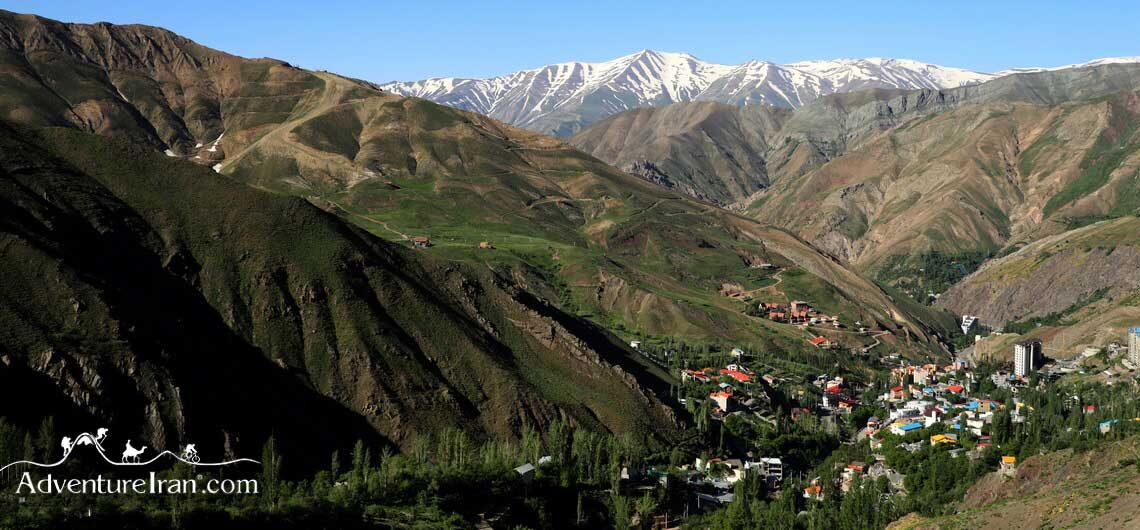
Shemshak Village Alborz Ski Region Shemshak village is one of the highest villages in Iran, situated in the heart of the Central Alborz Mountain, at 2,700 m altitude. It is only 65 km from the center of Tehran, about a 1 ½ hour drive to reach through a mountainous road. There is also a ski resort beside Shemshak village called Shemshak Ski resort. This ski resort is famous as it was the first to open in Iran in 1958, and is now the third largest ski resort in the country after Dizin and Darbandsar. Shemshak village is surrounded by numerous mountains above 3,000 m and 4,000 m, which makes the area ideal for hiking and mountain biking in Iran during spring, early summer, and summer. It is perfect for skiing in the winter. The 3,000m mountains are just right for easy and moderate hikes and are close to the village. For strenuous and challenging trekkers, the renowned mountains above 4,000 m. are perfect. There is a 15 Km mountain ridge above Shemshak village, stretching from Kolon Bastak (4,170m) in the west to Sarakchal (4,210m) in the east. Between the two peaks, there are even more mountains over 4,000m (Sarakchal 2 & Sarakchal 3), making this ridgeline very challenging. In the south, there is Mt Abak (3,520m) which is above Shemshak Ski Piste. If the weather is clear, you can view a number of Iran’s high mountains such as Kholeno (4,387m), Azadkuh (4,350m), Borj (4,326m), and the roof of Iran, Mt Damavand (5,610m). On the Adventure Iran website, we have a variety of hiking, mountain biking, and ski tours in this region, with different difficulty levels suitable for all travelers. We will briefly introduce some of these tours so that you can get a general idea. Shemshak Wall
Shemshak Village Alborz Ski Region Shemshak village is one of the highest villages in Iran, situated in the heart of the Central Alborz Mountain, at 2,700 m altitude. It is only 65 km from the center of Tehran, about a 1 ½ hour drive to reach through a mountainous road. There is also a ski
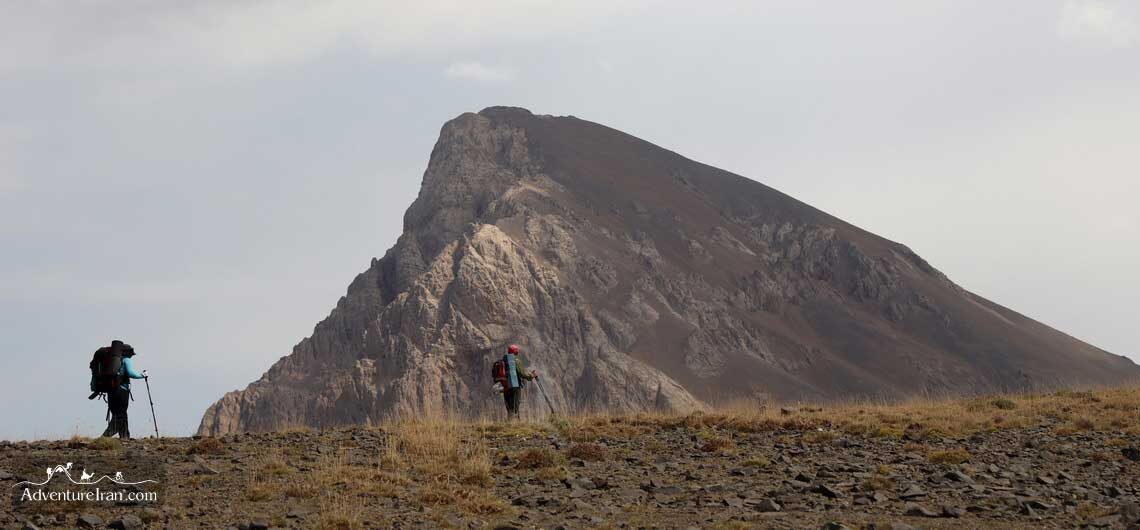
Azad Kuh Mountain Azad Kuh Mountain, with a giant rocky summit, is one of the highest peaks in Iran and is located in the high central Alborz mountains. Azad means ‘free’ and Kuh means ‘mountain’. The free mountain might be the local name, due to it being cone-shaped, so dissimilar from the other surrounding mountains. If you assume a line from Tehran city to the north, in the direction of “Noshahr city”, Azad Kuh is located somewhere in the middle. The three faces of the summit, north, east, and west, are surrounded by steep rocky walls that are more than 500 meters tall. In the summer, there is no need to use any technical equipment for climbing. The mountain is located in the Alborz Markazi protected area where there are different types of flora and fauna, various species of birds, and a broad range of wildlife. MT. Azad Kuh Ascend is one of the treks we prepare to reach the peak, suiting the most experienced hikers during summertime. Why Climbers Love Azad Kuh Technical Terrain: Features steep ice walls (like the North Face), crevassed glaciers, and rocky ridges—best for experienced mountaineers. Myth & History: Local legends say its name comes from a defiant prisoner who escaped captivity by climbing it. Epic Views: On clear days, spot Damavand, Tochal, and the Caspian Sea from the summit. Practical Guide Best Season: Late June to September (avoid early spring). Base Camp: Start from Varangeh Roud Village in Chalus Road (3~4-day round trip). Ski Potential: Untouched powder slopes in winter. https://www.adventureiran.com/10-best-off-the-beaten-path-hiking-trails-in-iran/
Azad Kuh Mountain Azad Kuh Mountain, with a giant rocky summit, is one of the highest peaks in Iran and is located in the high central Alborz mountains. Azad means ‘free’ and Kuh means ‘mountain’. The free mountain might be the local name, due to it being cone-shaped, so dissimilar from the other surrounding mountains.
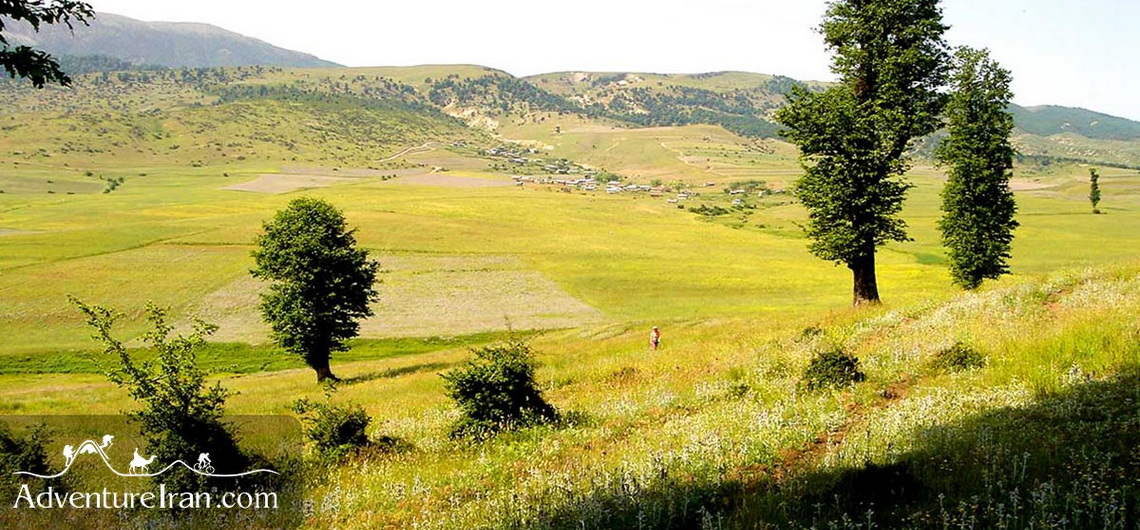
Highlands of Talesh in Iran Talesh also spelled Talysh and Talish, is a region in northwest Iran, west of the Alborz Mountain range along the southwest of the Caspian Sea. The Talesh area is believed to be the place where the Aryan People first settled (They are Indo-European people who moved down from, what are today, the Russian steppes to Europe, Iran, Central Asia, and northern India in the second millennium BC). It is also said to be the birthplace of Zoroaster, the prophet of the ancient Persian religion, Zoroastrianism. Talesh has a sub-tropical climate with a lush green landscape. The region can be divided into two parts, the lowlands, and the highlands. The lowlands lie along the fertile coastal plain of the Caspian Sea and are abundant with rice paddies and orchards. The highlands constitute almost three-quarters of the area of Talesh and are covered by dense deciduous forests and meadows. The Talesh massif forms a 300 km long natural barrier against the drier climate to the south and west. Its highest peak, Bagharo Dagh, is at an altitude of 3,200 meters. The people of Talesh have their own distinct language and culture which have been preserved over the centuries by the remoteness of their land. A great number of them are pastoralists and semi-nomadic. They migrate to the highlands with their herds of sheep and goats every spring to pasture. They live in wooden houses or a kind of fixed tent, called Kapar, in their summer encampments. During this undiscovered superb trek, we will experience their genuine hospitality firsthand by staying and eating with them or camping next to them. Talesh has wonderful mountainous areas and its virgin and intact nature is a charming place for those eager to immerse themselves in it. Talesh is situated 140
Highlands of Talesh in Iran Talesh also spelled Talysh and Talish, is a region in northwest Iran, west of the Alborz Mountain range along the southwest of the Caspian Sea. The Talesh area is believed to be the place where the Aryan People first settled (They are Indo-European people who moved down from, what are