
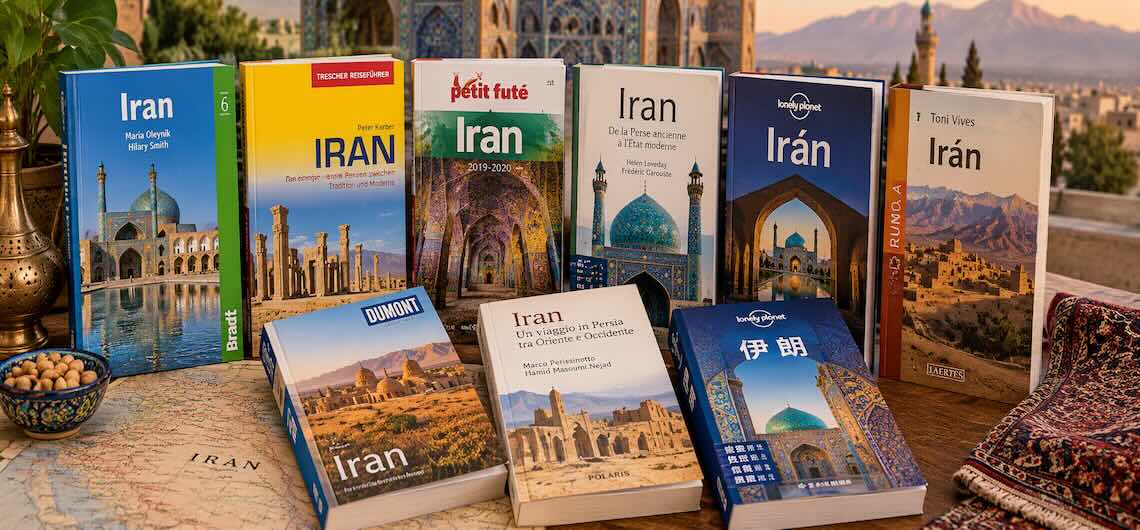
Iran Travel Guide Books in Different Languages
English, German, French, Spanish, Italian and Chinese
When you are planning a trip to Iran, there is still something special about having a printed guidebook in your hands.
You can put a bookmark between the pages, draw a line on a map, read about a city on the bus, or suddenly discover a place you had never heard of before.
For a country as large and diverse as Iran, a good guidebook can help you understand where you are going before you arrive.
Over the years, we have collected a number of Iran travel guidebooks in different languages at Adventure Iran. Looking at them together is interesting because each book presents Iran from a slightly different point of view.
Some concentrate more on practical travel information, while others give more space to history, architecture, culture, nature or the different regions of the country.
In this article, we introduce some of the Iran travel guidebooks available in English, German, French, Spanish, Italian and Chinese.
English: Bradt Travel Guide – Iran
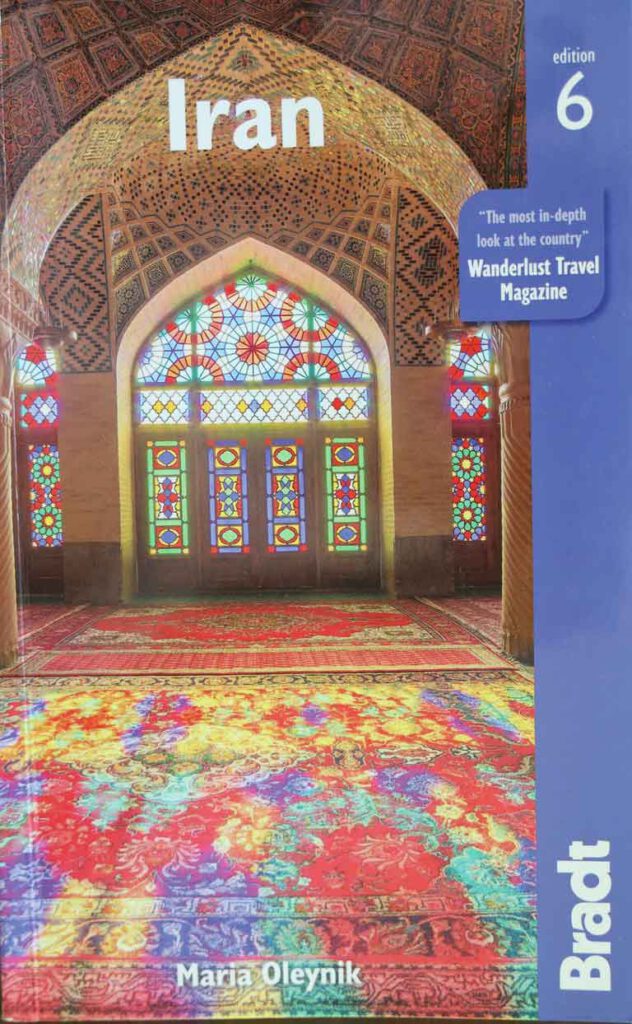
For English-speaking travellers of Iran Travel Guide Book, the Bradt Travel Guide to Iran is one of the most substantial modern printed guides to the country.
The sixth edition was written by Maria Oleynik and Hilary Smith and published in 2020. It has 392 pages and covers much more than the famous Tehran–Kashan–Isfahan–Yazd–Shiraz route.
The book includes Iranian Kurdistan, Khorasan, the Caspian region, the Alborz and Zagros Mountains, the Persian Gulf and many historical and cultural sites.
This is particularly useful for travellers who want to see a different side of Iran. Iran is much more than its famous cities and monuments, and the Bradt guide gives considerable attention to nature, walking, local culture and places outside the standard tourist route.
Book: Iran
Publisher: Bradt Travel Guides
Authors: Maria Oleynik and Hilary Smith
Edition: 6th edition
Year: 2020
Pages: 392
ISBN: 9781784775773
German: TRESCHER Reiseführer Iran
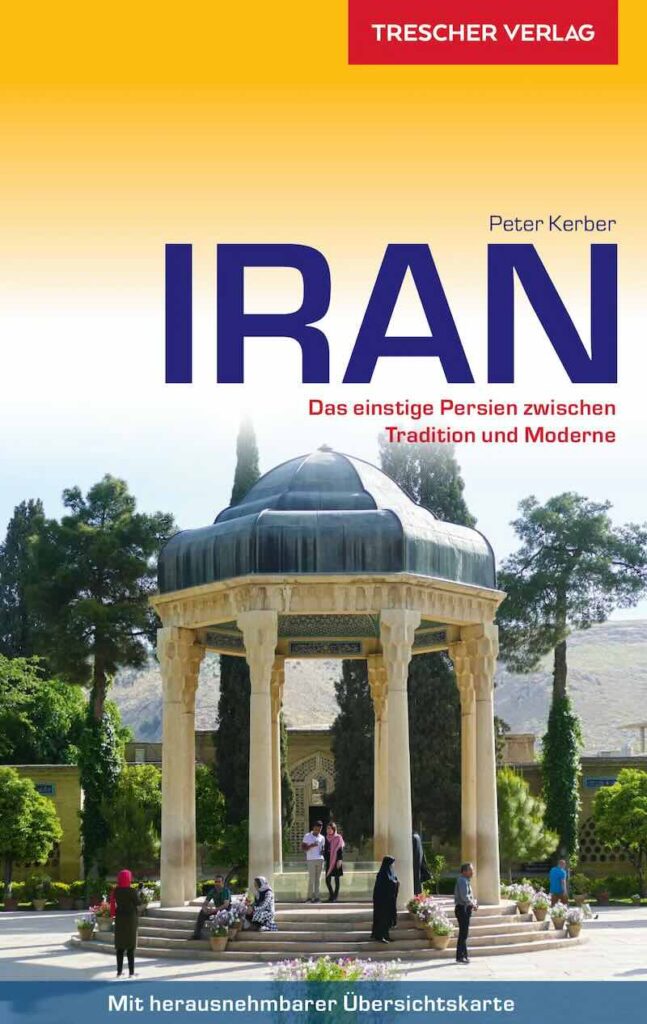
The German-language of Iran Travel Guide Book, TRESCHER Reiseführer Iran is one of the largest Iran guidebooks in our collection.
Written by Peter Kerber, the fifth updated and expanded edition was published in 2017/2018. It contains 624 pages, more than 400 colour photographs, numerous maps and a large fold-out map of Iran.
The book gives a detailed picture of Iran’s different regions, history, archaeology, architecture and geography.
For me, one of the most useful things about a large guidebook like this is that it reminds the reader how big Iran really is. The country cannot be understood through only a few famous cities.
The book is especially useful when preparing a longer journey and looking beyond the usual tourist route.
Book: TRESCHER Reiseführer Iran – Das einstige Persien zwischen Tradition und Moderne
Publisher: Trescher Verlag
Author: Peter Kerber
Edition: 5th, updated and expanded edition
Year: 2017/2018
Pages: 624
ISBN: 978-3-89794-396-4
French: Petit Futé – Iran 2019/2020
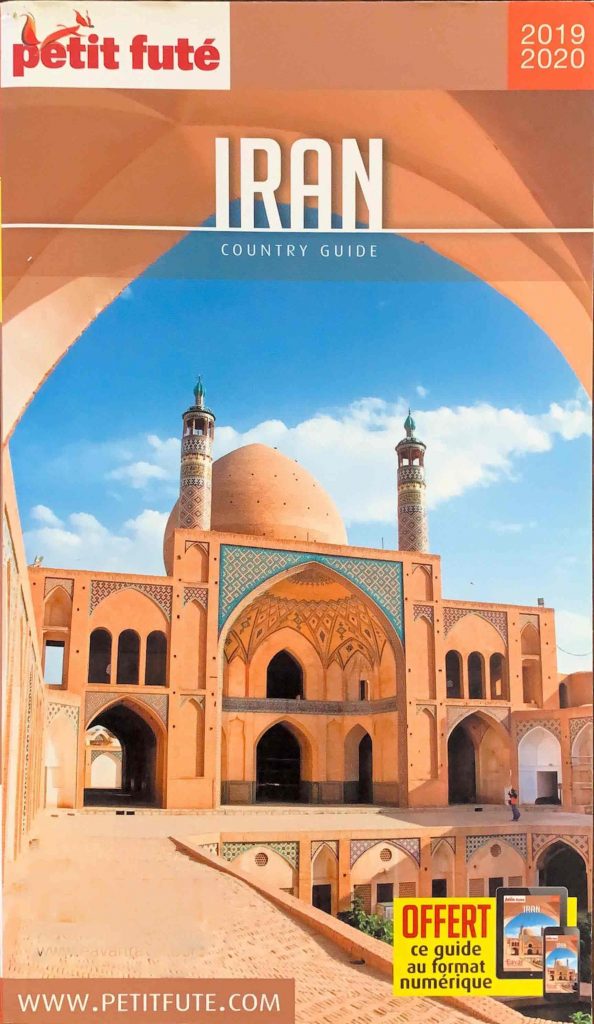
The French section of Iran Travel Guide Book of our collection is particularly interesting because we have two different Iran guidebooks from 2019.
The first is the Petit Futé Iran 2019/2020, written by Dominique Auzias and Jean-Paul Labourdette.
The guide covers Tehran and its surroundings, Isfahan, Shiraz, Tabriz and other parts of Iran, as well as the Caspian Sea, eastern Iran and the Persian Gulf.
Like most Petit Futé guides, it combines practical travel information with background about the country and its destinations.
It is now an older guidebook, so some practical information should be checked before travelling, but it remains an interesting reference for anyone preparing a journey through Iran.
Book: Iran 2019/2020
Publisher: Petit Futé
Authors: Dominique Auzias and Jean-Paul Labourdette
Year: 2019
Pages: 408
ISBN: 9791033199038
French: Olizane – Iran, de la Perse ancienne à l’État moderne
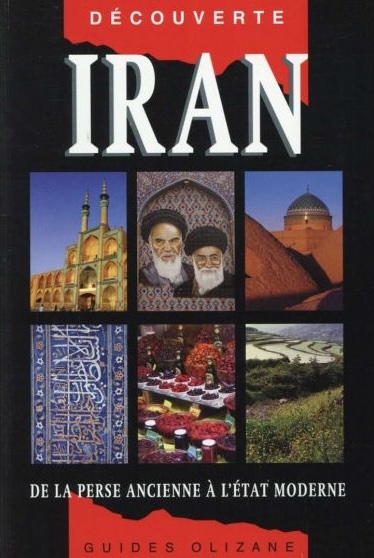
The second French-language book of Iran Travel Guide Book, in our collection is quite different.
Iran – De la Perse ancienne à l’État moderne, by Helen Loveday and Frédéric Garouste, was published by Olizane in 2019.
It is the tenth edition of the guide, which shows that this book has been accompanying travellers to Iran for many years.
The book goes beyond practical travel information and gives considerable space to Persian architecture, Islamic art, calligraphy, Persian poetry, history and culture.
For someone who wants to understand Iran rather than simply make a list of places to visit, this kind of guidebook can be particularly valuable.
Book: Iran – De la Perse ancienne à l’État moderne
Publisher: Olizane
Authors: Helen Loveday and Frédéric Garouste
Edition: 10th edition
Year: 2019
Pages: 336
ISBN: 978-2-88086-487-3
Spanish: Lonely Planet – Irán
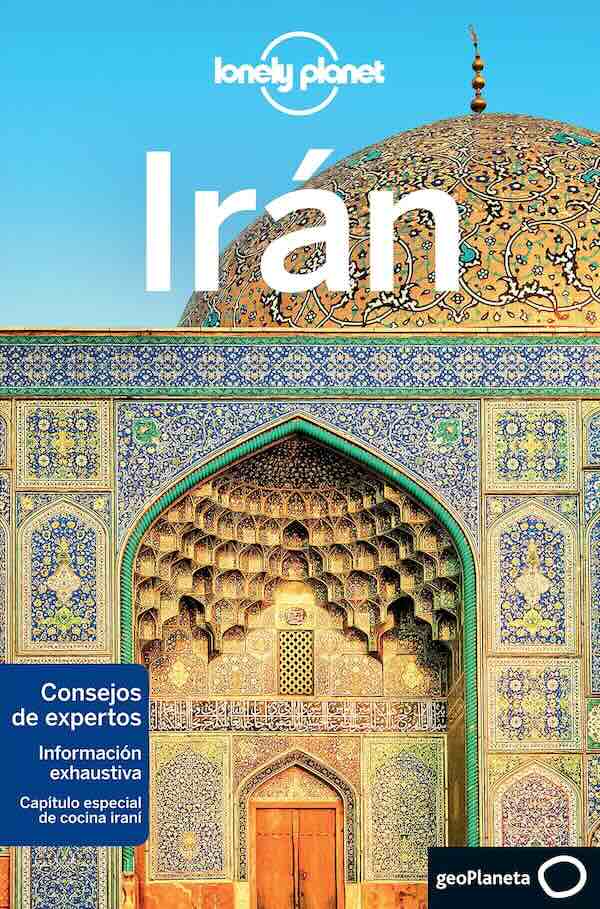
For Spanish-speaking travellers of Iran Travel Guide Book, the latest major printed edition we could identify is the Spanish Lonely Planet guide to Iran, published by GeoPlaneta in 2017.
The guide covers the country’s main destinations and includes practical information as well as sections about Iranian history, religion, food, carpets, shopping and everyday life.
It is now an older edition, but the historical and cultural information remains useful for someone beginning to learn about Iran.
As with any older guidebook, practical details such as prices, accommodation, transport and travel regulations should be checked again before departure.
Book: Irán
Publisher: GeoPlaneta / Lonely Planet
Year: 2017
Pages: 384
ISBN: 9788408175537
Spanish: Laertes – Irán by Toni Vives
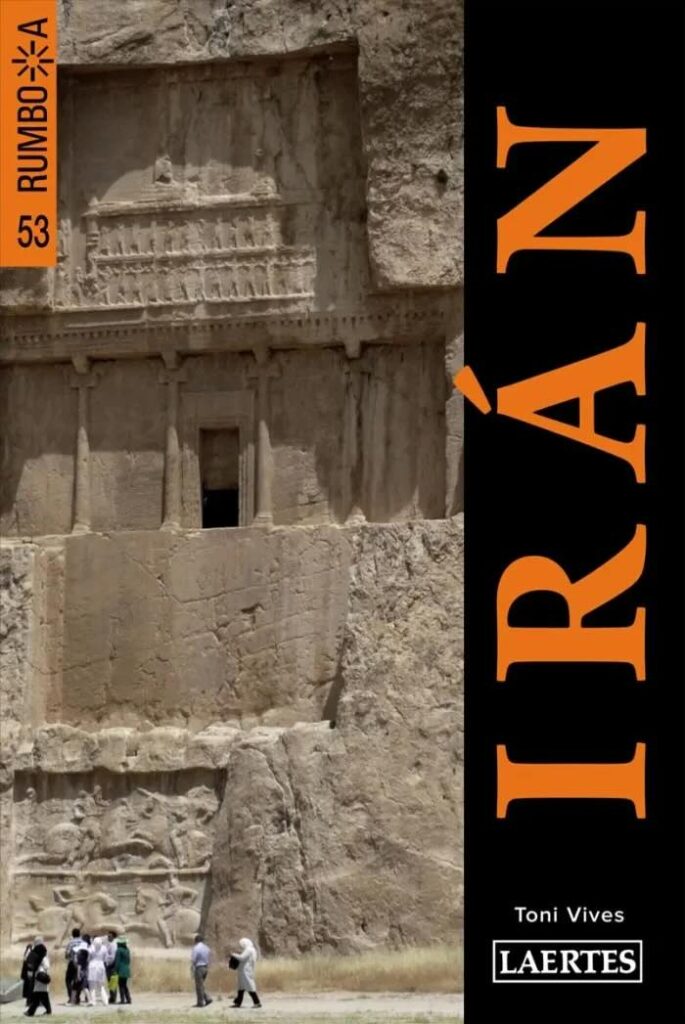
Another Spanish-language book in our collection is Irán by Toni Vives, published by Laertes as part of its Rumbo a series.
The third edition was published in 2014 and contains 445 pages.
Toni Vives approaches Iran through its history, archaeological sites, cities, Persian architecture, carpets, bazaars and, importantly, its people and hospitality.
Although this is an older guidebook, it is worth keeping in a collection of Iran travel books. Older travel writing can sometimes give us a different view of a country, before certain places become well known among international travellers.
Book: Irán
Publisher: Laertes
Author: Toni Vives
Edition: 3rd edition
Year: 2014
Pages: 445
ISBN: 9788475849355
Italian: DuMont – Iran
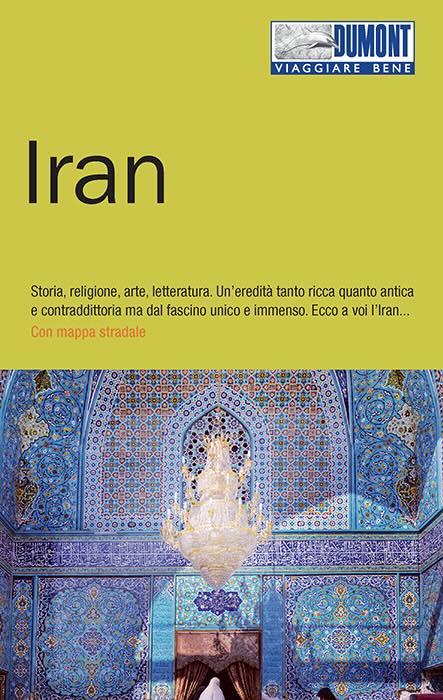
Our Italian collection of Iran Travel Guide Book, includes the DuMont guide to Iran by Walter M. Weiss.
Published in 2019, this is a substantial 504-page guidebook with a fold-out road map.
It covers Tehran and the Caspian coast, northwestern Iran, the Zagros region and many other parts of the country.
For Italian travellers who want one comprehensive printed guide to carry during their journey, this is one of the more substantial books in our collection.
Book: Iran
Publisher: DuMont
Author: Walter M. Weiss
Year: 2019
Pages: 504
ISBN: 9788899694241
Italian: Polaris – Iran, un viaggio in Persia tra Oriente e Occidente
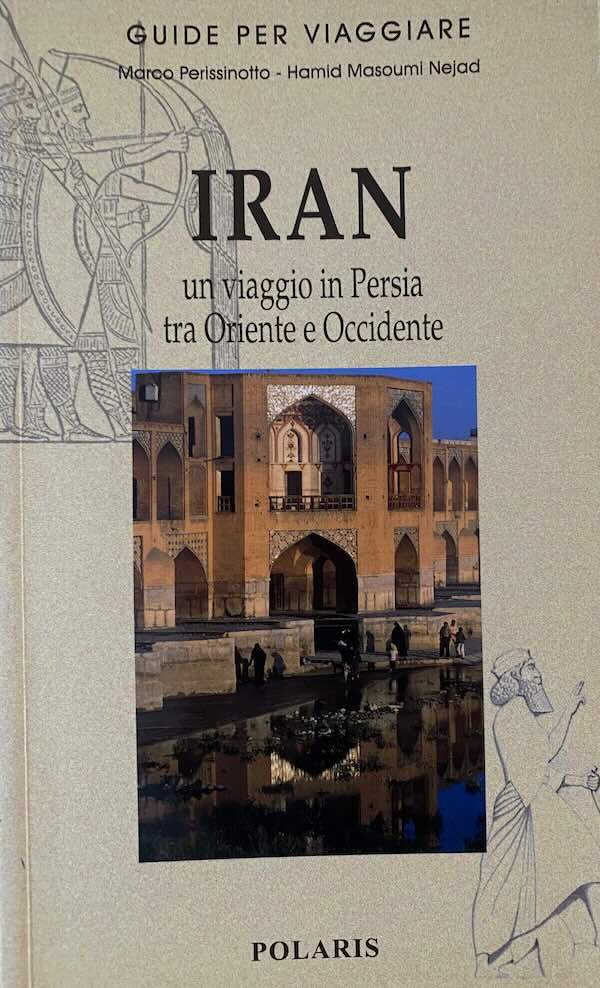
The second Italian book of Iran Travel Guide Book, in our collection is Iran: Un viaggio in Persia tra Oriente e Occidente, written by Marco Perissinotto and Hamid Masoumi Nejad.
It was published by Polaris in 2014.
The title itself describes an interesting way of looking at Iran: Persia between East and West.
Hamid Masoumi Nejad, an Iranian journalist who has worked in Italy for many years, brings an Iranian perspective to an Italian-language book. This gives the guide a character that is different from a standard international travel guide.
Book: Iran – Un viaggio in Persia tra Oriente e Occidente
Publisher: Polaris
Authors: Marco Perissinotto and Hamid Masoumi Nejad
Year: 2014
Pages: 272
ISBN: 9788860590602
The newest Italian Iran guidebook: Benvenuti in Iran
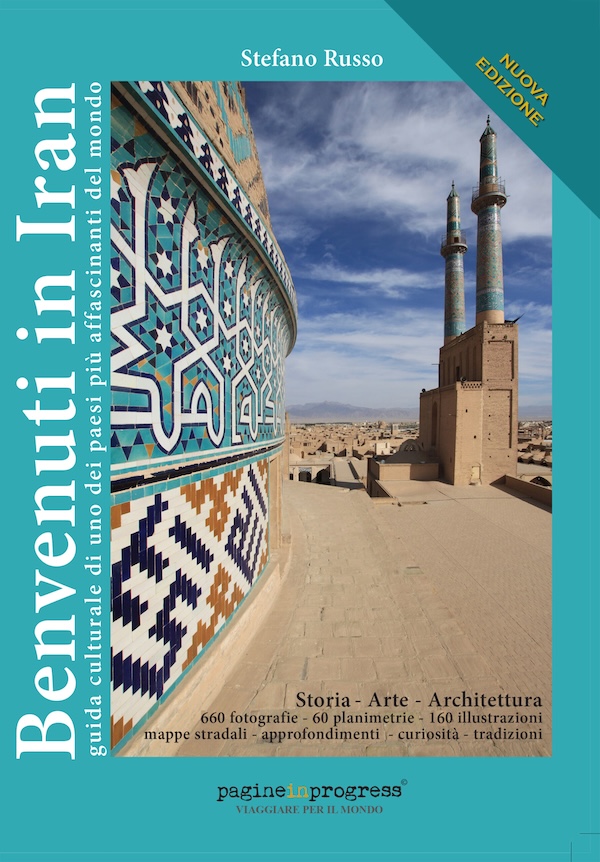
There is also a newer addition to the Italian market of Iran Travel Guide Book.
Benvenuti in Iran by Stefano Russo was published in 2026 and is currently the newest Italian printed Iran guidebook we found.
The book takes a cultural approach to Iran, looking at its long history, art, architecture and relationship between East and West.
This is an interesting development because most of the other major printed Iran guides we found in different languages are several years older.
Book: Benvenuti in Iran – Guida culturale di uno dei paesi più affascinanti del mondo
Author: Stefano Russo
Publisher: Pagineinprogress
Year: 2026
Pages: 292
ISBN: 9791281329058
Chinese: Lonely Planet – 伊朗
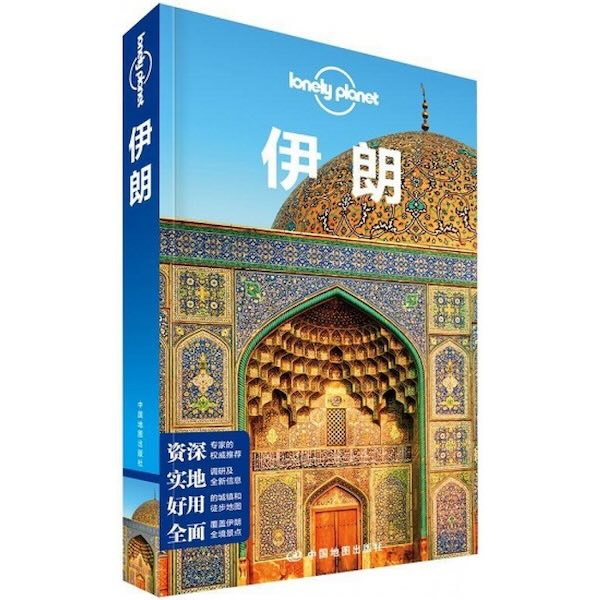
For Chinese-speaking travellers of Iran Travel Guide Book, the latest printed Chinese edition we could identify is the second Chinese edition of the Lonely Planet Iran guide, published in 2018.
The book covers Tehran, Isfahan, Yazd, Shiraz, Mashhad and other regions of Iran. It also introduces readers to Iranian history, ethnic groups, food, religion, carpets, arts and crafts, music and the natural environment.
For us at Adventure Iran, one particularly interesting part is the attention given to Iran’s nomadic cultures and the Zagros Mountains.
This is an important side of Iran that is often missing from the familiar international image of the country.
Book: Lonely Planet – 伊朗
Publisher: China Map Publishing House
Edition: 2nd Chinese edition
Year: 2018
Pages: 383
ISBN: 9787520404914
What do these Iran guidebooks tell us?
After looking at all these books together, one thing surprised us.
There are surprisingly few new printed Iran travel guidebooks.
The latest major guides we could identify are mostly several years old:
- English: Bradt, 2020
- German: Trescher, 2017/2018
- French: Petit Futé and Olizane, 2019
- Spanish: Lonely Planet, 2017
- Italian: Benvenuti in Iran, 2026
- Chinese: Lonely Planet, 2018
This does not mean that the older books have lost their value.
Much of what makes Iran fascinating does not change every few years. Persepolis is still Persepolis. The architecture of Isfahan is still there. The deserts, mountains, bazaars, villages and historic cities remain.
But practical travel information is different.
Visa regulations, prices, hotels, transport, border crossings, opening hours and other details can change. So an older guidebook should be used as a source of knowledge and inspiration, while current information should always be checked before travelling.

Iran is much bigger than the famous cities
Reading these guidebooks also reminds us how easy it is to reduce Iran to a short list of famous places.
Tehran.
Kashan.
Isfahan.
Yazd.
Shiraz.
Persepolis.
These places are certainly worth visiting. But they are only one part of Iran.
There are the Zagros Mountains, Iranian Kurdistan, the Caspian forests, the deserts of central Iran, Khorasan in the northeast, the Persian Gulf and its islands, and many remote regions where the landscape and local culture are completely different.
There are also Iran’s nomadic communities, whose seasonal movements have been part of the country’s cultural landscape for centuries.
For travellers interested in trekking, mountains, remote landscapes and nomadic life, these parts of Iran can become some of the most memorable experiences of a journey.
A guidebook can introduce Iran, but it cannot replace travelling
Perhaps this is the most important thing we would say after looking through these books.
A guidebook can tell you where to go.
It can explain why a mosque is important, who built a caravanserai, how old a city is, or where to find a particular historical monument.
But a book cannot tell you exactly what it feels like to sit with a family in a village in the Zagros, walk through a nomadic camp, cross a desert road at sunset, or spend an evening talking with people who have never appeared in a travel guide.
That is where travelling becomes different from reading about a country.
And perhaps that is why, even in the age of Google Maps and travel apps, we still like printed guidebooks.
They make you curious before the journey begins.
Iran Travel Guidebook Collection
The books mentioned for this article are part of the Iran travel guide collection we have at Adventure Iran.
They represent several generations of travel writing about Iran and show how authors from different countries have described the same country from very different perspectives.
If you are planning an adventure, trekking or cultural journey in Iran, we recommend using a guidebook as a starting point — and then going beyond its pages.
Because the best parts of Iran are not always found in a guidebook.
Comments