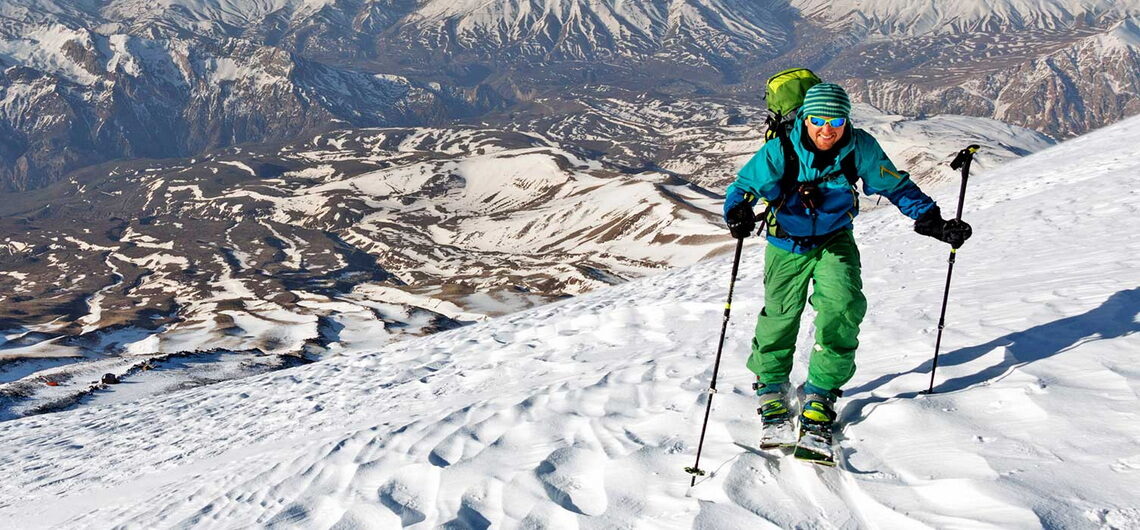
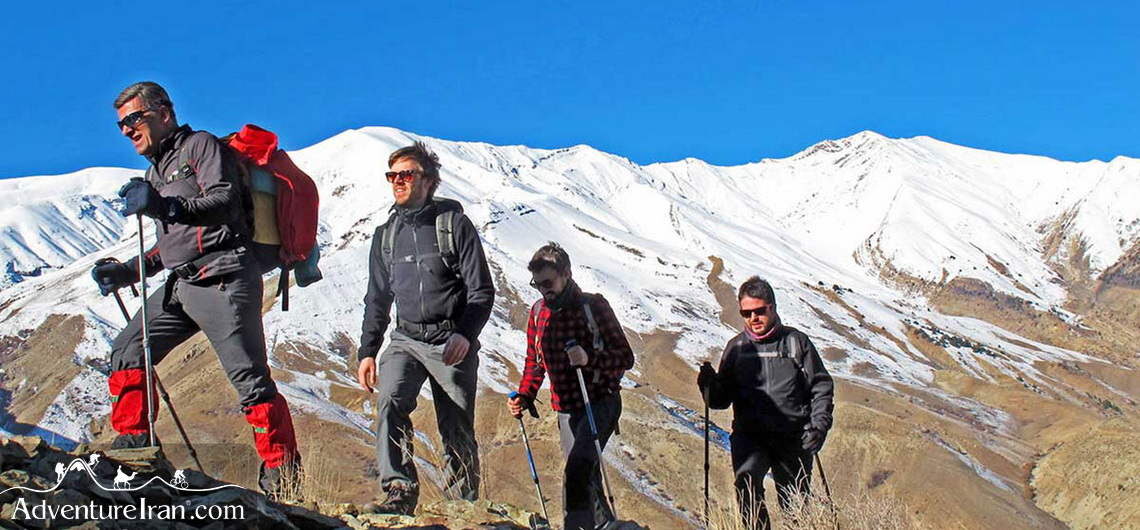
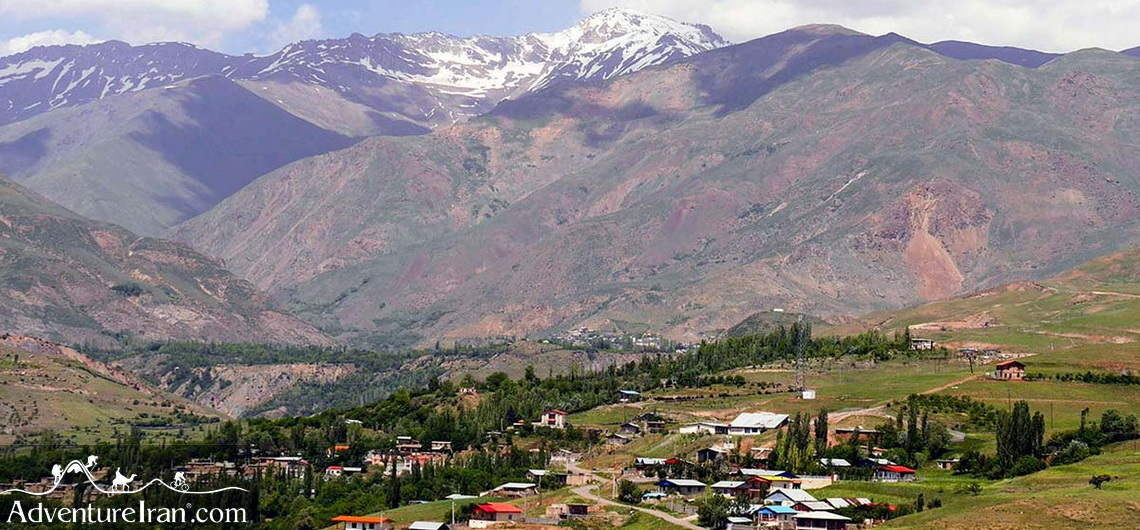
Iran Ski Touring Iran, with its numerous high peaks in the Alborz and Zagros mountains, is absolutely the loneliest destination for skiing and Ski touring in the Middle East. Having a high snowfall starting from November till June in the towering mountains on the one hand, and having 150 mountains above 4,000 m on the other, makes Iran an ideal destination for Ski Touring. There are many pistes above 2,500 m level and the amount of snow is also perfect for winter activities. Adventure Iran operates many ski touring trips in Alborz and Zagros mountains in Iran. Depending on your ski level and time of travel, we advise different locations and paths for professional and amateur skiers. One of the most popular ski touring adventures which has attracted many ski enthusiasts is Mount Damavand (5,610m), the highest mountain in Iran and the Middle East. The Mount Damavand Ski Touring in Asia’s highest volcano mountain tour is a one-week trip that Adventure Iran conducts in the spring. We also combine Damavand Ski Touring with Dobarar mountain range, which makes the best combination for powder skiing, leisure trips, views of other mountains and Mount Damavand, and acclimatization at the summit. Ski Touring in MT Damavand and Dobarar Mountain chains is a ten-day trip covering both these mountains. Damavand is only 100 km away from the capital and is within easy reach of the base of Damavand where you can start your ski tour. The Alam Kuh Mountain is the second mountain in Iran in terms of altitude at 4,850 m above sea level. It is also one of the most challenging peaks in Iran. Sometimes, you can ski in Alam Kuh Mountain till June, depending on the snowfall during the year. Mount Alam Kuh Ski Touring is a one-week tour
Iran Ski Touring Iran, with its numerous high peaks in the Alborz and Zagros mountains, is absolutely the loneliest destination for skiing and Ski touring in the Middle East. Having a high snowfall starting from November till June in the towering mountains on the one hand, and having 150 mountains above 4,000 m on the
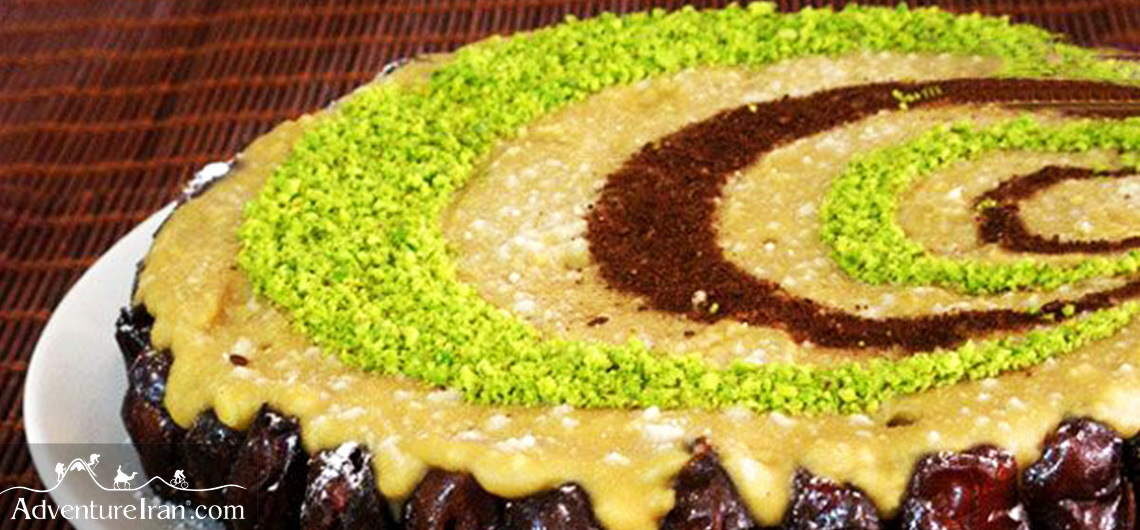
Ranginak, Iranian Dessert Recipe Ranginak is an Iranian delicious dessert originally from the southern parts of the country, mainly Fars, Khuzestan, Hormozgan, and Bushehr. Persian desserts, just like Persian food, are healthy and nutritious. Although Ranginak is easy to make, it is so nutritious that makes you feel full long after having it. The main ingredients for this luscious dessert include dates, flour, and cinnamon. Here, you will learn how to make Ranginak- this Iranainan mouthwatering dessert- recipe. Ingredients: 500g of dates 3 or 4 tablespoons of flour 2 teaspoons of cinnamon or more according to taste A little powdered coconut to decorate 3 or 4 teaspoons of vegetable oil How to make delicious Iranian dessert of Ranginak: First of all, Place the dates in a dish having cut them in half, and remove the nut. After that, very gently, brown the flour in a dry pan, stirring continually. When the flour color changes, add the oil and cinnamon. Mix well to obtain a smooth paste (a little like a pancake paste). Sprinkle with coconut powder and some cinnamon. Then, pour the mixture over the dates and leave to sit for a minimum of 2 hours. It is generally served at the end of the meal with tea or coffee. *Notes: You can use butter instead of oil for a better flavor if you wish. You can also garnish the Rangnak dessert with pistachio or walnut powder according to your taste. You can fry the walnut kernel gently on low heat until it is toasted, then use it. https://www.adventureiran.com/top-ten-persian-cookbooks/ https://www.adventureiran.com/iran-cooking-tour-persian-cuisine/
Ranginak, Iranian Dessert Recipe Ranginak is an Iranian delicious dessert originally from the southern parts of the country, mainly Fars, Khuzestan, Hormozgan, and Bushehr. Persian desserts, just like Persian food, are healthy and nutritious. Although Ranginak is easy to make, it is so nutritious that makes you feel full long after having it. The main
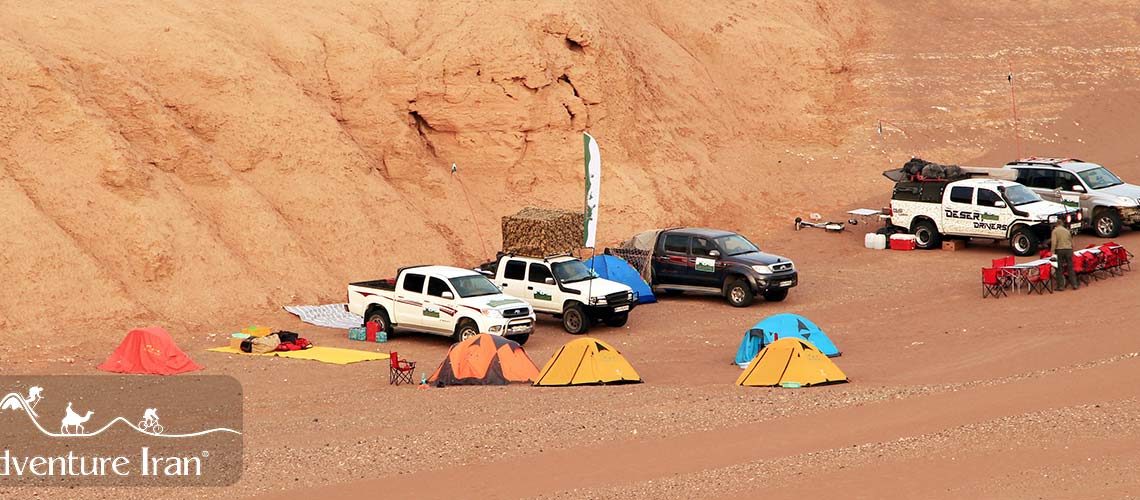
Desert 4x4 Safari in Iran Desert 4x4 Safari in Iran is one of the main activities that most travelers would like to experience on their journey to Iran. As you may know, Iran has two deserts; Dasht-e Kavir and Lut deserts. They are both perfect for a 4x4 safari for all adventurous travelers in search of a new and remarkable experience. Dasht-e Lut lands are quite unusual in comparison with the other deserts of Iran, having eye-catching and unique landscapes. Maranjab, Rig-e Jen, Koreh Gaaz, and Mesr desert make up the Dasht-e Kavir desert all of which are ideal for off-road 4x4 safaris. Maranjab desert is close to Kashan city, where there is a historical caravanserai which is well worth visiting. This desert is unrivaled for a multi-day desert trip for those who would like to have a short and cost-effective desert journey in Iran. Rig-e Jen, in the central desert of Iran, is one of the most adventurous. It is located in the heart of the Dasht-e Kavir desert. Rig-e Jen is perfect for those travelers who would like to have a longer and more complete 4x4 safari as it is not easily accessible. It is also more challenging compared to the other deserts in the area. There are two ways for starting the journey. Anarak is the most accessible town in the Rig-e Jen desert, 222 km from the east of Esfahan. The second way is from Khur which is a town in the heart of Dasht-e Kavir. The least popular deserts for safaris in Iran are the Koreh Gaz and Mesr deserts. Koreh Gaz is also known as Mohammad Abad Koreh Gaz; it is the last oasis in the desert where a couple of people still live. In this region, there is underground water, a few
Desert 4×4 Safari in Iran Desert 4×4 Safari in Iran is one of the main activities that most travelers would like to experience on their journey to Iran. As you may know, Iran has two deserts; Dasht-e Kavir and Lut deserts. They are both perfect for a 4×4 safari for all adventurous travelers in search
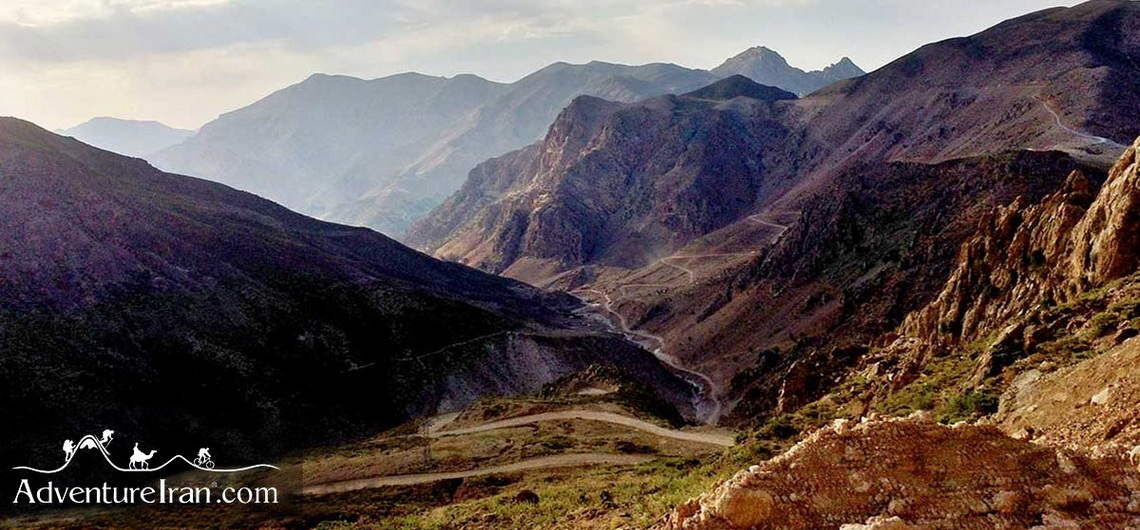
Zardkuh Mountain in Iran Zardkuh Mountain Chain, (Zardkooh) the name of a sub-range of the Zagros Mountain range, stands in the center of Zagros and is one of the most popular mountains in the entire Zagros Range in Iran. It is also spelled Zard Kouh, Zad Koh, Zardkuh, Zarduh Kuh, and Zard Kuh-e Bakhtiari. In Persian, Zard Kuh means "The yellow mountain". The mountain is located in Chaharmahal and Bakhtiari province in western Iran. Zardkuh is near the two famous cities of Shahr-e-Kord and Koohrang and is one of the most beautiful places in Iran. Karoon and Zayandeh-rud rivers are the two major rivers in the country originating from ZardKuh Mountains. There are a number of mountains over 4,000 m in this mountain chain such as Haft Tanan 4,019m, Shah-e-Shahidan 4,180m, Ab-Sefid 4,050m, Koloonchin (Do-Zardeh) 4,221m, and Khersan 4,050m. There is no specific name for Zardkuh peak in the entire Zardkuh mountain chain. However, most people, even local climbers, mistakenly refer to it as Zardkuh’s peak, “Koloonchin”, because it is the main summit in this chain. This mountain chain has several glaciers. The two main highest mountains of Zardkuh (Shah-e Shahidan and Koloonchin) formed the massive glacier which is the source of water for the two rivers of Kuhrang and Bazoft. Both these rivers are Karun river branches. Karun river is the longest river in Iran and is one of the most important sources of water for the country. Zardkuh Mountains are the main center for climbers from all over Iran during summer. The mountains are rich in various species of plants and wild animals making them even more attractive and spectacular. Zardkuh is also a key ski area for travelers. Chelgerd Ski Resort is located in Chelgerd town which is 200 km away from the
Zardkuh Mountain in Iran Zardkuh Mountain Chain, (Zardkooh) the name of a sub-range of the Zagros Mountain range, stands in the center of Zagros and is one of the most popular mountains in the entire Zagros Range in Iran. It is also spelled Zard Kouh, Zad Koh, Zardkuh, Zarduh Kuh, and Zard Kuh-e Bakhtiari. In
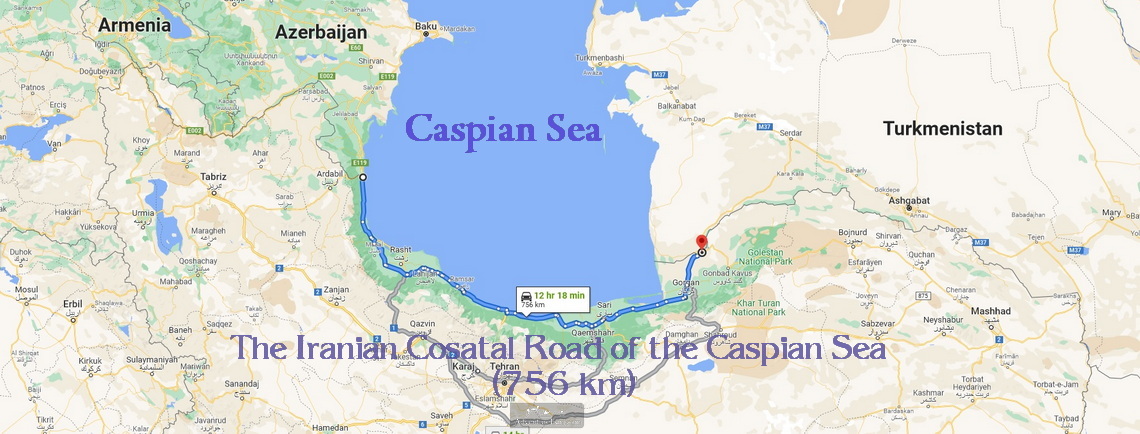
The Caspian Sea North of Iran The Caspian Sea is the largest lake in the world, situated in south-eastern Europe and south-western Asia. It is surrounded by 5 different countries, Kazakhstan, Russia, Azerbaijan, Turkmenistan, and Iran. The Sea is home to a wide range of species. More than 850 different animals and at least 500 different types of plants live in this sea. However, the diversity of species can be considered almost too low for the size of this water body, most of them being indigenous like caviar. In Persian, the Caspian Sea is called Daryaye Kahzar, which is doubtlessly one of the most beautiful parts of Iran. In the summertime, millions of people from all over the country, especially Tehran, travel to this coast. In Iran, it is also known as Shomal-e Iran meaning Northern Iran, an area along the coast of the Sea. The forested coastal plains rise up to the Alborz Mountains. This region consists of the three provinces of Gilan, Mazandaran, and Golestan, each with plenty of attractions. The climate of the southern Caspian Sea is perfect for agriculture. There is an abundance of fruits, vegetables, and herbs as well as rice and tea, so important to Iranian culture. Northern Iran, to the south of the Sea, is the rainiest region. In addition, the area is located in the northern part of the Alborz Mountain Range with a lot of high-altitude mountains, where melted snow has created splendid rivers. Furthermore, there are many exquisite dense forests between the Alborz Mountains and the Caspian Sea. One of the most famous is the Hyrcanian Forests, registered on the list of UNESCO natural sites. There is also another UNESCO site in this region. Gonbad-e Qabus tower is a UNESCO world heritage site, being the tallest pure-brick tower in
The Caspian Sea North of Iran The Caspian Sea is the largest lake in the world, situated in south-eastern Europe and south-western Asia. It is surrounded by 5 different countries, Kazakhstan, Russia, Azerbaijan, Turkmenistan, and Iran. The Sea is home to a wide range of species. More than 850 different animals and at least 500 different
We are adapting all our trips are adapted to new health standards. Living a memorable and safe adventure has always been the first concern of Adventure Iran and this special year will not be an exception to this rule. When you are able to travel to Iran, we shall continue to make you travel, make you dream and make you discover wonderful places in Iran. We are working with our accommodation providers, guides, partners in order to adapt all our circuits to new health constraints: physical distance, barrier gestures, specific hygiene measures. Transport: Reduction in the number transfers and the number of people in vehicles, wearing of a mandatory mask and regular disinfection of vehicles. Accommodation: We apply all of the strict rules imposed on accommodation. Hotels: We no longer offer rooms to share with people who do not know each other. Family, double or single rooms are available. Private accommodation and mountain huts: Minimum surface area per person, 1 bed out of 2 offered in dormitories, blankets are no longer provided in shelters, you will need to provide a personal duvet. Camping: An individual tent is offered to you for the whole stay, we transport it, you may be asked to pitch it up / dismantle it. Meals: Reduction in the number of dishes shared on picnics, and an increase in individual portions. Food is not in contact with all participants; strict hygiene rules are applied even when hiking or cycling. Activities: Your guide will explain the new health rules implemented in connection with the various players in your trip: accommodation providers, drivers. During the activities, he helps everyone to respect the rules of physical distance (for example, 2 meters when hiking).
We are adapting all our trips are adapted to new health standards. Living a memorable and safe adventure has always been the first concern of Adventure Iran and this special year will not be an exception to this rule. When you are able to travel to Iran, we shall continue to make you travel, make
Nomadic Tribes in Iran Iran is a multi-ethnic country, made up of different ethnic groups who live in every corner of the land. There are also umpteen types of nomadic tribes living in the various regions of the Alborz and Zagros mountain ranges in Iran. They consist of Bakhtiari, Qashqai, Shah Savan (Ilsavan nomads), Kurdish, Taleshi, Mamiand, Boier Ahmadi, Khamseh, Behmaiee, Mamasani, Kord, Taiebi, Jalali, Zalaki, Baluchi, and Afshar. Their customs, language, culture, and food are dissimilar to each other. They are supported by the Nomads Affairs Organization of Iran, a government organization responsible for supplying services to mountain climbers by managing the migration and relocation of nomads. It regulates the essential guidelines and schemes in coordination with the superior organizations such as parliament, government, and the Nomads supreme council. The nomads with their families and herds generally move from lower altitudes to higher mountains during the hot season, moving again to lower altitudes during the cold season. The majority start moving from early spring “depending on the region” till mid-autumn with their families and sheep. The biggest and best-known Iran nomads are the Bakhtiari who live mainly in the provinces of Esfahan, Khuzestan, and Chaharmahal with the remaining ones (approximately 200,000 people), located in the west. Qashghais with around 120,000 people are the second most populous nomads, who have a seasonal life in Bushehr, Fars, and a small part of Esfahan, Chaharmahal, and Bakhtiari provinces. Shahsavans are the third most populous nomads in Iran with around 500,000 people. They live in the northwest in the provinces of East Azarbaijan, Gilan, and Ardabil. The lifestyle of the indigenous people is set to be changed. Iranian nomads are also changing with the times. In recent decades, Iran's nomads are fading away. Comparing the first Adventure Iran nomadic trips
Nomadic Tribes in Iran Iran is a multi-ethnic country, made up of different ethnic groups who live in every corner of the land. There are also umpteen types of nomadic tribes living in the various regions of the Alborz and Zagros mountain ranges in Iran. They consist of Bakhtiari, Qashqai, Shah Savan (Ilsavan nomads), Kurdish,
Hiking in Iran Hiking in Iran is one of the most attractive activities for many individuals, especially considering Iran is a mountainous country with many of them over 4,000 m. Hiking is a popular sport for Iranians at weekends. Iran is a vast country with two huge deserts, where even from the desert area it is possible to see these staggeringly beautiful 4,000 m mountains in the distance. There are also a lot of hiking routes in the country. As you may know, there are two long mountain ranges in Iran. Alborz mountain range with around 900 km length to the south of the Caspian Sea and Zagros Mountain Range with 1,500 km length starting from the northeast of the country and stretching to the southeast. There are also numerous high mountains over 4,000 m in other parts of the country for hiking. Most travelers from all around the world come here for hiking, with Iran hiking becoming the most popular activity for many adventurers. You cannot find an IRAN HIKING MAP here as the one you may see in your home country. There are a few organizations and companies that print Iran maps, but, unfortunately, they do not provide a special Iran hiking map for our mountains, or a topographic hiking map with contours and nature signs. On the north side of the capital city of Tehran, there are a number of hiking routes that go up to Tochal Mountain, where the long ridge line is nearly 4,000 m. There are plenty of characteristic cafés and shops around here where hikers have the opportunity to stop and have breakfast on the trail and take in the stunning scenery. There are also a bunch of trails for hiking outside of Tehran city in the country parts. Most
Hiking in Iran Hiking in Iran is one of the most attractive activities for many individuals, especially considering Iran is a mountainous country with many of them over 4,000 m. Hiking is a popular sport for Iranians at weekends. Iran is a vast country with two huge deserts, where even from the desert area it
Alamut Valley in Iran Alamut is the name of a huge valley located on the western edge of the Alborz mountain range, northeast of Qazvin province, Iran. It lies beneath the southern side of the Alborz mountains, between the dry plains of Qazvin province in the south and the densely forested slopes of Mazandaran province, south of the Caspian Sea. The Alamut mountain region was potentially perfect for castle construction due to its height and inaccessibility, providing a natural built-in defense structure against invaders. The Ismailis built two citadels in the Alamut Valley, famous for their enormous size. Ismailis are a branch of Shia Muslims who believe in seven Shia Imams (e.g. seven heavens, seven continents, seven orifices in the skull, seven days in a week, etc.) Hassan-e Sabbah built the castles of Alamut and Lambsar in Alamut Valley. As he lived in the Alamut Castle for many years, it is also known as Hassan Sabbah’s Castle. He was an Ismaili messenger who founded a community in the Alborz Mountains in the late 11th century. Sabbah used the Alamut Castle as the main command center for a decentralized Persian uprising against the Seljuk Turks. He founded a group of fadayeen (hermits) whose members are known in western literature as the Hashshashin or "Assassins". Alamut Castle is located in the Moalem Kalayeh district of Qazvin province. It is situated close to a village called Gazor Khan on its northeastern side. The castle’s height is 2,163 m., built on a 220m cliff. The castle dates back to the 11th century. The cultural landscape of Alamut has been added to the tentative list of UNESCO’s World Heritage Sites. Since 2007, it is still waiting for its inscription. Freya Stark was a British traveler who explored the Valley of Alamut. She
Alamut Valley in Iran Alamut is the name of a huge valley located on the western edge of the Alborz mountain range, northeast of Qazvin province, Iran. It lies beneath the southern side of the Alborz mountains, between the dry plains of Qazvin province in the south and the densely forested slopes of Mazandaran province,
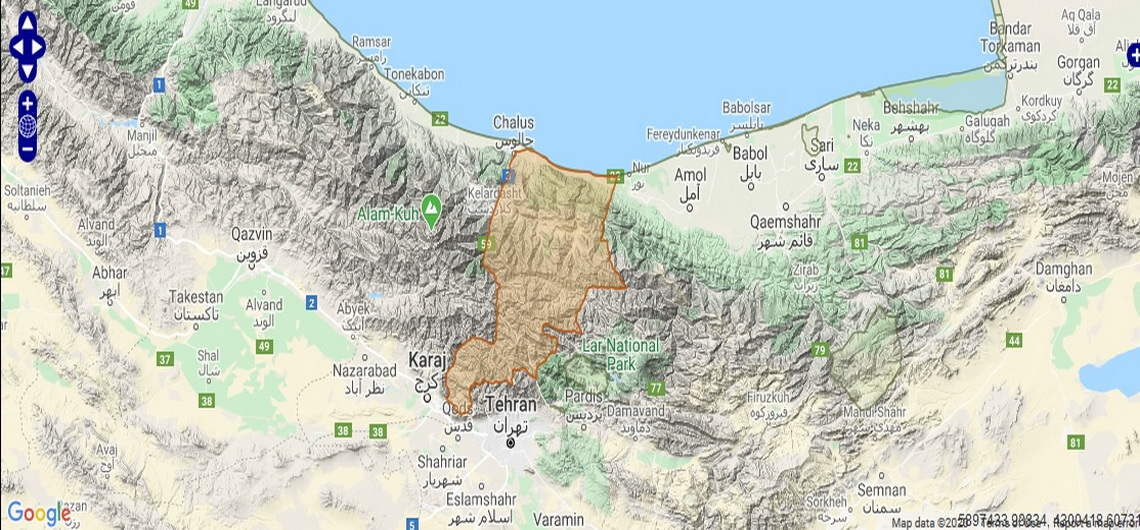
Alborz-e Markazi Protected Area Alborz-e Markazi Protected Area is one of the biggest protected areas in Alborz Mountain Range observed by the Department of Environment of Iran. The area starts north of Tehran city and stretches to the Caspian Sea. It is situated in three provinces of Tehran, Alborz, and Mazandaran. The whole area is around 400,000 hectares and is home to 48 species of mammals, 156 species of birds, 1,400 different species of plants, and 26 species of reptiles who live in this area. It is one of the main sources of water as there are many rivers in this region. The most famous mountains of Central Alborz, above 4,000m, are located in this protected area. Mount AzadKuh 4,400m, Mount Kolonbastak 4,150 m, and Mount Sarakchal 4,250m are its most famous peaks. In addition, Abali Ski resort, the first ski resort in Iran, built around 60 years ago (1960), is located in Alborz-e Markazi protected area. The main ski resorts of Dizin, Shemshak, and Darbandsar are also found here. Adventure Iran is one of the pioneer tour operators focusing on this region to conduct and create action-packed tours in Iran. Short and long mountain trekking, Mountain biking, and Ski touring are a variety of Adventure Iran tours that are carried out during the most suitable period for each activity throughout the year. A couple of tours with fixed departure dates are included in Adventure Iran Group Tours too. Due to the high altitude, the temperature and climate vary in each season. We, therefore, arrange appropriate trips for each season. One of the most popular moderate treks is Hike in Iran through off the beaten tracks which is one-week trekking in the Central Alborz Mountains and includes several protected areas such as Alborz Markazi protected area. For Mountain
Alborz-e Markazi Protected Area Alborz-e Markazi Protected Area is one of the biggest protected areas in Alborz Mountain Range observed by the Department of Environment of Iran. The area starts north of Tehran city and stretches to the Caspian Sea. It is situated in three provinces of Tehran, Alborz, and Mazandaran. The whole area is