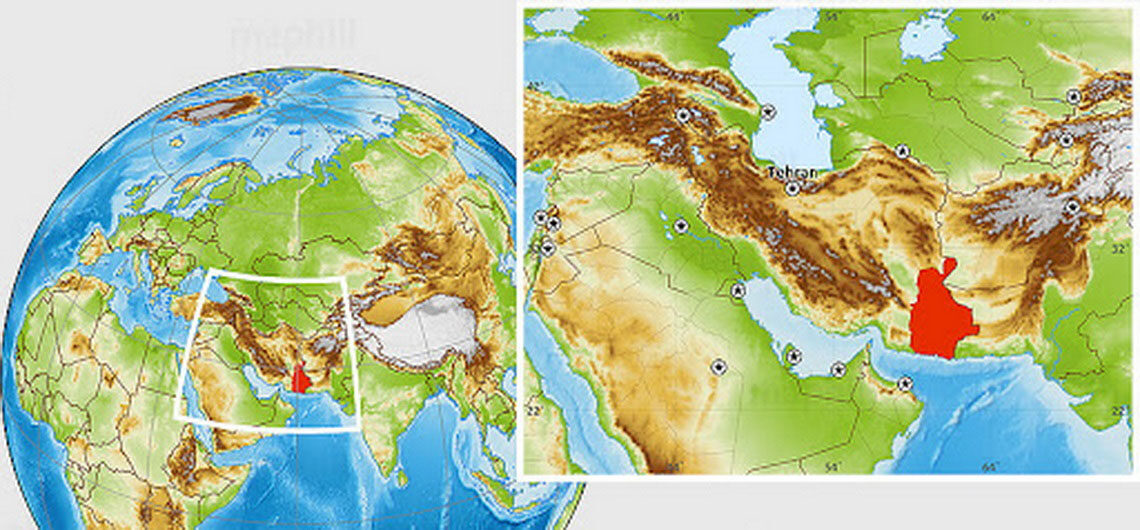
Sistan and Baluchistan in Iran Sistan and Baluchistan province (also spelled Sistan and Baluchestan / Balochistan) is in the southeast of Iran on the border with Afghanistan and Pakistan. To the south lies the Indian Ocean and the Gulf of Oman. This province is about the size of Switzerland, the Netherlands, Belgium, Denmark, and Slovenia combined. As a result of its huge dimensions, there is a fair amount of driving from the north to the south. It has 1,100 km of land along the border with Pakistan and Afghanistan together with a coastal stretch of 300 km along the Indian Ocean’s Gulf of Oman. The inhabitants consist of two tribes, one is the Baluchi tribe, who are Sunni Muslims, and the other the Sistani tribe, who are Shi’a Muslims. Both speak Persian. Balochistan offers adventurous travelers a unique opportunity to explore a region rich in ethnic culture, ancient traditions, and surreal landscapes. This vast province is part of Sistan and Baluchestan, one of Iran’s largest and most ethnically diverse regions. Though historically overlooked due to its remoteness, it’s now emerging as a fascinating destination for those seeking something truly different. The province is really amazing with huge contrasts between the deserts, snow-capped mountains, peculiar rock formations, an active 4,000 m volcano, Martian scenery, cliff-enclosed fishing villages along the coast, plus tropical rivers with the rare Mugger crocodile. This is a lesser-known destination in Iran but, at the same time, one of the most beautiful areas of our country. Top Places to Visit in Iranian Balochistan 1. Chabahar The gateway to Balochistan, Chabahar is a strategic port city on the Gulf of Oman, and one of the few coastal towns in Iran with a tropical climate. Highlights: 🌊 Martian Mountains (Miniature Mountains): Otherworldly rock formations with dramatic ridges that
Sistan and Baluchistan in Iran Sistan and Baluchistan province (also spelled Sistan and Baluchestan / Balochistan) is in the southeast of Iran on the border with Afghanistan and Pakistan. To the south lies the Indian Ocean and the Gulf of Oman. This province is about the size of Switzerland, the Netherlands, Belgium, Denmark, and Slovenia
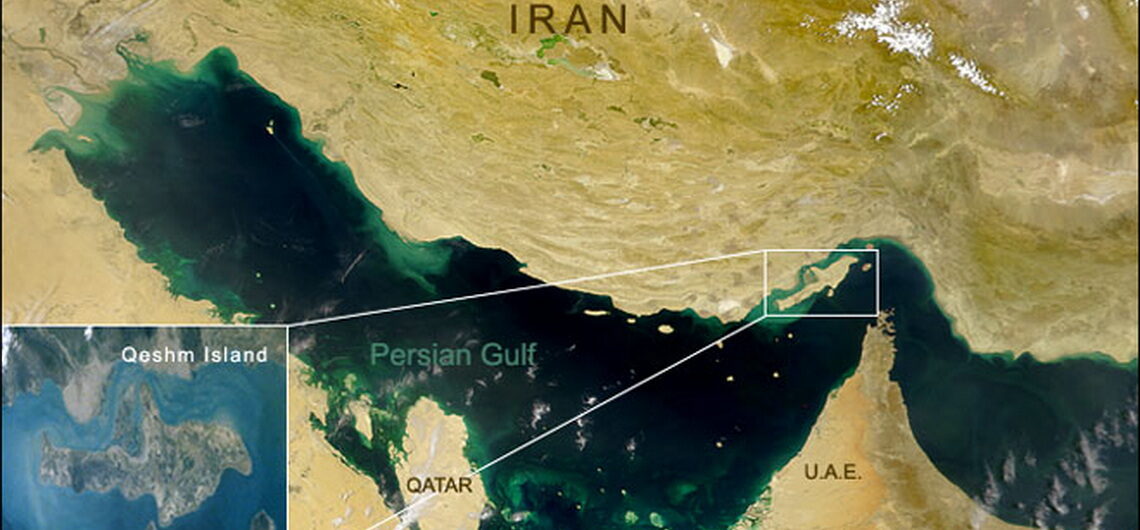
Qeshm Island in Iran Qeshm Island, in Hormozgan province, Iran, is the largest island in the waters of the Persian Gulf. We have always heard a lot about the unique beauties and features of this island. The countless attractions have made Qeshm one of the most important tourist destinations in Iran. It is located in the Strait of Hormuz and has long belonged to Iran. Its pristine and beautiful nature, together with its history dating back to the Sassanid era, has made this southern island a popular tourist destination for many Iranians and foreign tourists. Qeshm Island has an area of 460 square miles (1,200 square km). The beaches are generally rocky, except for the northwest coast, with its sandy bays and muddy plains. Irregular hills cover most of Qeshm. Several of them are more than 900 feet (270 meters) high, and one of them, Kish Kuh, reaches 1,331 feet (406 meters). Salt is extracted on the southeastern shores and there are springs of naphtha. The island is largely barren, but cereals, vegetables, melons, and dates are grown there. Fishing and weaving are common in this region. Shipbuilding is also one of the oldest indigenous industries of the people of Qeshm. On the 5th of May 2017, Qeshm Island was designated as a UNESCO Global Geopark. This Geopark has the shape of a dolphin. The world's longest salt cave is also situated on the island. It is 6,600 meters long. In addition to the formation of salt and complex, other sedimentary formations are located in various anticline structures on it. The island has rich wildlife; various birds, reptiles, dolphins, and turtles can be seen in this area. In Qeshm Island, zoo geographical areas of Palearctic and Oriental, and phytogeographical areas of Afro-tropical, Oriental and Eurasian face each
Qeshm Island in Iran Qeshm Island, in Hormozgan province, Iran, is the largest island in the waters of the Persian Gulf. We have always heard a lot about the unique beauties and features of this island. The countless attractions have made Qeshm one of the most important tourist destinations in Iran. It is located in
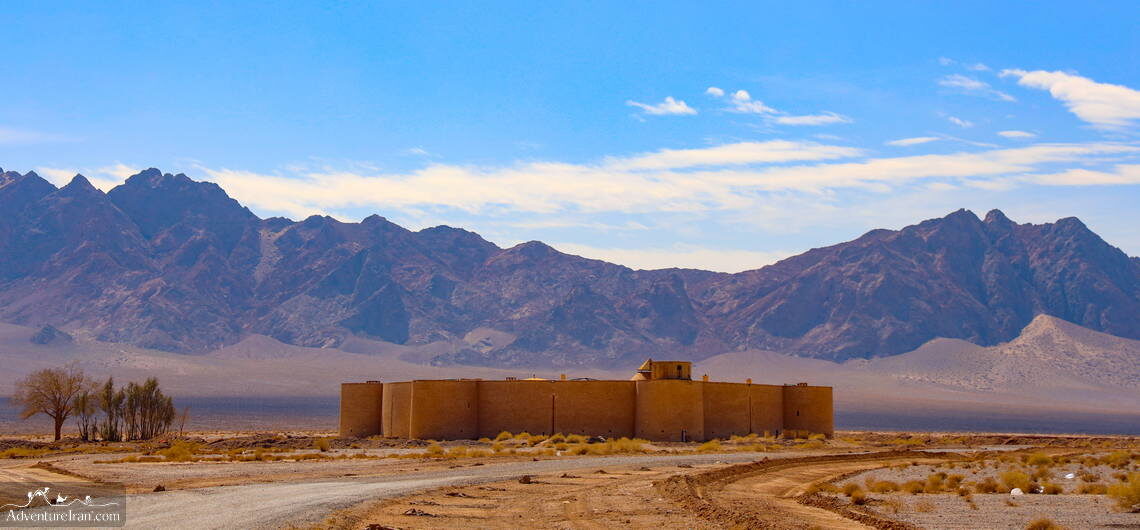
Iran Caravanserais Iran Caravanserais (UNESCO) were built during the Safavid dynasty on the Silk Road route of Persia. These were essential to service the needs of the influx of traders and travelers passing through. At that time, the country was massive and called Persia. During that dynasty, Iran had a main role in the Silk Road route from China to East Europe. The foremost purpose of a caravanserai on the ancient Silk Road was for accommodation and as a gathering place for caravans and travelers. A “Caravanserai” is basically a roadside dwelling similar to an “inn”, built to shelter men, camels, animals such as goats, goods, and other possessions of the caravans. This is how society during that period understood the usage of the caravanserai. Caravanserai was particularly valuable as a link to other trade routes along the former Silk Road. In addition, there was also a large network of caravanserais built along the whole trade path in the Middle East and Central Asia. Throughout the history of the various Muslim kingdoms in India, Asia, North Africa, and South-Eastern Europe, this network, most notably along the Silk Road, was vital to support the flow of information, commerce, pilgrims, and travelers from the 9th until the 19th centuries. The word caravanserai is a Westernized form of the Persian word, which merges “caravan” with “sarayi” or “serai”. This means a palace, a dwelling, or enclosed courts. It is also known as caravansary. “Caravan” has a similar meaning in English, which refers to a troop of soldiers, merchants, pilgrims, or other travelers participating in a long-distance journey. Although caravanserais were constructed in a vast geographical region covering Central Asia, Asia, India, Middle East, North Africa, and South-Eastern Europe, a substantial number of them were also located in the Middle East, Central
Iran Caravanserais Iran Caravanserais (UNESCO) were built during the Safavid dynasty on the Silk Road route of Persia. These were essential to service the needs of the influx of traders and travelers passing through. At that time, the country was massive and called Persia. During that dynasty, Iran had a main role in the
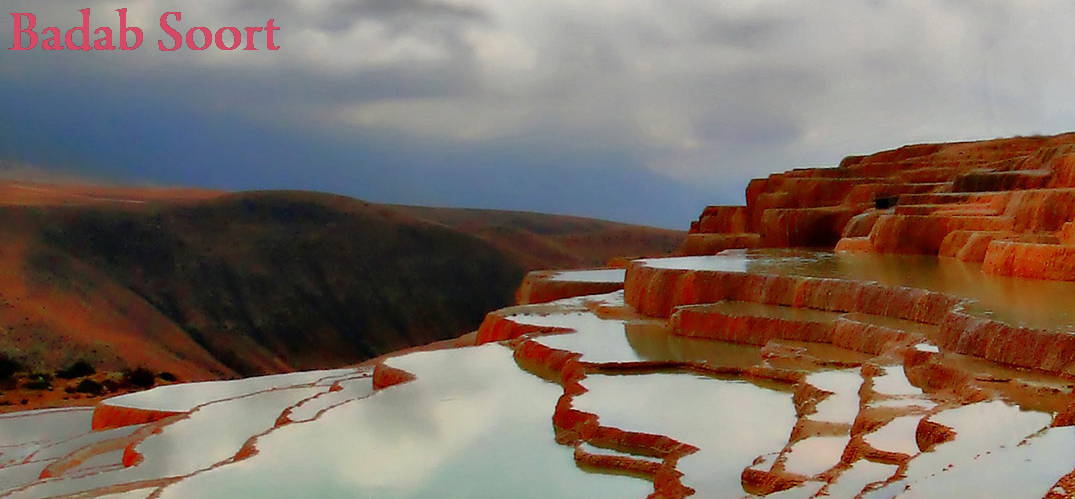
Badab-e Surt Natural Springs in Iran Consider a stepped spring, surrounded by wild trees and barberry bushes, where the color and fragrance of the water on each step is different from the previous one. Looking down from above the spring, you will see forests of coniferous trees. Isn't that fascinating? If you haven't guessed so far that we are talking about Badab-e Surt, you must read this article to the end to find out why this impressive and strange spring has been registered on the Iran National Heritage List. Mazandaran province in Iran is located between the magnificent Caspian Sea and the Alborz Mountain range. Due to its unique beauty and pleasant weather, this province hosts millions of Iranian and foreign tourists every year. Badab-e Surt Spring, Mazandaran province, is south of Sari city, and west of Orost village. It is considered to be one of the most breathtaking and unbelievable spectacles in the area. It is situated at a height of 1,841 meters above sea level. It is commonly assumed that the spring was formed during the Paleocene Era, simultaneously with the most recent folds in the Alborz Mountain range. Badab is the Persian combination of two words; Bad means ‘gas’ and ab means ‘water’. So, Badab means ‘gassed water’ which implies that the spring water is actually carbonated mineral water. Surt is a former name of the nearby Orost village. The Persian word means intensity. Badab-e Surt was created a few thousand years ago by a variety of stepped travertine terrace formations. Over the years, the running water from the two very warm mineral springs cooled and placed carbonate minerals on the mountainside. The Badab-e Surt Spring in Iran is made up of two detached springs with thoroughly contrasting colored and scented water. The first
Badab-e Surt Natural Springs in Iran Consider a stepped spring, surrounded by wild trees and barberry bushes, where the color and fragrance of the water on each step is different from the previous one. Looking down from above the spring, you will see forests of coniferous trees. Isn’t that fascinating? If you haven’t guessed
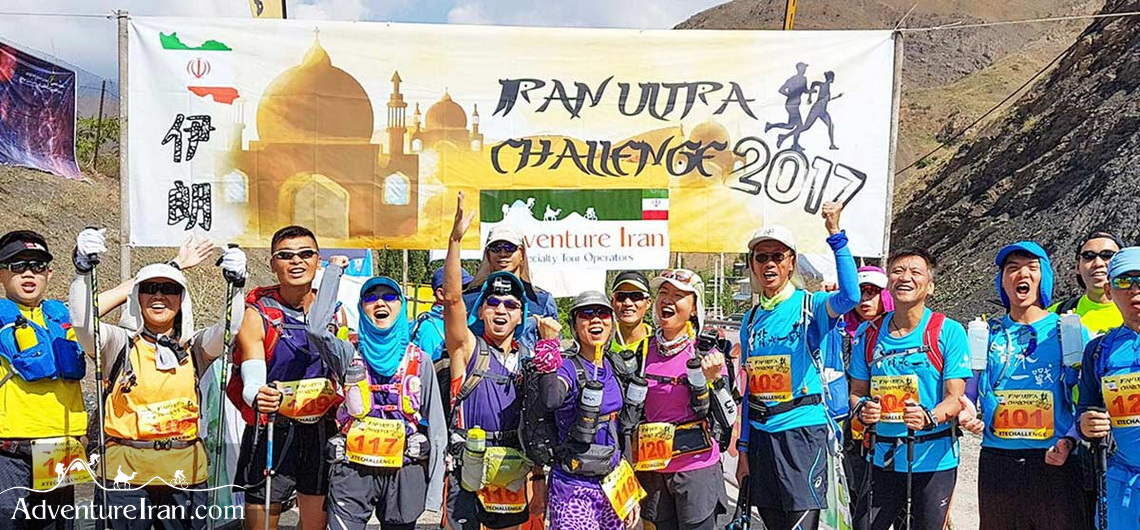
Ultra Trail Mount Damavand in Iran UTMD (Ultra Trail Mount Damavand) is an Ultra Trail Marathon in Iran conducted in the Lar National Park and on the west side of volcanic Mt Damavand (5,610 meters, the highest mountain in the Middle East). Adventure Iran started organizing this approximately 100 km race in 2017. It is an annual summer competition, with many runners from all over the world participating in this contest, simultaneously enjoying the race itself, and the experience of being in the foothills of Damavand Mountain. The race takes place in the beautiful Lar National Park, run by the Mountaineering Federation of Iran. This is a race for everyone: UTMD 100 km, PLP 61 km, and PGP 22 km. Both the start point and finish point are at the Polour Mountain Federation hut. The race route covers some of the most stunning scenery of Lar National Park and Mt. Damavand, including remote and unspoiled grasslands, nature trails, Lar reservoir, and exquisite steep hills. This is a unique, unparalleled, and challenging running competition for trail running enthusiasts. It is also a great opportunity to participate in an unforgettable event. The race has a website that is organized by Adventure Iran and other co-organizers since 2018. https://www.adventureiran.com/lar-national-park/
Ultra Trail Mount Damavand in Iran UTMD (Ultra Trail Mount Damavand) is an Ultra Trail Marathon in Iran conducted in the Lar National Park and on the west side of volcanic Mt Damavand (5,610 meters, the highest mountain in the Middle East). Adventure Iran started organizing this approximately 100 km race in 2017. It
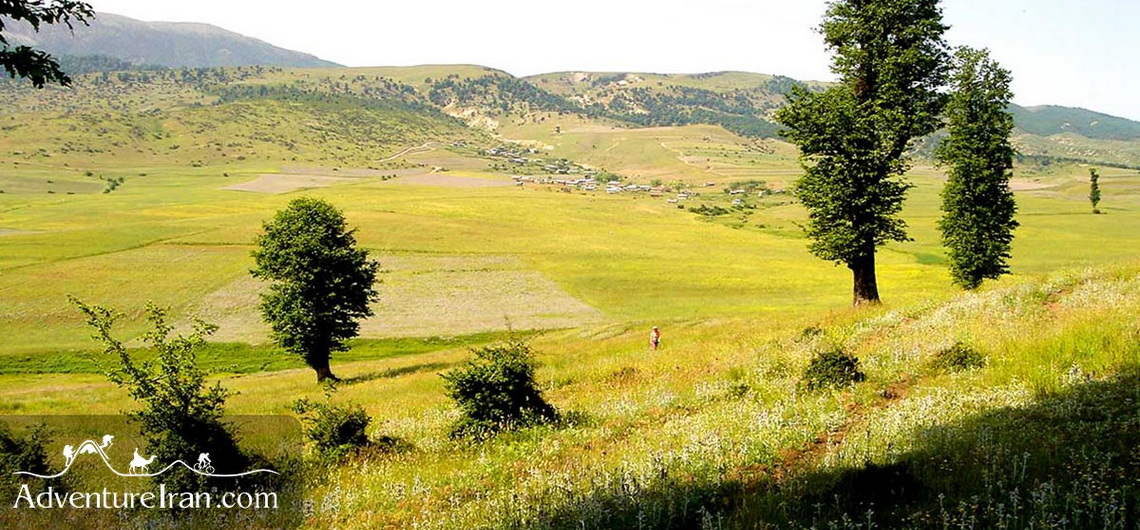
Jahan Nama Protected Area A small village of Jahan Nama by the Caspian Sea gave the name to the vast Jahan Nama Protected Area in the Golestan Province in Iran. With rich wildlife, including wild sheep and goats, wolfs, panthers, bears, weasels, owls, eagles, cuckoos, woodpeckers, and porcupines, Jahan Nama is also famous for its variety of plants and trees, including barberry, Sorkhdar, Kolah-e Mir Hassan, Bolandmaza Namdar, Borage Cowslip, Ras, Darmaneh, and many others. During the studies performed here between 1999 and 2008, 1,350 species were identified, including 607 vascular plant species from 85 families. There are also many seasonal birds in the park and a lot of rivers and springs. The highlands of Jahannama are the most suitable habitats for various hunting birds such as the golden eagles, as well as large partridges. Jahan Nama Park, with an area of about 38 ha, is the largest protected area in Mazandaran province, after Golestan National Park. It is part of the Hyrcanian forests (UNESCO), which are among the oldest forests in the world. The beauties and attractions of the Jahan Nama region are not only limited to its rich flora and fauna and intact nature. The 35-meter Radkan Tower, also known as Mil Radkan, is one of the main historical attractions in this area. It is a cylindrical brick tower dating back to the 13th century. Ziarat Waterfall is another natural attraction in the northeast of the region, located about 5km from Ziarat Village. The village is one of the most beautiful tourist villages in Iran. The pristine nature of the park makes it an ideal hiking destination and we, at Adventure Iran, have created a long hiking trail, which starts south of the Great Gorgan Wall and stretches all the way to the Jahan Nama National Park.
Jahan Nama Protected Area A small village of Jahan Nama by the Caspian Sea gave the name to the vast Jahan Nama Protected Area in the Golestan Province in Iran. With rich wildlife, including wild sheep and goats, wolfs, panthers, bears, weasels, owls, eagles, cuckoos, woodpeckers, and porcupines, Jahan Nama is also famous for its variety
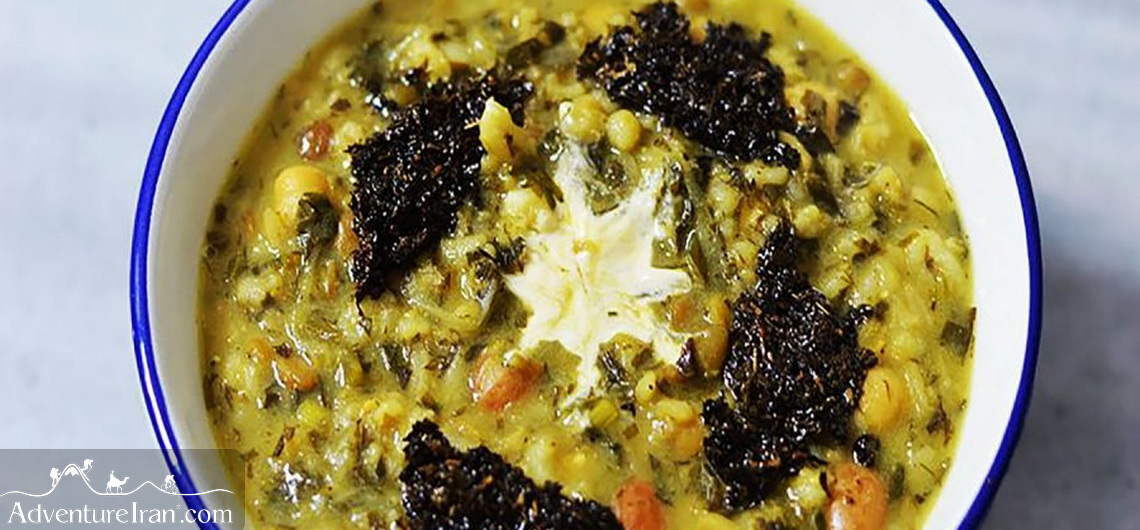
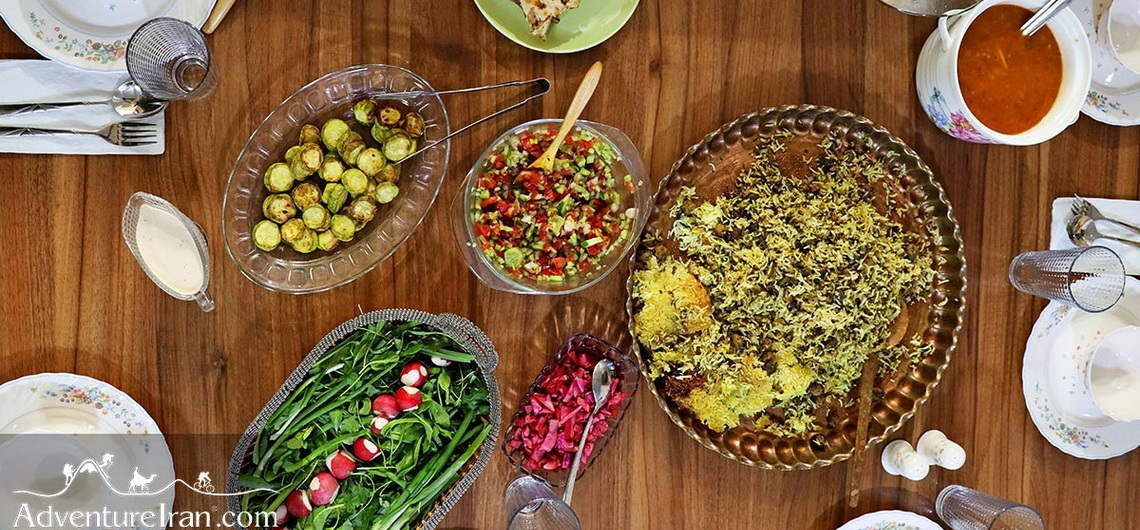
Ashe Jo, Traditional Persian Food Iran is a vast country with amazing diversity in geographical features, climatic conditions, cultural elements, and groups of ethnicity. Each region enjoys its unique customs, languages or dialects, traditions, clothes, and cuisine. The common feature in all regions is that Iranian cuisine is not just about mixing the ingredients, but also about how to mix which ingredients in what quantity so that the final product looks like an arty healthy meal. One of the most popular foods among all regions is Aush or Ash (the Persian style of soup). Persian food includes a wide range of traditional soups such as Ashe Jo (Barley Soup) which is one of the most popular soups served at most Persian restaurants and ceremonies. Here, you will learn how to make Ashe Jo in Persian style. If you are interested in Persian Food Tours, do not hesitate to contact us. Ashe Jo (Bean, chickpea, and herb soup), an Iranian dish Ingredients (for 5 to 6 people): 4 tablespoons of dried chickpeas 3 tablespoons of dried red beans (the ones used in Iran have small white marks) 3 tablespoons of lentils 4 tablespoons of oatmeal 4 tablespoons of wheat 3 tablespoons of porridge mix 500g mixture of fresh herbs: coriander, parsley, chives, dill, and spinach sprouts 1 tablespoon of dried mint 6 chicken legs or chicken stock 2 tablespoons of oil 2 onions 4 cloves of garlic 3 or 4 tablespoons of dried onions (to serve) Kashk * Salt & pepper Recipe: First, the day before, soak overnight the chickpeas and beans. After peeling and chopping the onions, cook them in a skillet until soft. Then, mix all the ingredients, add the stock to cover, and cook gently for about 30 minutes. Finally, just before serving, put on the
Ashe Jo, Traditional Persian Food Iran is a vast country with amazing diversity in geographical features, climatic conditions, cultural elements, and groups of ethnicity. Each region enjoys its unique customs, languages or dialects, traditions, clothes, and cuisine. The common feature in all regions is that Iranian cuisine is not just about mixing the ingredients, but
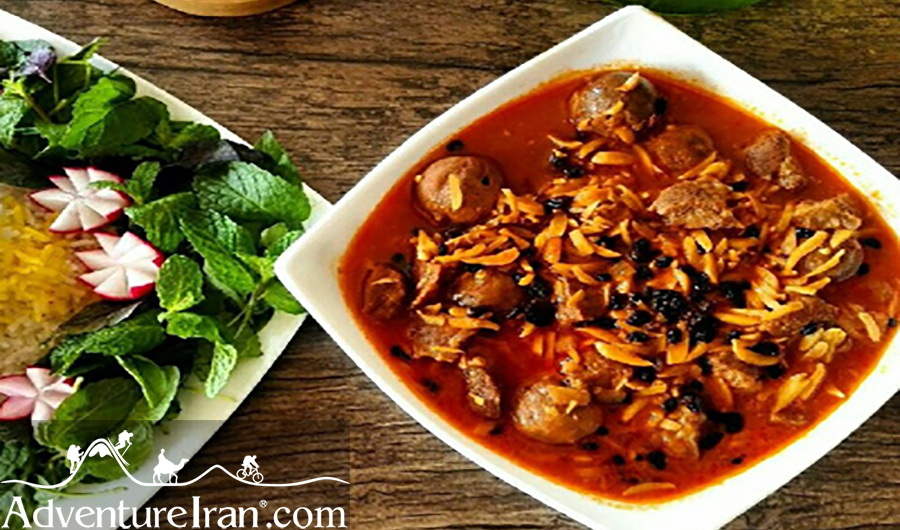
Khoresht-e Khalal, an Iranian Food Khoresht-e Khalal Badam or Silver Almond Stew is a delicious and fragrant Iranian food that originates from Kermanshah province, west of Iran. It is usually prepared in formal ceremonies, but you can easily order it in some restaurants too. So, if a Kermanshahi invited you to Khorest-e Khalal for lunch or dinner, be aware that you have been their VIP! Let's learn how to make this mouthwatering Persian food. A stew of flaked and crushed almonds A dish from the Kermanshah region Ingredients: (For 5 to 6 people) 1 large onion or 2 small 1kg of braising beef cut in pieces (150 g per person) 100 g of crushed almonds soaked overnight in rose water 1 pinch of saffron steeped in water with an ice cube (about 5 cl of water) 100 g of barberries steeped for a few minutes in cold water 1 tablespoon of tomato concentrate 5 cardamom pods 1 tablespoon of dried crushed rose buds 6 dried lemons steeped in cold water for a few minutes 2 tablespoons of sesame oil with a little water How to make it: Peel and chop finely the onions. Put them into a heavy skillet with the cold sesame oil and water. Cook gently until soft. Add the pieces of meat, the drained barberries, the almonds with the rose water, the cardamom, the rose buds, and 20 cl of water. Cover with water. Add the tomato concentrate and 3 tablespoons for the saffron-water mixture. Cook gently for 4 hours or 1h30 in a pressure cooker. Add salt and cook for another 15 minutes Serve with rice cooked in the Iranian style. * You can also make this tasty bright-color stew with poultry such as chicken according to your taste. If you are vegetarian, you
Khoresht-e Khalal, an Iranian Food Khoresht-e Khalal Badam or Silver Almond Stew is a delicious and fragrant Iranian food that originates from Kermanshah province, west of Iran. It is usually prepared in formal ceremonies, but you can easily order it in some restaurants too. So, if a Kermanshahi invited you to Khorest-e Khalal for lunch
Iranian Foods and Persian Cuisine Iran has numerous ethnic groups and tribes in its vast and historic land. Each ethnicity and tribe have its own traditional food according to geography and climate. The type of Iranian foods and Persian cuisine in the hot regions such as the Iran Deserts is very different from the northwest of Iran with its cold temperature. It also varies from the vegetarian food of the Caspian Sea to the spicy seafood of the Persian Gulf. The idea behind these distinct Persian dishes is not only to provide an endless variety of tasty recipes but, more importantly, for the food to have nourishing properties, using special herbs, to ensure a healthy body. To achieve this, it is vital to understand how traditional food was selected to suit the varying climatic conditions. The out-of-the-ordinary delicious Persian cuisine, combined with the colors of Iranian food, is for us the art of cooking. In our tradition, which goes back centuries, the hot and cold nature of the body and its temperament were taken into consideration when it was determined what to eat and where. This was to control the balance of this system. The ingredients, the root of everything we eat, are essential to keep our bodies from preventing illnesses rather than curing them. We are thankful and proud of our Persian medicine, developed over two thousand years, which is included in our every meal. In Iran, we call it ‘Iranian Traditional Medicine’, where some of our universities offer various programs about this ‘traditional medical science’. Not only, but also, this history of the hot and cold nature of our bodies has been followed by other traditions of medical science such as the Chinese, Greeks, Romans, etc. ‘Avicenna’ was an outstanding and highly admired Persian scientist who was and
Iranian Foods and Persian Cuisine Iran has numerous ethnic groups and tribes in its vast and historic land. Each ethnicity and tribe have its own traditional food according to geography and climate. The type of Iranian foods and Persian cuisine in the hot regions such as the Iran Deserts is very different from the northwest
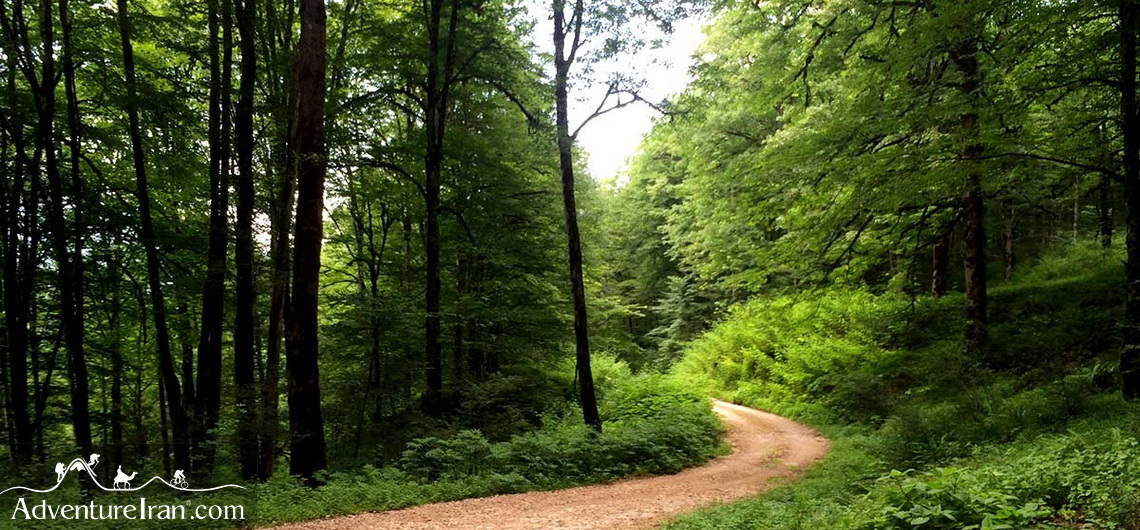
Hyrcanian Forests in Iran (UNESCO) Iran has a large number of national parks and protected areas, including two Natural UNESCO World Heritage Sites, one of which is the Caspian Hyrcanian Forests. Located in northern Iran along the southern coast of the Caspian Sea and the northern slopes of the Alborz Mountains, the forest covers an area of 850km and, from a historical perspective, dates back to 25 to 50 million years ago. Hyrcanian Forests in Iran were registered as the second natural site of Iran on UNESCO World Heritage List in 2019. The forests are named after the ancient region of Hyrcania, a historical region extended from southeast of the Caspian Sea in Iran and Turkmenistan. Hyrcanian Forest represent one of the planet’s oldest and most ecologically significant temperate forests. These lush woodlands of Hyrcanian forests survived the Ice Age, creating a living museum of biodiversity. Hyrcanian forests are home to 180 species of birds including Steppe Eagle, European Turtle Dove, Eastern Imperial Eagle, and Caspian Tit, as well as 58 species of mammals, including Panthera pardus tulliana (Persian leopard), and Wild Goat, while they only cover 7% of the country. The forest is extended across three Provinces of Gilan, Mazandaran, and Golestan, and part of that covers the southeast part of the country of Azerbaijan. One of the habitats of this rare species is Jahan Nama protected area, that Adventure Iran’s “The Red Snake Wall and the Turkoman Plain” tour lies through. Why Are They Unique? Primeval Ecosystem: Home to 1,800+ plant species (including Persian ironwood and Caspian beech) and rare wildlife like the Caspian tiger (extinct) and Persian leopard (critically endangered). Climate Resilience: Their layered canopies and humidity trap moisture, forming a "green belt" that cools the region. Cultural Ties: Local communities, like the
Hyrcanian Forests in Iran (UNESCO) Iran has a large number of national parks and protected areas, including two Natural UNESCO World Heritage Sites, one of which is the Caspian Hyrcanian Forests. Located in northern Iran along the southern coast of the Caspian Sea and the northern slopes of the Alborz Mountains, the forest covers