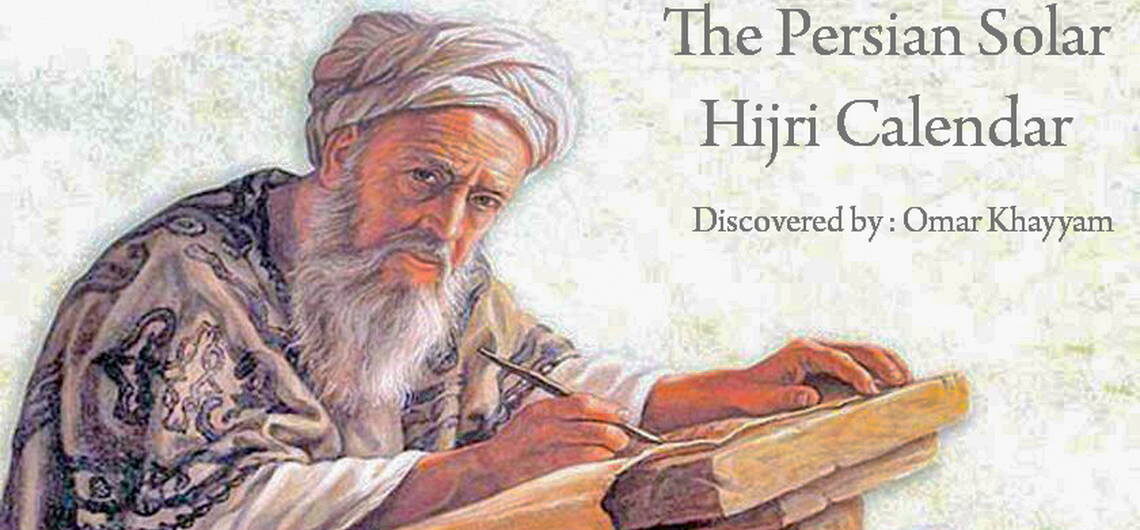
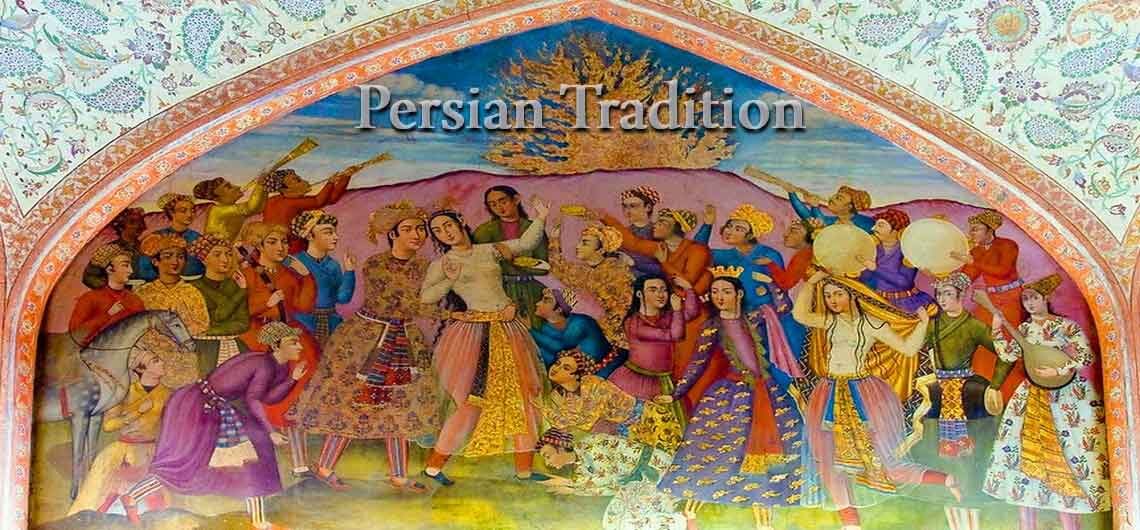
Iranian Ancient holidays versus the Muslim holidays Iran has 22 days of official national holidays which are marked in our Shamshi calendar and more unofficial holidays that most domestic travelers use for their holiday time. Some of the occasions date back to Ancient Persia to the Zoroastrian important events such as Persian New Year (Nowrooz) while many of them are related to the religious holidays which are mostly used in Shiite Muslim countries. Some also commemorate contemporary historical events. The ancient Iranian holidays are fixed every year on the Persian calendar because they are considered on the Solar Hijri calendar “Shamsi Calendar” with 365 days. So you could mark it on your calendar “Gregorian calendar” as a fixed date for Iran’s holiday. But the Muslim religious holidays of Iran do not have a fixed date in the Persian Calendar. Because those dates sets on the Lunar calendar which is mostly used in the Islamic Shia countries. The number of days on this calendar is between 354 to 355 days. This makes about a 10-11 days difference to our Persian calendar. So the national religious holidays of Iran move forward between 10-11 days every year and it makes it complicated for those who would like to travel to Iran or for travel agencies, tour operators, and other companies who work with Iran. Below is the list of Iranian Public holidays and some details: Index Event Days Local Name Remarks Type of Calendar 1 Persian New Year 4 Nowruz Celebrating Iranian Ancient New Year Solar 2 Nature Day 1 Sizdah Be-dar Celebrating the rebirth of nature after Nowruz Solar 3 Islamic Revolution Day 1 Dahe-ye Fajr (celebrating Iran’s Islamic revolution for 10 days) contemporary historical events Solar 4 The demise of Imam Khomeini 1 Rehlat-e Eman contemporary historical events Solar 5 15
Iranian Ancient holidays versus the Muslim holidays Iran has 22 days of official national holidays which are marked in our Shamshi calendar and more unofficial holidays that most domestic travelers use for their holiday time. Some of the occasions date back to Ancient Persia to the Zoroastrian important events such as Persian New Year (Nowrooz)
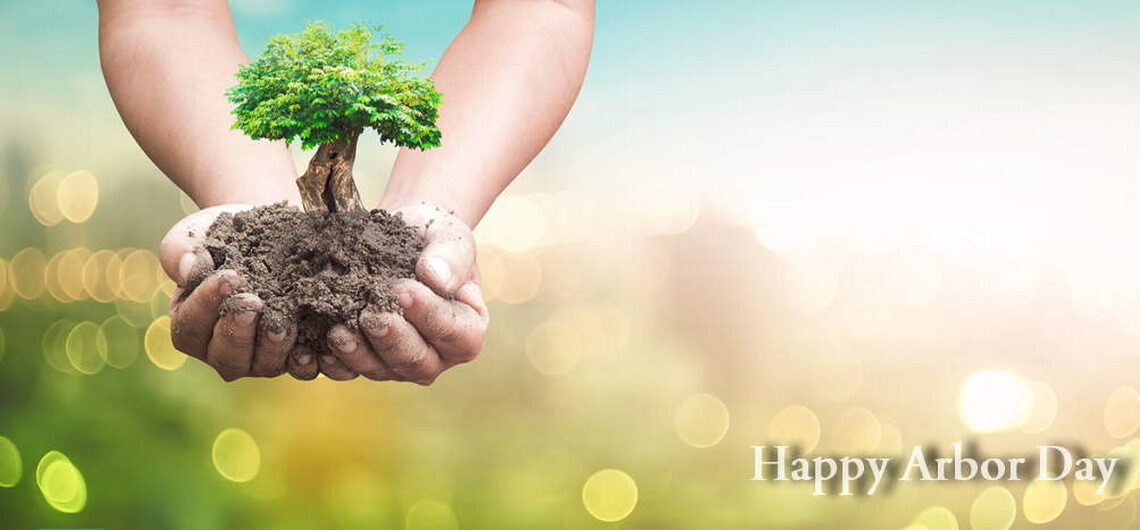
The Arbor Day The tree is the embodiment of beauty and life and one of the most magnificent and fruitful blessings of God that fulfills an important part of human needs. In ancient times Iranians had many substantial and special celebrations. One of these celebrations was planting trees on Arbor Day. Every year people were planting young seedlings in gardens and forests, respecting the soil and agriculture. This tradition has been passed down through the generations. Even now, Iranians are celebrating "Arbor Day" together and planting trees. Iranians welcome spring by donating a seedling to nature. Individuals are encouraged to plant trees on Arbor Day. In Iran, 5-12 March has been designated as "Natural Resources Week". "Arbor Day ", which falls on 5th March is the first day of this week. In other countries, the day and date change, depending on its climate, when a time is chosen so the tree can grow. During this week in Iran, different kinds of seedlings are distributed among people by the municipality, and tree planting techniques are taught to those interested. On this day you will be given free seedlings in front of most parks, green spaces, and other parts of the city. Planting trees and their maintenance have always been important. In general, trees are a large part of the natural and national resources of any country and belong to everyone. Every single person in the community breathes the delicate air that trees produce. In addition, the role of trees in preventing floods should never be overlooked. These days, because of industrialization, trees play other essential roles in human life. Trees provide products such as furniture, stationery, timber, and thousands of other commodities. Another significant role that trees play in human life is their therapeutic properties. For centuries, plants have played a
The Arbor Day The tree is the embodiment of beauty and life and one of the most magnificent and fruitful blessings of God that fulfills an important part of human needs. In ancient times Iranians had many substantial and special celebrations. One of these celebrations was planting trees on Arbor Day. Every year people were
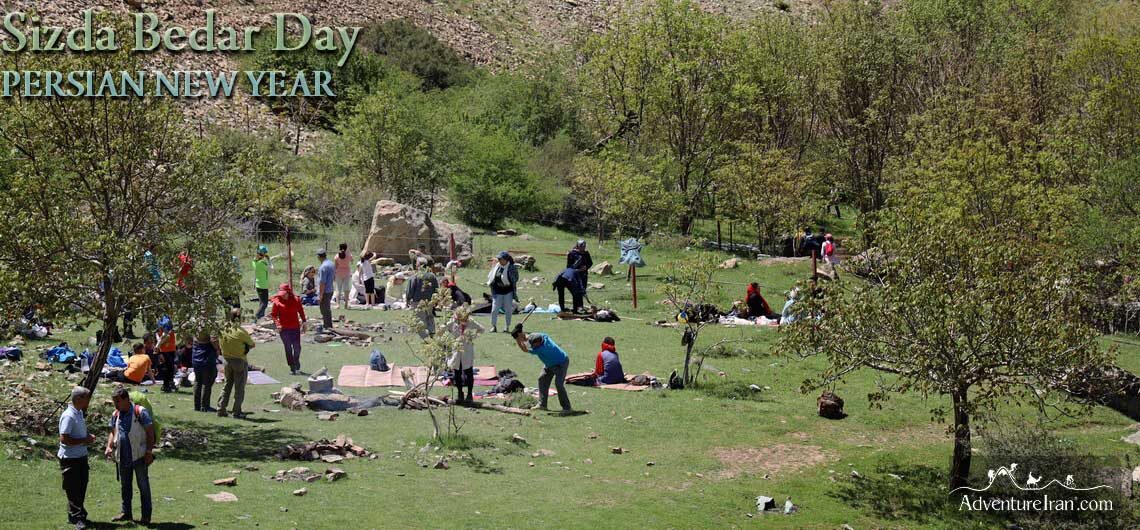
Sizdah Be-dar Day Sizdah Be-dar is the thirteenth day of Farvardin (the first month of the Iranian calendar) and is one of the New Year’s festivals. In Iran’s official calendar, this day is designated as Nature Day and is a holiday. Some people believe that Sizdah Be-dar day has an ominous feel about it, so they prefer to leave their houses that day to spend time outdoors in natural surroundings. However, there is no historical and credible narrative to prove that the ancient Iranians had this view. After twelve days of celebration, Ancient Iranians would, on the thirteenth day of Nowruz, considered an auspicious day, go outside to appreciate nature and rejoice. By celebrating this day, they ended the Nowruz period. Sizdah Be-dar Traditions People prepare everything for Sizdah Be-dar a day before. For Aush Reshteh, all beans and grains get cooked the night before. In some parts of Iran, people believe that food must be cooked with wild herbs on this day. For example, one of the Sizdar Be-dar rituals in Khorasan province is cooking a kind of Aush with wild native herbs. Samanu or halva should also have been on the table on Sizdah Be-dar. Kabab is the other popular food that can be seen on almost every occasion and Sizdah Be-dar is no exception. Before lunch, we eat lettuce with Sekanjabin, (the oldest Iranian drink which is made of honey and vinegar). Usually, nuts are eaten in the afternoon. Playing in a group is the other delightful part of this day. Playing with the family brings joy and vitality, which is an important part of this day's program. Some examples of these games are pantomime, kabaddi, dodgeball, kite flying, snakes and ladders, and football.Knotting the greenery is another tradition of this day. It is common for
Sizdah Be-dar Day Sizdah Be-dar is the thirteenth day of Farvardin (the first month of the Iranian calendar) and is one of the New Year’s festivals. In Iran’s official calendar, this day is designated as Nature Day and is a holiday. Some people believe that Sizdah Be-dar day has an ominous feel about it,
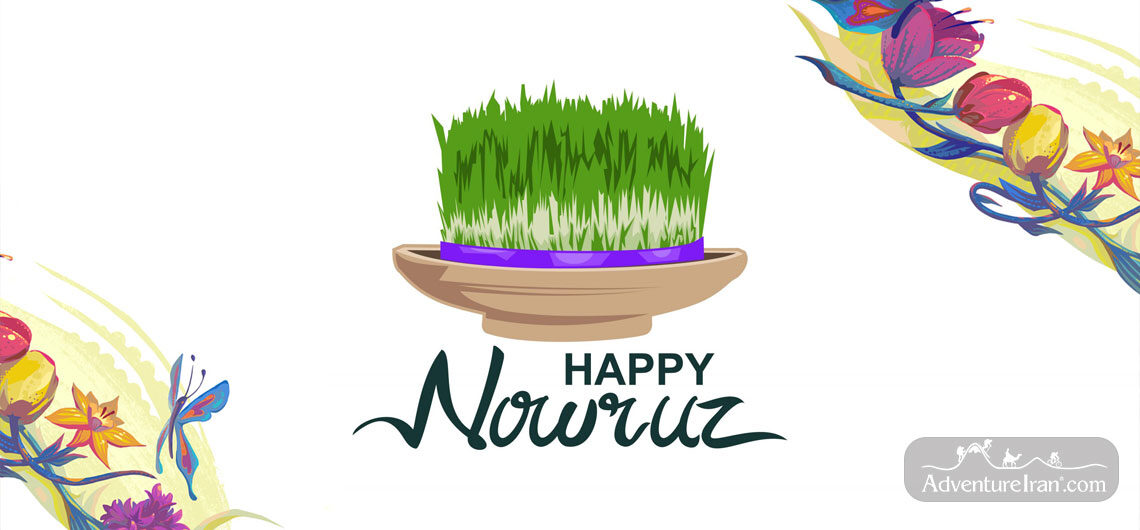
Happy Nowruz 1401 From our team in Adventure Iran we wish you a very happy Nowruz and also we hope you a joyful and adventurous New Year. Nowruz is one of the oldest and most important traditions in Iranian culture. We keep this holiday in high regard. Chaharshanbe Suri, an Iranian event taking place on the last Tuesday of the year, was just a few days ago, we had many fires to jump from with many fireworks to spare. The streets are full of sound on this night and everybody is celebrating this ancient occasion. During this holiday many Iranians take a long vacation to their nearby cities, so traveling at this time can be a curse and a blessing. Many people plan for this week-long (for some people 2 weeks long) vacation in advance. They usually go visit their relatives in other cities or plan a sightseeing trip for themselves. People have started their journeys and the trains and busses are mostly full. Haft-sin tables are set and everybody is counting down the hours to the New Year. because of the calculations of when the Sun crosses the celestial equator and equalizes night and day, the time of the new year is different every year. This year it is at night around 7 P.M local time. This is a time for families to gather around and spend time with each other, a time for friends to reconcile and a time to put the winter behind us and start a New Year with many blossoms on trees.
Happy Nowruz 1401 From our team in Adventure Iran we wish you a very happy Nowruz and also we hope you a joyful and adventurous New Year. Nowruz is one of the oldest and most important traditions in Iranian culture. We keep this holiday in high regard. Chaharshanbe Suri, an Iranian event taking place on
Chaharshanbe Suri Like other ancient nations, Iranians have their festivals and traditions. One of these festivities is called Chaharshanbe Suri. This impressive festival is one of the most popular celebrations among Iranians. Chaharshanbeh Suri goes back 1700 years BC and is held on the last Wednesday before Nowrouz, (New Year). To be more precise, this festival feasts on the evening of the last Tuesday of the year and is a mixture of great and little traditions. Chaharshanbeh Suri is also the fire dance to welcome spring. "Chaharshanbeh Souri" gets made from two words. ،The first is a day of the week, (Chaharshanbe is Wednesday), and the other, (Suri), means redness. Fire has been respected not only in ancient Iran but also among Indians, Europeans, and other cultures. The ancient Iranians believed in the power of purification by fire. This belief was so strong that to prove a person's innocence of any wrongdoing, the person had to cross a blazing fire. An example of this is Siavash's character in the Shahnameh, (the epic poem), by Ferdowsi, (the Persian poet and author), who passed through fire to prove his innocence. The most important and common rituals related to Chaharshanbe Suri are as follows: Jumping over the fire The main tradition in Chaharshanbe Suri is to make a bonfire, set fire to it in the evening and read the poem "My yellowness for you, your redness for me" (in Persian «زردی من از تو، سرخی تو از من») when jumping over it. This poem has been a prayer that Iranians have long been singing to fire, asking for it to put an end to diseases, boredom, and the worries of the past year to start the New Year afresh with happiness and vitality. Kuzeh Shekani (Breaking the Jug) In many cities,
Chaharshanbe Suri Like other ancient nations, Iranians have their festivals and traditions. One of these festivities is called Chaharshanbe Suri. This impressive festival is one of the most popular celebrations among Iranians. Chaharshanbeh Suri goes back 1700 years BC and is held on the last Wednesday before Nowrouz, (New Year). To be more precise, this
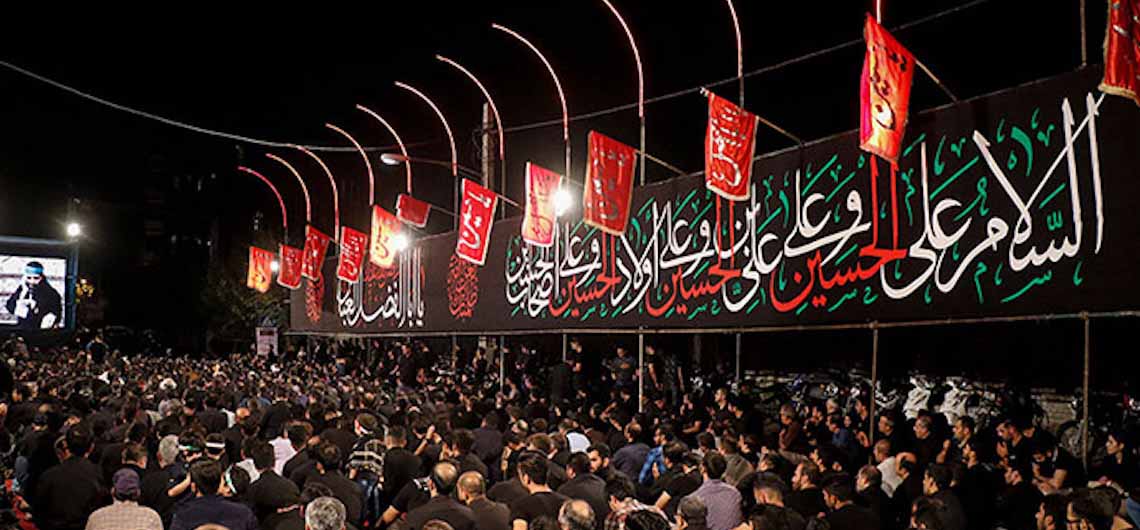
Muharram in Iran The month of Muharram is important in the Hijri Calendar (Islamic calendar) and a significant one in the Iranian culture. This is a month full of key historical events, especially the 9th –Tasu’a- and the 10th –Ashura- are acknowledged yearly by many people in the world. These two days hold many memories for Iranians throughout their life. So, Muharram in Iran is annually commemorated by Iranians. As a constant for many years, they have developed a lot of traditions, customs, and ceremonies from it in various forms. History of Tasu’a and Ashura Imam Husain (the 3rd imam of Shia Muslims) was the second son of Imam Ali (the first imam of Shia Muslims) who due to the opposition to the Hasan–Muawiya treaty conflicted with Yazid (the son of Muawiya). During his travel to Kufa (a city near Mecca) he and most of his family died in battle due to him not pledging alliance to Yazid. Husain's suffering and death became a symbol of sacrifice in the struggle for right against wrong, and justice and truth against injustice and falsehood in Shi’a history, and as a result, the days of his and his family’s deaths are mourned every year by Shi’a’s around the world, especially in Iran. Muharram, Tasu’a and Ashura in Iran This is a time that most Tekyehs (sometimes they are called Heiats, Hosseiniye, Zeinabiye, etc.) start working in Iran, these are places for people of religion to gather in, socialize, mourn or celebrate events and do charity work for the local community. They are managed privately by the people and every neighborhood has one for itself (except some big ones in large cities like Tehran that have branches throughout the city), they are busy with the preparation the days before the start of the month.
Muharram in Iran The month of Muharram is important in the Hijri Calendar (Islamic calendar) and a significant one in the Iranian culture. This is a month full of key historical events, especially the 9th –Tasu’a- and the 10th –Ashura- are acknowledged yearly by many people in the world. These two days hold many memories
This year was full of surprises in every imaginable way. With its ups and downs we managed to push through to another year, it couldn’t be done without your help and we wouldn’t want it any other way. Happy New Year to you, may you have a year full of success, new experiences and joyful moments. We wish you a year full of travel and memorable moments.
This year was full of surprises in every imaginable way. With its ups and downs we managed to push through to another year, it couldn’t be done without your help and we wouldn’t want it any other way. Happy New Year to you, may you have a year full of success, new experiences and joyful
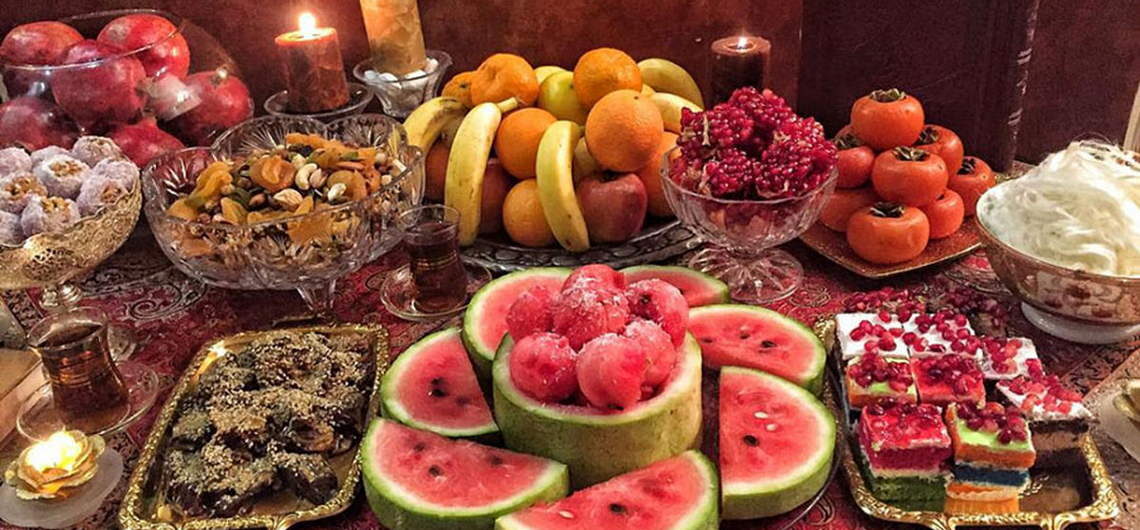
Yalda Night Yalda is the traditional Iranian celebration of the winter solstice – the longest night of the year. Observed widely throughout Iran’s history stretching back into pre-Zoroastrian times, Yalda Night evolved into a treasured festival bringing the family together and continues to be practiced by Iranians around the world. The ritual symbolizes the rebirth of light following the darkest night, and mythologically speaking, represents a critical moment in the eternal battle of Ahuramazada (light/ virtue/ existence) over Ahriman (dark/ evil/ nonexistence). On this cosmically important night, family members gather together in the home of the family elder (typically grandparents, parents, or great aunts and uncles) to share sweets, red fruits (including pomegranate, watermelon, and persimmon), and a mix of candied and roasted nuts. Sometimes, Persian herbed rice with fish is steamed for dinner. In the old days, fruits were set on a korsi – a low table with a heating source underneath – and the family would huddle under a thick blanket to munch on treats and tell stories. The use of the korsi diminished as modern heating systems became common in Iranian homes, but the feeling of togetherness survives in various forms. Some choose to eschew the traditional ceremony and instead gather with close friends for a music-fueled dance party. Whatever the feast, the one ever-present element is the cherished poetry of Hafez, the 14th-century Iranian poet, and mystic, whose words, even 700 years later, are still revered as a kind of oracle by all generations. Similar to fortune-telling with a side of mysticism, each family member puts their hand on the edge of the book, closes their eyes as they make a wish, and opens up a random page. Every family has a dedicated reader, who interprets the selected poem to suit the details of the wisher’s life. It
Yalda Night Yalda is the traditional Iranian celebration of the winter solstice – the longest night of the year. Observed widely throughout Iran’s history stretching back into pre-Zoroastrian times, Yalda Night evolved into a treasured festival bringing the family together and continues to be practiced by Iranians around the world. The ritual symbolizes the rebirth
Ultra Trail Mount Damavand The video is made of the highlights of our two races in the Junes of 2017 and 2018 . The race was an ultra-trail running through Iran’s famous national park of Lar towards Damavand Mountain which is the highest peak in Iran. Lar is a protected area located in the south west of Damavand and it’s managed by Iran Environmental Organization and needs a permit for entering. It was an international race and people joined us from different countries. The trip starts from Tehran and finishes in Tehran as well. The group slept one night inside the park and a night in the Damavand shelter in the base camp which is located at the south face of Damavand nearby Polour village. It was a combination of running and adventuring in Iran during a three days race. The runners carried a small bag with all of their requirements for the three days and with crossing Lar reveres, passing through the nomadic region of the valley and seeing the local with goats and sheep, hiking in a canyon, sleeping in the nature in the park and the spectacular view of Mt Damavand they were very pleased by the whole thing. Hope you enjoy the video and if you like it subscribe to our channel to see more of the beauty of our country. https://www.youtube.com/watch?v=cq6vTmMu2TI https://www.adventureiran.com/mount-damavand/ https://www.adventureiran.com/lar-national-park/
Ultra Trail Mount Damavand The video is made of the highlights of our two races in the Junes of 2017 and 2018 . The race was an ultra–trail running through Iran’s famous national park of Lar towards Damavand Mountain which is the highest peak in Iran. Lar is a protected area located in the