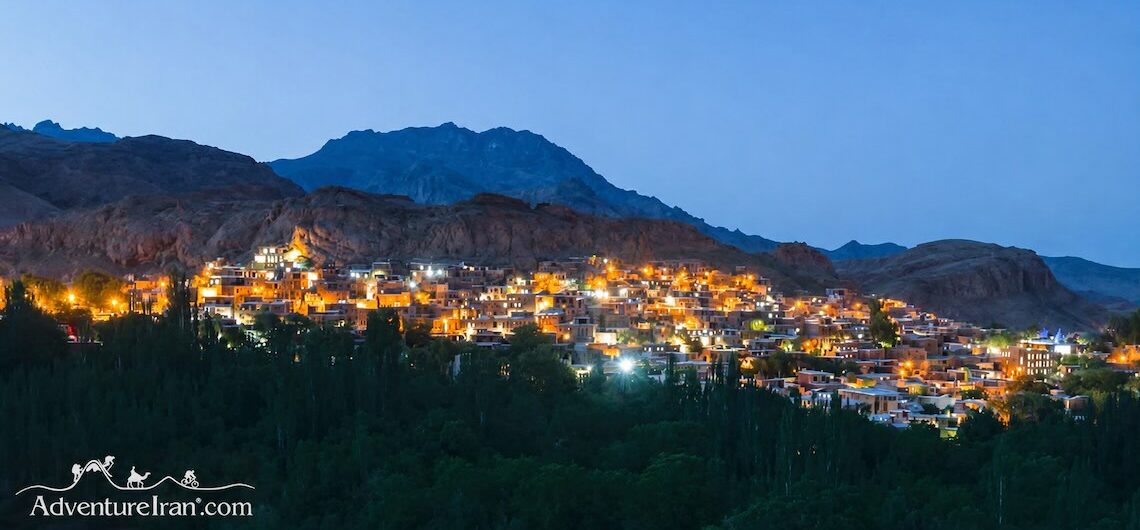
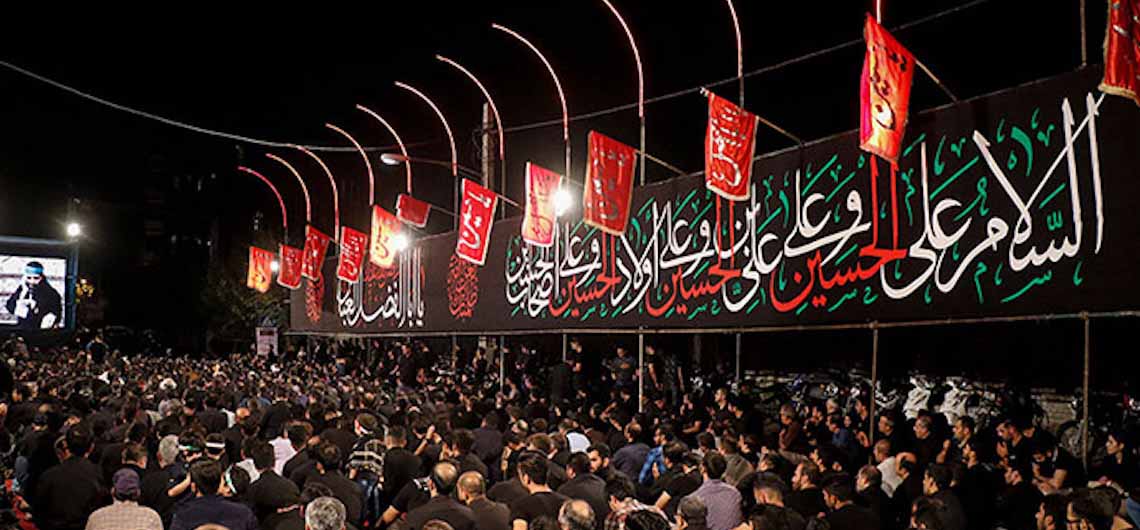
Tasua and Ashura in Abyaneh An Ancient Muharram Tradition in Iran Every year, with the arrival of the Islamic month of Muharram, a very different atmosphere is felt in Iran. Streets and mosques are decorated, especially with black flags appearing in towns and villages. People gather for mourning ceremonies, prayers, religious speeches, and processions. In many parts of the country, families prepare NAZRI—food and drinks are distributed freely as a religious offering—and communities come together to remember one of the most important and emotional events in Islamic history. Many people prepare free tea and Sharbat, a type of syrup well known in Persian Culture- in the streets and villages. For Shia Muslims, Muharram is a month of mourning for Imam Hussein, the grandson of the Prophet Muhammad, and his companions, who were killed in the Battle of Karbala in 680 CE. The tenth day of Muharram, known as Ashura, is the central day of mourning. The day before it, Tasua, is also deeply significant, particularly because of its association with Abbas ibn Ali, the half-brother of Imam Hussein and one of the central figures of the Karbala story. Across Iran, Muharram is observed in many different ways. Some cities are famous for enormous processions, others for Ta'zieh, a traditional form of religious theater, while villages and local communities often preserve their own distinctive rituals. One of the most remarkable places to experience these traditions is the historic mountain village of Abyaneh in central Iran. During Tasua and Ashura, Abyaneh becomes a place of mourning, remembrance, and community. Its narrow red-earth streets fill with traditional ceremonies that have been preserved by generations of villagers. Among them are Jaghjagheh-zani, Nakhl-gardani, Parsa or Porseh, Shada-gardani, Tolu-khani, and Sham-e Ghariban. Together, these ceremonies reveal a side of Iranian culture that cannot be understood simply
Tasua and Ashura in Abyaneh An Ancient Muharram Tradition in Iran Every year, with the arrival of the Islamic month of Muharram, a very different atmosphere is felt in Iran. Streets and mosques are decorated, especially with black flags appearing in towns and villages. People gather for mourning ceremonies, prayers, religious speeches, and processions. In
Muharram in Iran The month of Muharram is important in the Hijri Calendar (Islamic calendar) and a significant one in the Iranian culture. This is a month full of key historical events, especially the 9th –Tasu’a- and the 10th –Ashura- are acknowledged yearly by many people in the world. These two days hold many memories for Iranians throughout their life. So, Muharram in Iran is annually commemorated by Iranians. As a constant for many years, they have developed a lot of traditions, customs, and ceremonies from it in various forms. History of Tasu’a and Ashura Imam Husain (the 3rd imam of Shia Muslims) was the second son of Imam Ali (the first imam of Shia Muslims) who due to the opposition to the Hasan–Muawiya treaty conflicted with Yazid (the son of Muawiya). During his travel to Kufa (a city near Mecca) he and most of his family died in battle due to him not pledging alliance to Yazid. Husain's suffering and death became a symbol of sacrifice in the struggle for right against wrong, and justice and truth against injustice and falsehood in Shi’a history, and as a result, the days of his and his family’s deaths are mourned every year by Shi’a’s around the world, especially in Iran. Muharram, Tasu’a and Ashura in Iran This is a time that most Tekyehs (sometimes they are called Heiats, Hosseiniye, Zeinabiye, etc.) start working in Iran, these are places for people of religion to gather in, socialize, mourn or celebrate events and do charity work for the local community. They are managed privately by the people and every neighborhood has one for itself (except some big ones in large cities like Tehran that have branches throughout the city), they are busy with the preparation the days before the start of the month.
Muharram in Iran The month of Muharram is important in the Hijri Calendar (Islamic calendar) and a significant one in the Iranian culture. This is a month full of key historical events, especially the 9th –Tasu’a- and the 10th –Ashura- are acknowledged yearly by many people in the world. These two days hold many memories