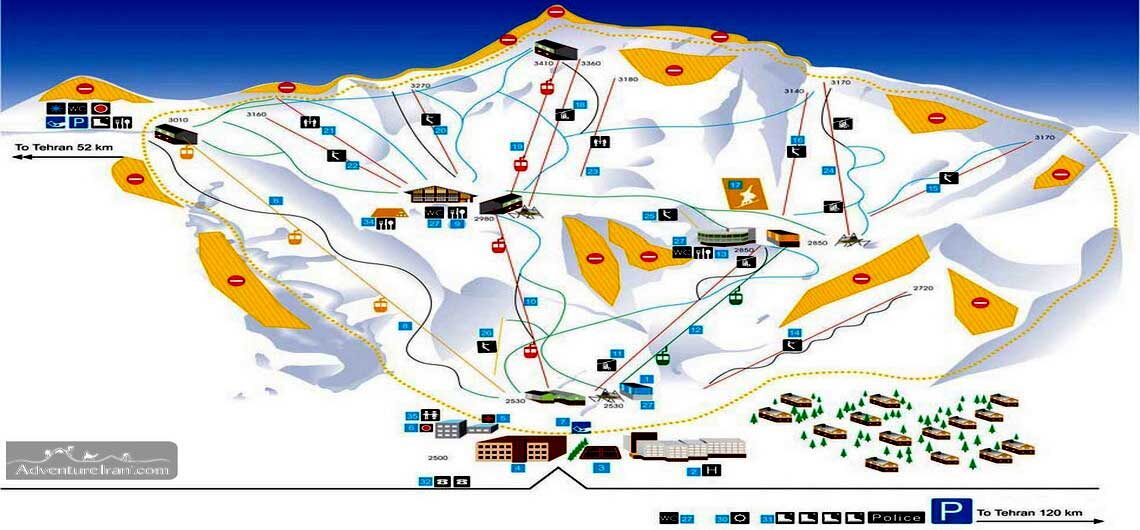
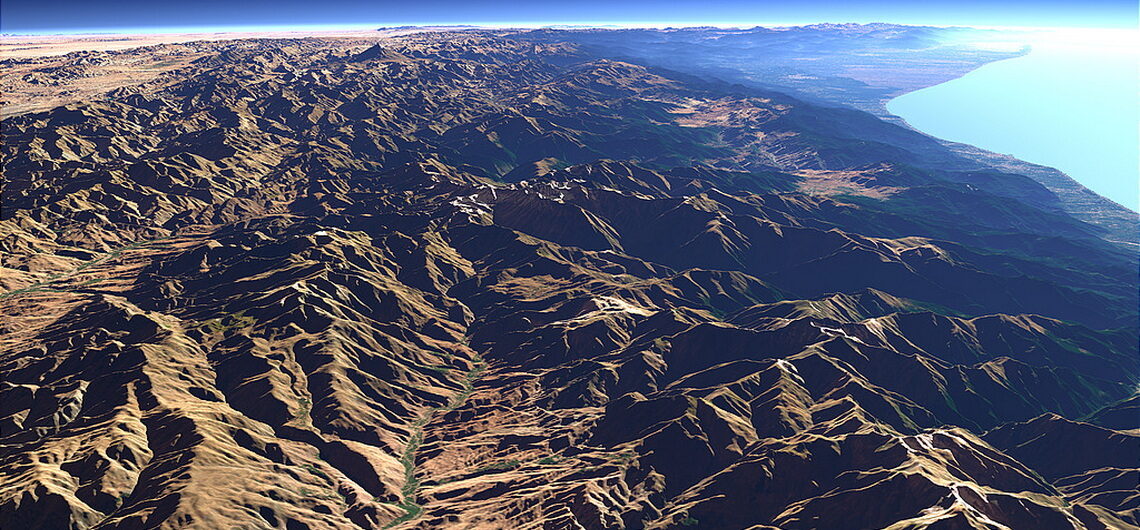
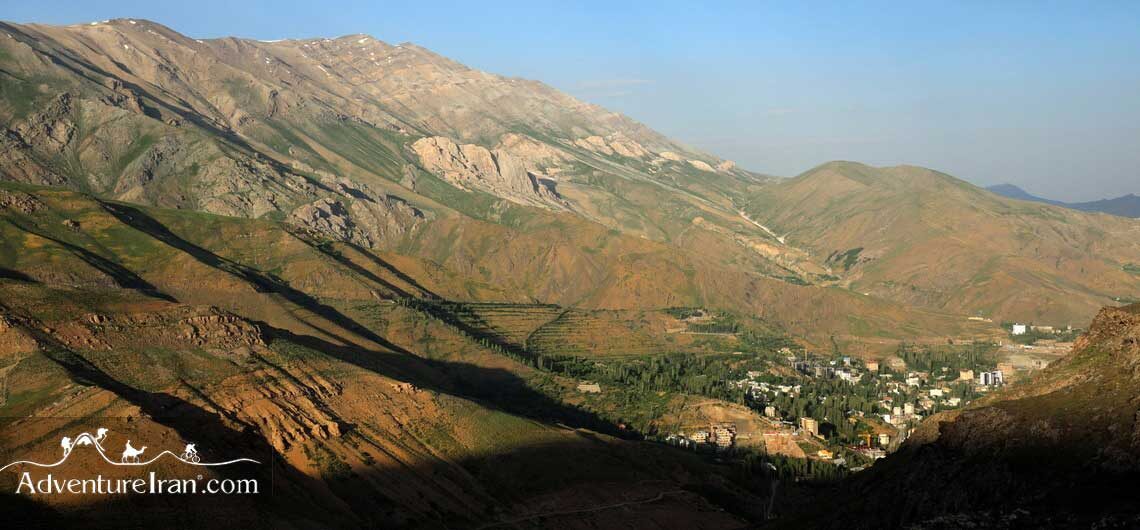
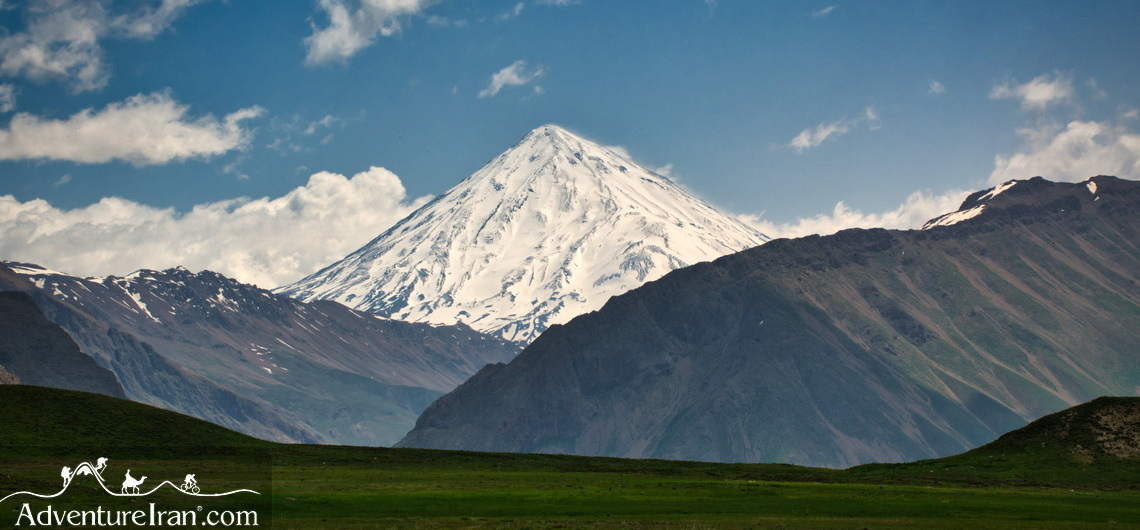
Dizin Ski Resort ALBORZ SKI REGION Dizin is the biggest Ski Resort in Iran, located in Alborz province, northeast of Tehran province, which is on the southern slopes of the Central Alborz Mountains. Dizin ski resort was built around 1960 during the reign of Pahlavi (Mohammad Reza Shah) before Iran’s Islamic revolution. The piste is situated in a staggeringly beautiful geographical position, surrounded by a lot of high mountain peaks around +4000 m, which makes for a very cold winter with amazing visibility of the mountains in the Alborz range. You will have a stunning view of Iran’s highest mountain, Damavand (5610m), from the top of the piste on Sichal peak. From the last station of Dizin, you have to ascend a little bit. It takes 10-15 minutes to reach the peak (Sichal), the highest point in the region. From there, you will have a breathtaking 360-degree panoramic view of the numerous mountains in the heart of Alborz. From the peak, you can see Kolonbastak (4150m), the ridgeline of the Sarakckal mountains, a 15km mountain chain above 4000m with 3 peaks. In the south, you will see Tochal mountain (3960m) which is north of the capital, Tehran. Dizin is, without a doubt, the finest place for skiing in Iran. For those who are looking for a more challenging activity, there are a lot of regions around Dizin that are terrific for Off Piste skiing. You will need a local guide or experienced ski instructor for off-piste skiing in Dizin. There are a few mountains around Dizin that are excellent for Ski-Touring at the end of winter and the beginning of spring. Mount Kolonbastak and Mount Azadkuh are two of them, which are fairly close, and ideal for ski touring. Besides ski activities, the attractive Dizin region is
Dizin Ski Resort ALBORZ SKI REGION Dizin is the biggest Ski Resort in Iran, located in Alborz province, northeast of Tehran province, which is on the southern slopes of the Central Alborz Mountains. Dizin ski resort was built around 1960 during the reign of Pahlavi (Mohammad Reza Shah) before Iran’s Islamic revolution. The
Iran's Most Famous Mountains and High Peaks Iran has a long list of mountains above 4000m in different regions in the Alborz and Zagros ranges. Surprisingly, even in the deserts of Iran, there are many mountains above 3000 m plus a few famous mountains above 4000m. Moreover, along these two long mountain ranges, there are numerous special regions such as Dasht-e Lut or Sistan and Baluchistan province embracing some mountains which are not well known to travelers. They have an ideal climate, perfect for a winter ascend. It is impossible to list all of Iran’s mountains here. We have chosen only a few of them for adventurous travelers who would like to specifically experience Iran’s mountains. We considered many factors to create the list below from more than 100 mountain names that local climbers generally choose for their various activities. We appraised the combination of the mountains’ altitude, the levels of difficulty, accessibility, special regions, protected areas, exquisite landscapes, and Off the Beaten Track, to cover a multitude of activities bearing in mind the best season for each activity to cover the whole year. Besides, our 20 years' experience of performing a lot of tours in different regions of Iran was another important aspect as to why we have chosen these specific mountains in our Iran’s Most Famous Mountains and High Peaks List. According to your travel time in Iran and your level of fitness, we have special offers for you. Also included are popular activities such as Trekking, Mountain Biking, and Ski-touring. The list has been prepared by Adventure Iran’s mountain guides’ team. It reflects our point of view of what we think is just right for you. Certainly, there are a lot of other mountains which are not listed in our famous mountains of Iran. If you are looking
Iran’s Most Famous Mountains and High Peaks Iran has a long list of mountains above 4000m in different regions in the Alborz and Zagros ranges. Surprisingly, even in the deserts of Iran, there are many mountains above 3000 m plus a few famous mountains above 4000m. Moreover, along these two long mountain ranges, there are numerous
Darbandsar Village in Iran ALBORZ SKI REGION Darbandsar is a village in the heart of the Alborz Mountains of Iran, 60 km away from the capital and northeast of Tehran province. The village is situated on the slope of the southern part of the Central Alborz mountains with various altitudes. The average height is approximately 2600m above sea level. Darbandsar is also the name of the ski resort which was created after Iran’s revolution. Darbandsar village became famous in Iran as the piste is owned by a private company. The company built the length of the ski slope as well as bought a new lift system for the ski resort, which, by the way, is more up-to-date compared to other ski resorts in Iran. Winter time is the busiest time of the year, with Tehranians coming to ski. It is generally even busier at the weekends, (which are Thursday and Friday in Iran). Due to this influx of visitors, the main road (Fasham-Shemshak) is usually packed full of cars at this time. Apart from the ski activity in winter, the region is a perfect destination for other activities such as trekking and mountain biking during other seasons. A lot of high mountains above 3000 m surround this village with plenty of canyons and spring water, flora, and wildlife. Darbandsar is located in the Alborz Markazi protected area which makes this region one of the best places to visit for those who live in the capital and would like to spend their weekend in northern Tehran in the central Alborz Mountains. The highest point of Darbandsar is 2650m, a mountain above the ski resort which locals call Mahmoud Chal peak. There are also a few very high mountains around Darbandsar such as MT Kolonbastak 4150m, Sarakchal 1 (4120m), Sarakchal 2
Darbandsar Village in Iran ALBORZ SKI REGION Darbandsar is a village in the heart of the Alborz Mountains of Iran, 60 km away from the capital and northeast of Tehran province. The village is situated on the slope of the southern part of the Central Alborz mountains with various altitudes. The average height is approximately
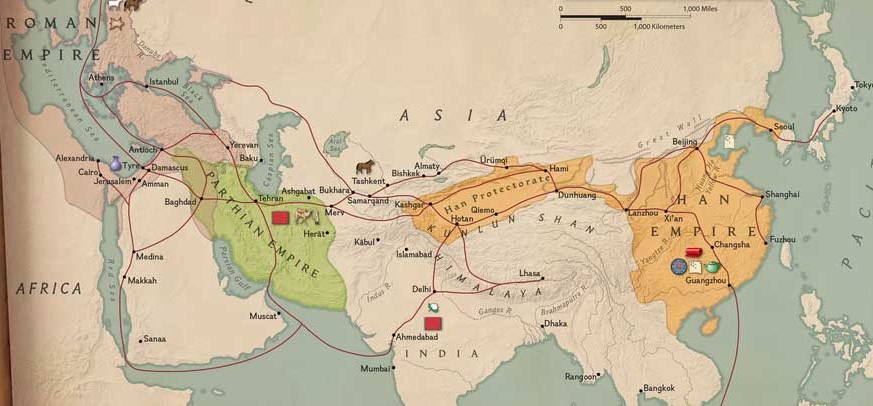
Iran Silk Road Iran was known as Persia during the Silk Road period. It was the main ring of the chain from East to West. It was strategically placed for the Silk Road trade with several routes passing through Iran’s ancient and beautiful country. Nowadays, Iran is no longer considered so famous for the Silk Road route compared to other central Asian countries. The Iranian tourism industry did not invest much time in marketing this interesting piece of history due to Iran being at the center of several difficult issues during the last 40 years. Despite this unfortunate drawback, Iran is firmly back on the map. Thanks to its attractiveness, and numerous ‘little-explored’ parts of this amazingly diverse country, there is so much to offer experienced travelers wishing to journey through Iran’s part of the Silk Road route which runs from China to Turkey. One of the main highlights of the Iran Silk Road is seeing the many historical sites alongside this route. In Iran’s Silk Road, there are plenty of ancient castles, caravanserais, citadels, and mosques that date back over a thousand years. There are a huge number of caravanserais, a lot of which have been renovated as boutique hotels. In addition, there are numerous oases in use in the Deserts of Iran on the original path of the Silk Road. These areas are still inhabited. The names of a couple of them are mentioned in the books of Alfons Gabriel and Sven Hedin who crossed the Iran desert about 100 years ago. In the Iran Deserts article, we also recommended adventurous individuals should visit Iran’s deserts to enjoy the countless attractions on offer. Iran has many caravanserais, many of which have been destroyed, and some of them still remain in their original form. Some of them have
Iran Silk Road Iran was known as Persia during the Silk Road period. It was the main ring of the chain from East to West. It was strategically placed for the Silk Road trade with several routes passing through Iran’s ancient and beautiful country. Nowadays, Iran is no longer considered so famous for the Silk
Damavand Acclimatisation Programme A Complete Guide for a Safe and Successful Climb Mount Damavand, the highest peak in Iran and the tallest volcano in Asia, is a dream destination for climbers and adventure enthusiasts worldwide. Standing at 5,610 meters (18,405 feet), this majestic mountain offers breathtaking views and a challenging yet rewarding climbing experience. However, one of the most critical aspects of a successful Damavand climb is proper acclimatisation. In this article, we’ll explore everything you need to know about acclimatizing for Mount Damavand, ensuring a safe and enjoyable adventure. Why Acclimatisation is Crucial for Climbing Mount Damavand Acclimatization is the process of allowing your body to adapt to the decreasing levels of oxygen at higher altitudes. As you ascend Mount Damavand, the air becomes thinner, and the oxygen levels drop significantly. Without proper acclimatization, climbers are at risk of developing Altitude Sickness (Acute Mountain Sickness or AMS), which can lead to severe symptoms like headaches, nausea, dizziness, and, in extreme cases, life-threatening conditions such as High Altitude Pulmonary Edema (HAPE) or High Altitude Cerebral Edema (HACE). Proper acclimatization not only reduces the risk of altitude sickness but also improves your overall climbing performance, allowing you to enjoy the journey to the summit. Understanding Altitude Zones on Mount Damavand Mount Damavand has several key altitude zones, each requiring careful acclimatization: Base Camp (2,200 - 3,000 meters): This is where most climbers begin their journey. Popular base camps include Goosfandsara and Polour. Spend at least 1-2 days here to allow your body to adjust to the altitude. Mid-Level Camps (3,000 - 4,000 meters): Camps like Bargah-e Sevom (Camp 3) at 4,200 meters are ideal for further acclimatization. Climbers often hike to these camps during the day and return to lower altitudes to sleep, following the "climb high, sleep low"
Damavand Acclimatisation Programme A Complete Guide for a Safe and Successful Climb Mount Damavand, the highest peak in Iran and the tallest volcano in Asia, is a dream destination for climbers and adventure enthusiasts worldwide. Standing at 5,610 meters (18,405 feet), this majestic mountain offers breathtaking views and a challenging yet rewarding climbing experience. However,
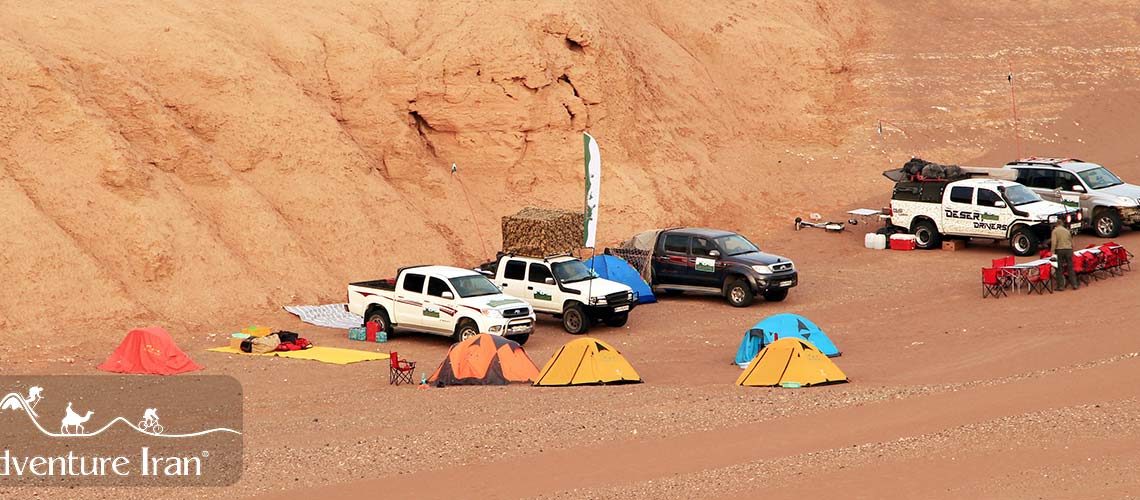
Desert 4x4 Safari in Iran Desert 4x4 Safari in Iran is one of the main activities that most travelers would like to experience on their journey to Iran. As you may know, Iran has two deserts; Dasht-e Kavir and Lut deserts. They are both perfect for a 4x4 safari for all adventurous travelers in search of a new and remarkable experience. Dasht-e Lut lands are quite unusual in comparison with the other deserts of Iran, having eye-catching and unique landscapes. Maranjab, Rig-e Jen, Koreh Gaaz, and Mesr desert make up the Dasht-e Kavir desert all of which are ideal for off-road 4x4 safaris. Maranjab desert is close to Kashan city, where there is a historical caravanserai which is well worth visiting. This desert is unrivaled for a multi-day desert trip for those who would like to have a short and cost-effective desert journey in Iran. Rig-e Jen, in the central desert of Iran, is one of the most adventurous. It is located in the heart of the Dasht-e Kavir desert. Rig-e Jen is perfect for those travelers who would like to have a longer and more complete 4x4 safari as it is not easily accessible. It is also more challenging compared to the other deserts in the area. There are two ways for starting the journey. Anarak is the most accessible town in the Rig-e Jen desert, 222 km from the east of Esfahan. The second way is from Khur which is a town in the heart of Dasht-e Kavir. The least popular deserts for safaris in Iran are the Koreh Gaz and Mesr deserts. Koreh Gaz is also known as Mohammad Abad Koreh Gaz; it is the last oasis in the desert where a couple of people still live. In this region, there is underground water, a few
Desert 4×4 Safari in Iran Desert 4×4 Safari in Iran is one of the main activities that most travelers would like to experience on their journey to Iran. As you may know, Iran has two deserts; Dasht-e Kavir and Lut deserts. They are both perfect for a 4×4 safari for all adventurous travelers in search
We are adapting all our trips are adapted to new health standards. Living a memorable and safe adventure has always been the first concern of Adventure Iran and this special year will not be an exception to this rule. When you are able to travel to Iran, we shall continue to make you travel, make you dream and make you discover wonderful places in Iran. We are working with our accommodation providers, guides, partners in order to adapt all our circuits to new health constraints: physical distance, barrier gestures, specific hygiene measures. Transport: Reduction in the number transfers and the number of people in vehicles, wearing of a mandatory mask and regular disinfection of vehicles. Accommodation: We apply all of the strict rules imposed on accommodation. Hotels: We no longer offer rooms to share with people who do not know each other. Family, double or single rooms are available. Private accommodation and mountain huts: Minimum surface area per person, 1 bed out of 2 offered in dormitories, blankets are no longer provided in shelters, you will need to provide a personal duvet. Camping: An individual tent is offered to you for the whole stay, we transport it, you may be asked to pitch it up / dismantle it. Meals: Reduction in the number of dishes shared on picnics, and an increase in individual portions. Food is not in contact with all participants; strict hygiene rules are applied even when hiking or cycling. Activities: Your guide will explain the new health rules implemented in connection with the various players in your trip: accommodation providers, drivers. During the activities, he helps everyone to respect the rules of physical distance (for example, 2 meters when hiking).
We are adapting all our trips are adapted to new health standards. Living a memorable and safe adventure has always been the first concern of Adventure Iran and this special year will not be an exception to this rule. When you are able to travel to Iran, we shall continue to make you travel, make
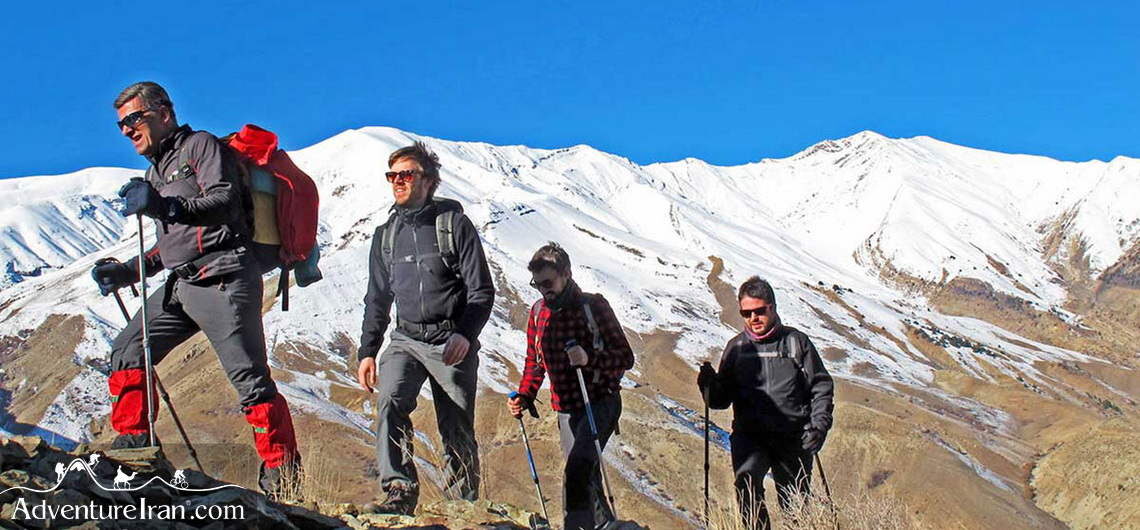
Hiking in Iran Hiking in Iran is one of the most attractive activities for many individuals, especially considering Iran is a mountainous country with many of them over 4,000 m. Hiking is a popular sport for Iranians at weekends. Iran is a vast country with two huge deserts, where even from the desert area it is possible to see these staggeringly beautiful 4,000 m mountains in the distance. There are also a lot of hiking routes in the country. As you may know, there are two long mountain ranges in Iran. Alborz mountain range with around 900 km length to the south of the Caspian Sea and Zagros Mountain Range with 1,500 km length starting from the northeast of the country and stretching to the southeast. There are also numerous high mountains over 4,000 m in other parts of the country for hiking. Most travelers from all around the world come here for hiking, with Iran hiking becoming the most popular activity for many adventurers. You cannot find an IRAN HIKING MAP here as the one you may see in your home country. There are a few organizations and companies that print Iran maps, but, unfortunately, they do not provide a special Iran hiking map for our mountains, or a topographic hiking map with contours and nature signs. On the north side of the capital city of Tehran, there are a number of hiking routes that go up to Tochal Mountain, where the long ridge line is nearly 4,000 m. There are plenty of characteristic cafés and shops around here where hikers have the opportunity to stop and have breakfast on the trail and take in the stunning scenery. There are also a bunch of trails for hiking outside of Tehran city in the country parts. Most
Hiking in Iran Hiking in Iran is one of the most attractive activities for many individuals, especially considering Iran is a mountainous country with many of them over 4,000 m. Hiking is a popular sport for Iranians at weekends. Iran is a vast country with two huge deserts, where even from the desert area it
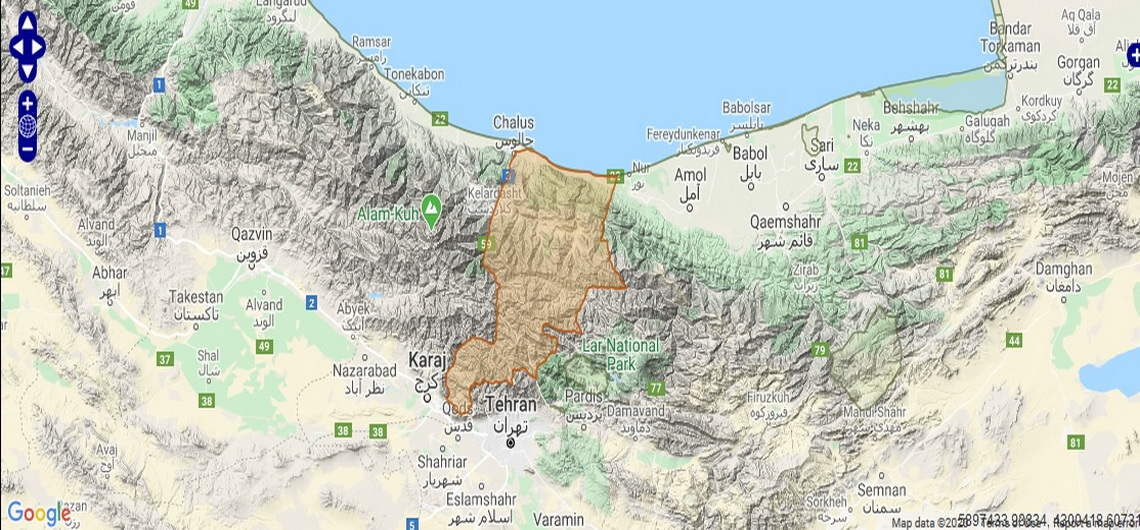
Alborz-e Markazi Protected Area Alborz-e Markazi Protected Area is one of the biggest protected areas in Alborz Mountain Range observed by the Department of Environment of Iran. The area starts north of Tehran city and stretches to the Caspian Sea. It is situated in three provinces of Tehran, Alborz, and Mazandaran. The whole area is around 400,000 hectares and is home to 48 species of mammals, 156 species of birds, 1,400 different species of plants, and 26 species of reptiles who live in this area. It is one of the main sources of water as there are many rivers in this region. The most famous mountains of Central Alborz, above 4,000m, are located in this protected area. Mount AzadKuh 4,400m, Mount Kolonbastak 4,150 m, and Mount Sarakchal 4,250m are its most famous peaks. In addition, Abali Ski resort, the first ski resort in Iran, built around 60 years ago (1960), is located in Alborz-e Markazi protected area. The main ski resorts of Dizin, Shemshak, and Darbandsar are also found here. Adventure Iran is one of the pioneer tour operators focusing on this region to conduct and create action-packed tours in Iran. Short and long mountain trekking, Mountain biking, and Ski touring are a variety of Adventure Iran tours that are carried out during the most suitable period for each activity throughout the year. A couple of tours with fixed departure dates are included in Adventure Iran Group Tours too. Due to the high altitude, the temperature and climate vary in each season. We, therefore, arrange appropriate trips for each season. One of the most popular moderate treks is Hike in Iran through off the beaten tracks which is one-week trekking in the Central Alborz Mountains and includes several protected areas such as Alborz Markazi protected area. For Mountain
Alborz-e Markazi Protected Area Alborz-e Markazi Protected Area is one of the biggest protected areas in Alborz Mountain Range observed by the Department of Environment of Iran. The area starts north of Tehran city and stretches to the Caspian Sea. It is situated in three provinces of Tehran, Alborz, and Mazandaran. The whole area is
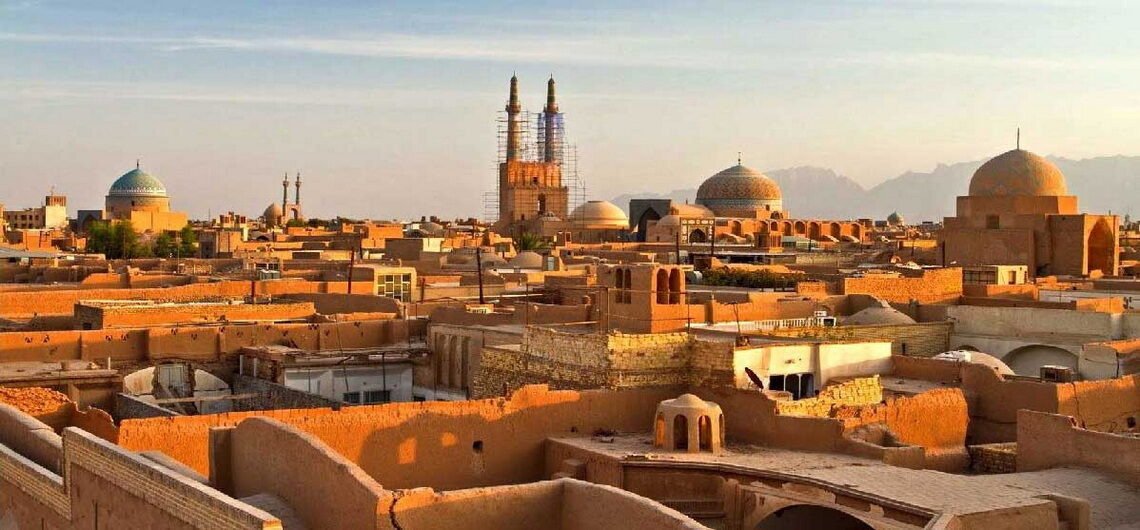
YAZD The UNESCO World Heritage City Yazd is one of the most beautiful earthen cities in the world and because of its unique attractions, it draws many tourists and travelers every year from all around the world. Yazd is the first earthen city and the second historic city in the world after Venice, Italy. It is located in the southeast of Iran close to the historic Silk Road. The city is situated between the Shirkuh and Kharang mountain ranges, in a wide valley. Yazd is well-known as ‘The City of Wind-catchers’, ‘City of Sweets’, and ‘City of Bicycle’. In 2017, the historical city of Yazd was recognized as a World Heritage Site by UNESCO. Yazd monuments are very diverse. In this article, we will introduce some of the most important sights of Yazd city. Jameh Mosque of Yazd Jame Mosque of Yazd is one of the most beautiful, unique, and important tourist attractions of Iran which was built in the 6th century AH (12 century AD) and its restoration has continued until the last decade. According to ancient documents, the construction and completion of the Yazd Mosque took close to a century and in different historical periods. The most important of these are the Ilkhanate, Safavid dynasty, the Timurid Empire, The Muzaffarid dynasty, and Qajar dynasty. Jameh Mosque of Yazd is one of the most extraordinary and unique monuments that has fascinated many people all around the world. There are six entrances to this great mosque, and each is built in different parts of the structure. The height of the minarets is over 52 meters and 6 meters in diameter which has earned the title of the tallest minaret among Persian historical mosques. Zoroastrian Temple This valuable monument is one of the spectacular attractions that you should not forget
YAZD The UNESCO World Heritage City Yazd is one of the most beautiful earthen cities in the world and because of its unique attractions, it draws many tourists and travelers every year from all around the world. Yazd is the first earthen city and the second historic city in the world after Venice, Italy. It