
Ferdowsi
THE VOICE OF ANCIENT PERSIA AND GUARDIAN OF THE PERSIAN LANGUAGE
INTRODUCTION: THE POET WHO PRESERVED A CIVILIZATION
For over a thousand years, one name has stood as the guardian of Persian identity: Ferdowsi. Born in the lush fields of Tus, in northeastern Iran in Khorasan, he spent over three decades crafting a masterpiece that would rescue the Persian language and culture from fading into history.
For travelers who journey to Iran to uncover the soul of this ancient land, understanding Ferdowsi is essential. His words are woven into the fabric of Persian life, from the stories told in teahouses to the inscriptions on monuments. To walk in the footsteps of Ferdowsi is to connect with the timeless spirit of Iran.
WHO WAS FERDOWSI? A MAN ON A MISSION
Abu’l-Qasem Ferdowsi Tusi was born around 940 CE near the city of Tus in the Khorasan Razavi province. He came from a family of dehqans, a class of landowners who were the true keepers of pre-Islamic Persian heritage. He began his poetic career under the patronage of the Samanid dynasty (819–999 CE), a period when the Persian language was being rediscovered after the Arab conquest.
Using a now-lost prose version of the Persian Book of Kings, Ferdowsi dedicated 35 years of his life to transforming it into a breathtaking epic poem. When he finally completed his life’s work in 1010 CE, he was an old man.
THE SHAHNAMEH: THE BOOK OF KINGS
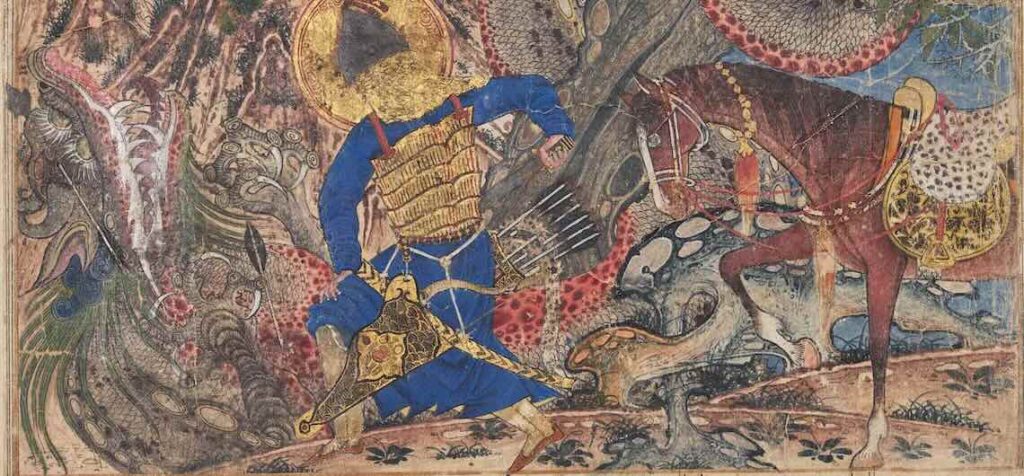
The Shahnameh, or “Book of Kings,” is Ferdowsi‘s immortal achievement. It is a colossal work of approximately 50,000 rhymed couplets, making it one of the longest epic poems ever written by a single poet. The poem traces the history of Persia, from the creation of the world to the fall of the Achaemenid era to the Islamic conquest in the 7th century.
Why Is It So Important?
- A Literary Masterpiece: The Shahnameh is considered the definitive work of Persian literature, comparable to Homer’s Iliad for Greek culture.
- The Guardian of the Persian Language: When Ferdowsi wrote, Arabic had become the dominant language of literature and science. Ferdowsi chose to write in Modern Persian, deliberately using very few Arabic words. His epic is widely credited with safeguarding and revitalizing the Persian tongue from being lost forever.
- A Mirror of Iranian Identity: For centuries, the Shahnameh has acted as a “national identity card” for the Iranian people. It tells the stories of mythical heroes like Rostam, wise kings like Jamshid, and tragic lovers, all of which have defined the ethical and moral compass of a nation.
THE TOMB OF FERDOWSI IN TUS: A PILGRIMAGE FOR LOVERS OF LITERATURE
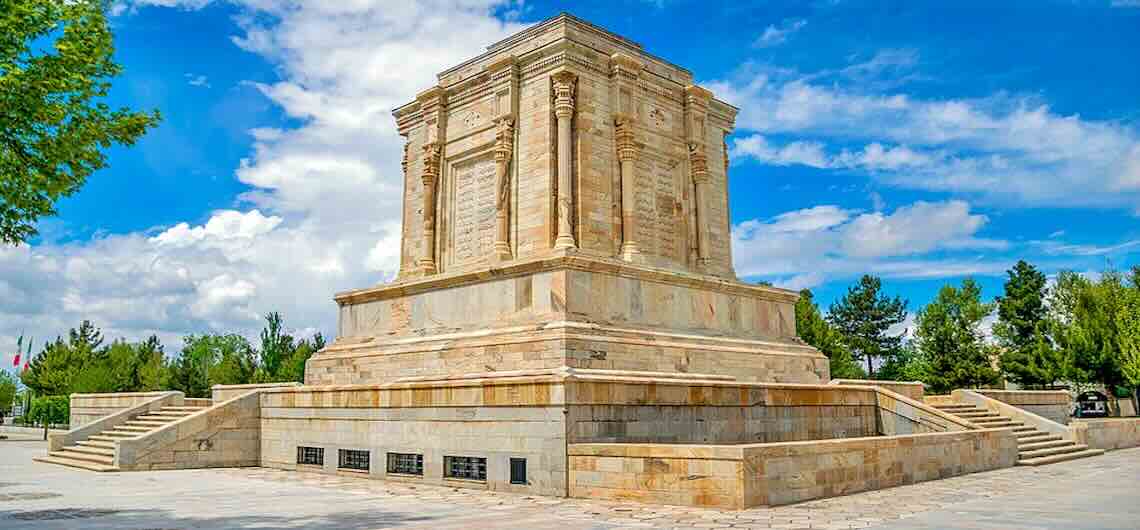
Just a short drive from the holy city of Mashhad, lies the ancient city of Tus. Here, amidst a beautiful garden, stands the magnificent mausoleum dedicated to the Persian poet. For many Iranians, visiting the Tomb of Ferdowsi is a pilgrimage. It is a place to pay homage to the man who gave them their language.
Architectural Mastery in Stone
The current mausoleum was built in 1934 to mark the millennium of Ferdowsi‘s birth. The design by Hooshang Seyhoun is a stunning fusion of Achaemenid-era architectural elements with modern form, symbolizing the deep roots of Iranian history. The complex features a massive white marble monument inscribed with verses from the Shahnameh.
What to See at the Complex
- Garden-Mausoleum: Situated in Tus, near Mashhad, in a tranquil park setting.
- The Tomb Hall: A serene white marble chamber.
- Inscriptions: The walls are covered with beautiful calligraphy of his epic verses.
- The Museum: A small museum displaying artifacts from the Shahnameh’s history.
- The Library: A collection of about 9,000 books related to Ferdowsi and Persian literature.
Practical Information for Visitors
- Best Time to Visit: Spring (March to May) and autumn (September to November) offer the mildest weather for exploring the complex.
- Getting There: Located in Tus, approximately 30 minutes north of Mashhad city center.
- Opening Hours: The complex is typically open daily from 9:00 AM to 7:00 PM.
A trip to Mashhad is incomplete without this detour. As one of the most visited cultural heritage sites in the province, it drew some 150,000 visitors during the Nowruz (Persian New Year) holidays.
WHY FERDOSI MATTERS TODAY
More than a millennium after his death, Ferdowsi’s words have lost none of their power. The annual Ferdowsi Day is celebrated on Ordibehesht 15 of the Iranian calendar, honoring the completion of his great work.
One scholar has called Ferdowsi “the architect of the Persian language.” He argued that Ferdowsi did not just write poetry; he created a unifying cultural identity that transcends politics and borders. For any traveler seeking to truly understand Iran’s deep cultural layers, from its ancient myths to its modern pride, a walk through the Shahnameh is not just a literary exercise—it is a journey to the heart of the Persian soul.
PLAN YOUR LITERARY JOURNEY TO IRAN
Do you wish to walk in the footsteps of kings and heroes? At Adventure Iran, we specialize in creating custom cultural itineraries. We can arrange a special tour for you to the Ferdowsi Mausoleum in Tus, exploring the ancient city’s history and the profound legacy of Persian literature.
Contact Adventure Iran to start planning your Iran tour.
CONCLUSION
Ferdowsi gave the Persian language a new life and compiled the stories of a nation. For the modern explorer, his tomb in Tus is a must-see destination that stands as a testament to the power of words to preserve a civilization. A visit here is a powerful reminder of the cultural depth that awaits travelers in Iran.
Comments