

Tous, Siraf & Persian Mosques
Three New UNESCO World Heritage Candidates in Iran
Three New UNESCO World Heritage Candidates in Iran: Tous, Siraf and the Persian Mosques
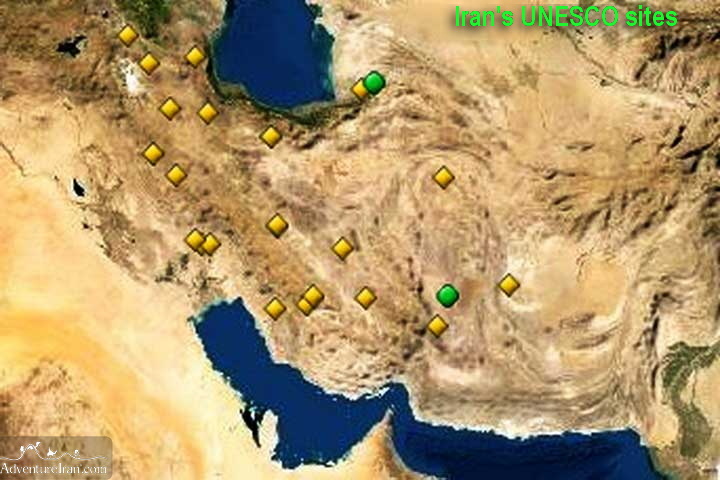
Iran’s UNESCO World Heritage story is entering a new chapter. Following the inscription of Alamut Castle and its Related Fortifications on the UNESCO World Heritage List in July 2026, Iran now has 30 UNESCO World Heritage properties.
At the same time, Iran is preparing several new nominations for possible future inscription. Among the most important are the historic city of Tous in Khorasan Razavi Province, the ancient port of Siraf on the Persian Gulf, and a serial nomination representing some of Iran’s most important historic mosques.

These three candidates tell very different stories.
- Tous represents the cultural and literary heritage of Khorasan and the legacy of the great Persian poet Ferdowsi.
- Siraf recalls the extraordinary maritime trade that once connected Iran with India, China, East Africa and the wider Indian Ocean world.
- The Persian Mosque nomination, meanwhile, aims to demonstrate the long development of Iranian Islamic architecture across different historical periods and regions.
For travelers interested in Iran’s history, culture, architecture and lesser-known heritage sites, these three places are especially worth watching.
Iran Now Has 30 UNESCO World Heritage Sites.
On July 26, 2026, Alamut Castle and its Related Fortifications were officially inscribed on the UNESCO World Heritage List during the 48th session of the World Heritage Committee in Busan, South Korea. The inscription includes not only the famous Alamut Castle but also a network of seven medieval fortifications spread through the rugged Alamut region of Qazvin Province.
With this inscription, Iran’s number of World Heritage properties reached 30. UNESCO currently lists 28 cultural and two natural World Heritage properties for Iran. Iran also has a much larger group of places on its Tentative List. This is the stage at which countries identify cultural or natural properties that they may nominate for future World Heritage inscription.
Among Iran’s potential future nominations are Tous and the Historical Port of Siraf, both of which have been on Iran’s Tentative List since 2007. A newer entry, the Persian Mosque, was added in 2024.
-
The Historical Port of Siraf: Iran’s Ancient Gateway to the Indian Ocean
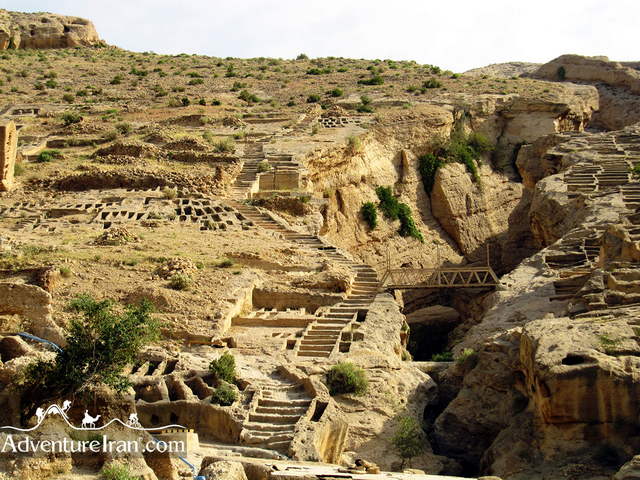
On the northern coast of the Persian Gulf, in Bushehr Province, lies the ancient port of Siraf. Today, the remains of Siraf are relatively quiet. But more than a thousand years ago, this narrow strip of land between the mountains and the sea was one of the most important maritime centers of the Persian Gulf.
Siraf flourished particularly from the late Sasanian period through the early centuries of the Islamic era. During its golden age, the port became an important center of maritime trade, connecting the Iranian plateau with the wider Indian Ocean world.
Its geographical position was crucial. Ships arriving at Siraf could connect Iran with the Indian subcontinent, East Africa, China, the Arabian Peninsula and other important trading centers. In this sense, Siraf was much more than an ancient Iranian port. It was part of an enormous international network of trade and cultural exchange.
Archaeological Evidence of a Cosmopolitan Port
Archaeological excavations beginning in the 1960s revealed the international character of Siraf. Among the discoveries are Chinese ceramics, glass vessels, coins, plaster architecture, warehouses, residential structures and remains associated with the historic port. Together, these finds provide evidence of long-distance commercial and cultural connections. They show that Siraf was not simply a local settlement, but one of the important centers of trade in the Persian Gulf and the Indian Ocean.
The archaeological evidence also demonstrates the movement of goods, ideas and people between Iran and distant parts of Asia and Africa. This international character is one of the most important reasons why Siraf has attracted attention as a potential UNESCO World Heritage Site.
Siraf’s Next Step Toward UNESCO
According to recent statements from Iranian heritage officials, the nomination of the Historical Port of Siraf has entered the evaluation process associated with ICOMOS, the International Council on Monuments and Sites, one of UNESCO’s advisory bodies for cultural heritage.
The evaluation process includes field assessment as well as an ongoing exchange of questions, documentation and responses between the Iranian authorities and the international advisory bodies. The process is expected to continue toward the next session of the UNESCO World Heritage Committee in Istanbul in 2027.
If the nomination successfully passes the necessary stages, Siraf could eventually become one of Iran’s most important UNESCO-recognized maritime heritage sites.
-
Tous: The Ancient City of Ferdowsi
Far to the northeast, near the modern city of Mashhad in Khorasan Razavi Province, lies another important candidate: Tous.
Tous is one of the great historical and cultural landscapes of northeastern Iran. Its history stretches across several periods, and the area contains archaeological remains and monuments associated with the ancient city and its later development. But Tous is perhaps best known around the world because of one extraordinary figure: Ferdowsi. The great Persian poet and author of the Shahnameh, or Book of Kings, was born in the region of Tous around the 10th century.
The Shahnameh is far more than a collection of legendary stories. It is one of the central works of Persian literature and played an enormous role in preserving the Persian language and cultural memory. This gives Tous a special kind of heritage significance. Its importance is not based only on archaeological remains or architecture. It is also deeply connected to literature, language, identity and cultural continuity.
The Tous Cultural Landscape has been included on Iran’s UNESCO Tentative List since 2007. The proposed nomination recognizes the archaeological, historical and cultural importance of the area.
A Landscape Rather Than a Single Monument
The proposed Tous nomination is important because the heritage value of the area extends beyond the tomb of Ferdowsi. The historic landscape includes archaeological remains of the ancient city, defensive structures and other historical elements. Together, they represent a long sequence of human settlement and cultural development.
This is precisely what makes Tous fascinating. It is better understood as a cultural landscape where archaeology, history, literature and geography come together. Iranian heritage authorities are currently working on completing the documentation required for the Tous nomination. If successfully advanced, Tous would add a major literary and cultural dimension to Iran’s growing collection of UNESCO World Heritage properties.
-
The Persian Mosques: A Heritage of Architecture Across Centuries
The third proposal is different from both Tous and Siraf.
Rather than focusing on one city or archaeological site, the Persian Mosque nomination seeks to bring together a group of important historic mosques from different parts of Iran. UNESCO added the Persian Mosque to Iran’s Tentative List in December 2024. The nomination is designed as a serial cultural property, with multiple components representing the development of mosque architecture in Iran.
The idea behind the nomination https://www.adventureiran.com/wp-content/uploads/2022/09/Masjed-e-Jame-UNESCO-Mosque-of-Isfahan-Interio-view-1024×683.jpgis particularly interesting because Iranian mosque architecture did not develop in a single moment. It evolved over many centuries. Early Islamic buildings were followed by important developments during the Seljuk, Ilkhanid, Timurid and Safavid periods. Architects and craftsmen experimented with domes, iwans, courtyards, brickwork, stucco, tilework, calligraphy and increasingly sophisticated spatial arrangements. The result is one of the world’s richest architectural traditions.


From Brick to Turquoise Tile
Iranian mosques demonstrate how architecture can change while maintaining a recognizable cultural language. Some of the earliest examples are relatively austere, relying heavily on brick and simple geometric forms. Later buildings introduced increasingly elaborate decoration, monumental entrances, domes covered in colored tiles, intricate geometric patterns and calligraphic inscriptions.
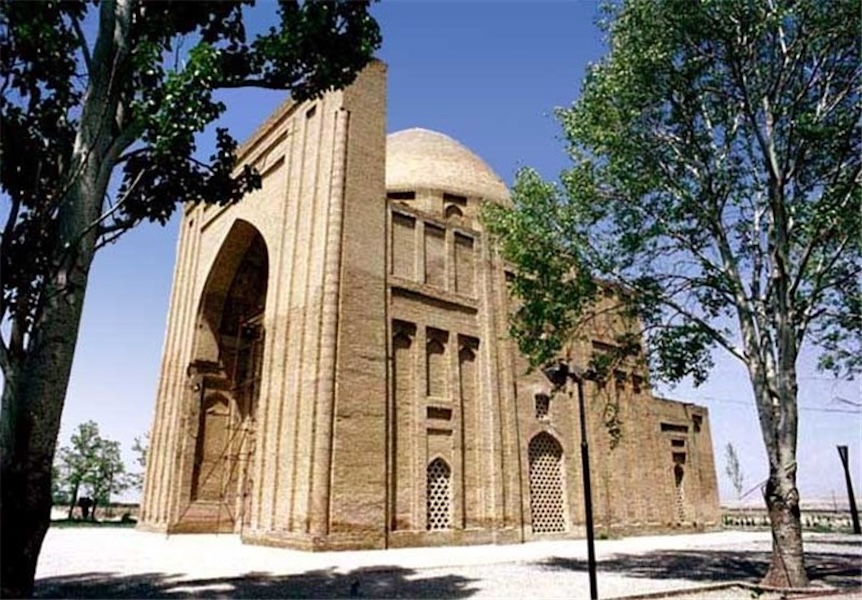
The proposed Persian Mosque nomination aims to present this architectural evolution through a carefully selected group of outstanding examples. Historic mosques such as the Jameh Mosque of Fahraj and Tarikhaneh Mosque in Damghan are among the examples considered in the current nomination.
The final selection, however, is still being developed.
Iranian heritage authorities have indicated that around 30 mosques have been studied so far, while additional sites may be considered before the final group is determined. The challenge is not simply finding old mosques. The selected sites must together demonstrate Outstanding Universal Value and represent important stages in the development of Persian mosque architecture.
What Does UNESCO Look For?
Being ancient does not automatically make a place a UNESCO World Heritage Site. UNESCO evaluates whether a property has Outstanding Universal Value, often abbreviated as OUV. This means that its cultural or natural importance must be exceptional enough to be considered significant for humanity as a whole.
For cultural properties, this can involve architecture, artistic achievement, historical influence, cultural traditions, technological development, urban planning and connections to important historical events or ideas.
The nomination process is also demanding.
A country must prepare extensive documentation addressing issues such as:
- The property’s history and significance
- Authenticity
- Integrity
- Boundaries
- Conservation
- Management
- Protection
- Comparative analysis with similar properties elsewhere in the world
For cultural properties, ICOMOS plays an important advisory role in the evaluation process.
This is why a place can remain on a Tentative List for many years before reaching the World Heritage List.

Iran’s UNESCO Heritage: More Than a List of Monuments
The possible future nominations of Tous, Siraf and the Persian Mosques are particularly interesting because together they represent three very different dimensions of Iranian civilization.
- Tous represents literature, cultural memory and the Persian language.
- Siraf represents maritime trade and Iran’s connection with the Indian Ocean world.
- The Persian Mosques represent centuries of architectural experimentation, craftsmanship and religious culture.
Together, they reveal something important about Iran itself: its heritage cannot easily be reduced to a handful of famous monuments.
From the mountains of Alamut to the shores of the Persian Gulf, and from the ancient cities of Khorasan to the historic mosques of the central Iranian plateau, Iran’s cultural landscape has been shaped by thousands of years of movement, exchange and adaptation.

What Happens Next?
The UNESCO process is gradual, and these three candidates are at different stages.
- Siraf is the most advanced of the three, with its nomination moving through the evaluation process.
- Tous is being prepared for submission, with its documentation undergoing further development.
- The Persian Mosque nomination remains in a research and documentation phase while Iranian heritage authorities continue assessing potential component sites.
The outcome will not be immediate. UNESCO inscription requires careful preparation, evaluation and a final decision by the World Heritage Committee.
The next major World Heritage Committee meeting is scheduled to take place in Istanbul from June 27 to July 7, 2027.
For travelers, however, there is no need to wait for a UNESCO inscription.
These places are already part of Iran’s extraordinary cultural heritage.
Discover Iran Beyond the Famous UNESCO Sites
Iran’s UNESCO sites are often associated with famous destinations such as Persepolis, Isfahan, Yazd and the Persian Garden. But some of the country’s most fascinating historical experiences lie beyond the best-known tourist routes.
Siraf is a perfect example. Standing between the mountains and the Persian Gulf, its archaeological remains offer a glimpse into a time when Iranian merchants and sailors were part of a vast international maritime network.
Tous offers another experience altogether: the atmosphere of an ancient cultural landscape connected to Ferdowsi and the enduring story of Persian literature.
And the historic mosques of Iran reveal how architecture, craftsmanship and cultural traditions evolved across centuries.
For travelers who want to explore Iran beyond the classic tourist itinerary, these places offer a deeper connection with the country’s history—and a glimpse of the heritage that may become part of the UNESCO World Heritage List in the future.
Comments