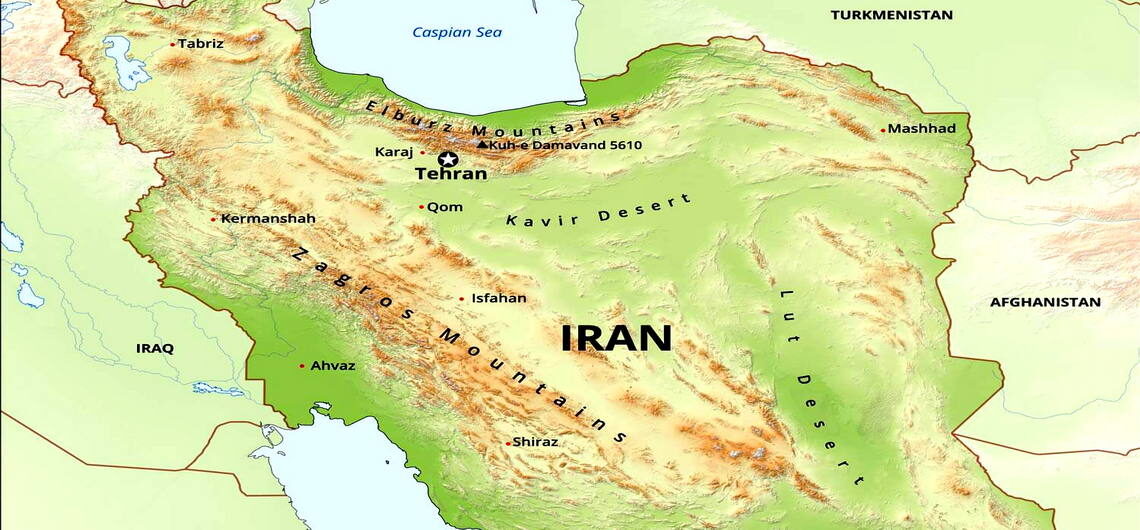
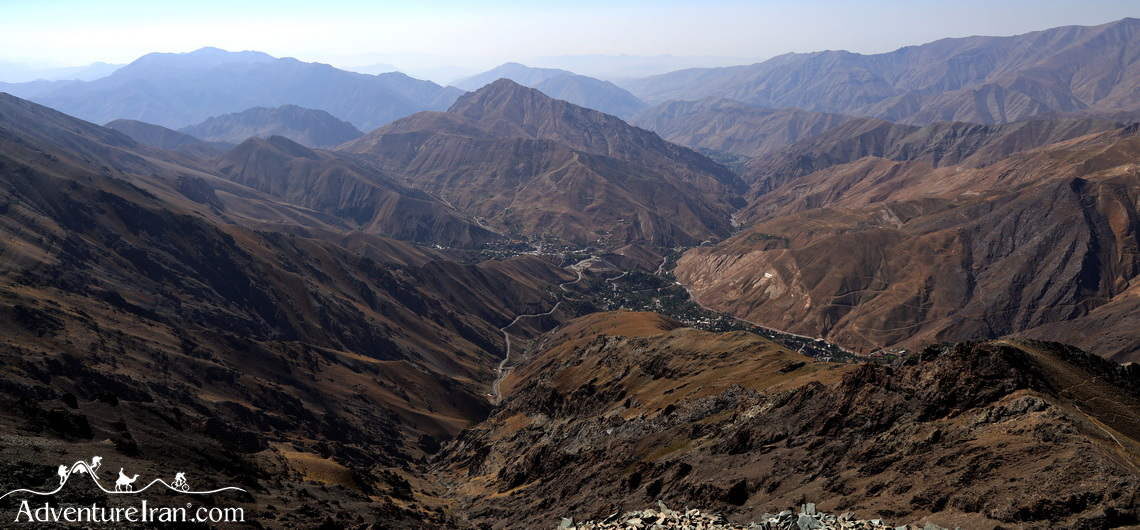
Iran Mountain Ranges Iran with 1.64 million km2 has two major mountain ranges called Alborz and Zagros Mountain Ranges. Alborz Mountain Range The first range is Alborz Mountains, also spelled Elburz, Albourz, Alburz, or Elburs. In the Persian language, it is called Reshte Koohe Alborz or Koohhayeh Alborz. This 900 km (560 miles) long mountain is the major mountain range in northern Iran. It stretches from Azerbaijan in the northwest of Iran (also southwest of the Caspian Sea) towards northeastern Iran in the Khorasan region (southeast of the Caspian Sea). The Alborz Mountains range made a big wall between the Caspian Sea and Iran Plateau. It created two different climate systems on the northern slopes of Alborz against the southern side of the huge mountain range. There are a few famous mountain chains and a lot of high peaks in different parts of the Alborz ranges. Talesh mountain chains, Takht-e Soleyman mountain chains, and Shahkuh mountain chains are subranges of the Alborz range located in the western, central, and eastern parts of the range. Moreover, two of Iran’s highest mountains, Mt Damavand 5610m and MT Alamkuh 4850m, are located in the Alborz range. The Alburz mountain system traverses virtually all of the northernmost portions of Iran from east to west. In addition, there are plenty of high-altitude famous mountains above 4000m extended in the Central Alborz Mountains which is in the north of Tehran province. Mt Kholeno (4375m), MT Azadkuh (4355m), MT Kolonbastak (4150m), MT Sarakchal (4210m), and MT Tochal (3963m) are the most famous high peaks located in central Alborz Mountains. The weather on the northern side of Alborz, called the Caspian slopes, has a distinctly humid climate. The famous Hyrcanian forests, which are Iran's natural UNESCO heritage site, are located in that region too. On
Iran Mountain Ranges Iran with 1.64 million km2 has two major mountain ranges called Alborz and Zagros Mountain Ranges. Alborz Mountain Range The first range is Alborz Mountains, also spelled Elburz, Albourz, Alburz, or Elburs. In the Persian language, it is called Reshte Koohe Alborz or Koohhayeh Alborz. This 900 km (560 miles) long
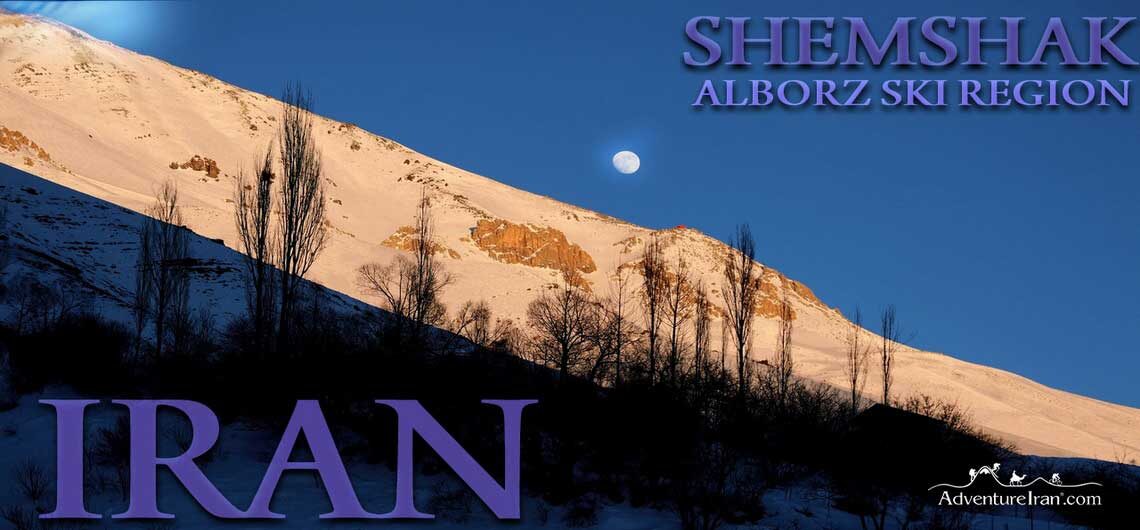
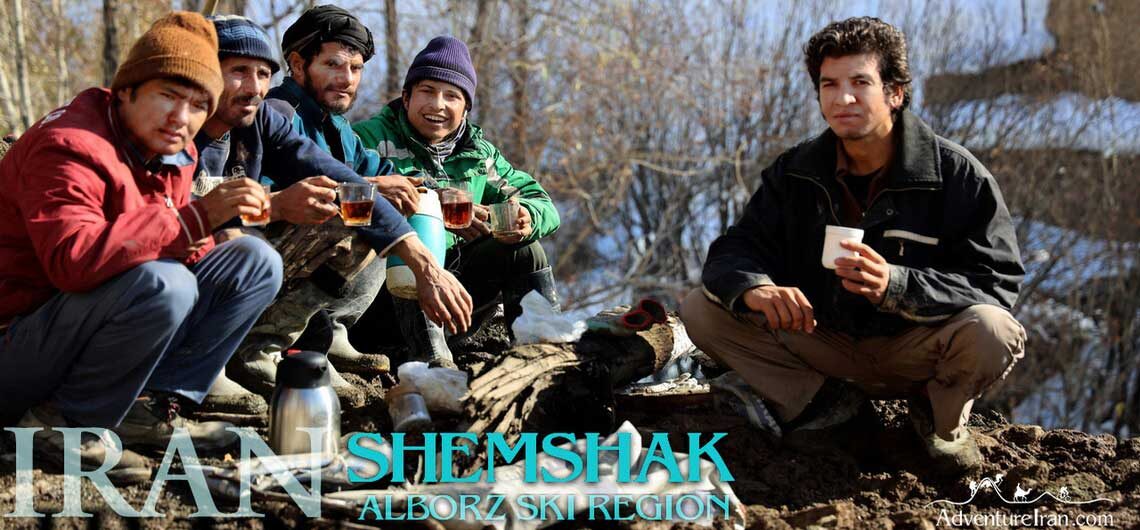
Shemshak Winter Mountain scenery Shemshak is the name of a touristic village before the revolution which has now turned mostly into a small town. Shemshak became famous because of the famous Shemshak Ski resort and a lot of old wealthy people before the revolution came to Shemshak for skiing and it was a hub for many active people in the past years. It’s located in the heights of central Alborz Mountains 50 km away from north east of the capital. The video that you see is a collection of 6 months of photography and timelapsing in the winter season from November 2020 till April 2021. Shemshak village is located between 2600 m – 2800m above the sea level surrounded by a lot of mountains above 4000m and it has about 6 months of winter. There is a long story behind this short video and these pictures as it happens after the pandemic situation when I moved from Lavasan to Shemshak to be far from the population. I had decided to make a short documentary about this special lifestyle that can happen in Iran and the things that happen in the village, but I couldn't make it fully and the end result was the aforementioned video. There were two reasons for that. The first was I didn't have much material and footage to make this video and the second was that I needed a crew and a lot of professional equipment to record this live life happening in the village. So I cut short the plan I had in my mind and only took the most special moments that happened during that winter and I asked our editor to make a nice slide show of the magnificent nature that happens in the high mountains of Alborz. Most of the footage
Shemshak Winter Mountain scenery Shemshak is the name of a touristic village before the revolution which has now turned mostly into a small town. Shemshak became famous because of the famous Shemshak Ski resort and a lot of old wealthy people before the revolution came to Shemshak for skiing and it was a hub
Shemshak village and ski resort 4 seasons of life in the Alborz mountains This clip is about one and half years of photography and life of Shemshak village and ski resort in the Shemshak village after Coronavirus from February 2020 till August 2012. The photos and time lapse were taken with Canon EOS-R camera and a few of them recorded with Go pro. The original reason for this was to have an archive of photos from this amazing place and use it in the Adventure Iran website as the Shemshak photo gallery section. https://www.youtube.com/watch?v=-tl-KLG7tqc After a while when I saw that I have a good collection of photos from different aspects of the region like nature, landscape, people, night photography and the changing seasons, I made the decision to make a photo book for the region as well as making a short clip of the slides of my photos. I hope you enjoy it and would be useful for your information. Shemshak village and in it Shemshak Ski Resort which is one the main three ski resorts of Iran, is about 55 km away from the north east of Tehran. Darbandsar village and the ski resort are also nearby Shemshak which is 4 km away and it’s one of the other ski regions in the area. The third is Dizin ski resort which is Iran's largest ski resort and its 14 km away from Shemshak village. These three villages are located in the valley and many mountains above 4000m in the Central Alborz surround these regions. Shemshak village has an altitude between 2600-2800 m and As it was an important coal mine in the region (about a 100 years ago) which was about the beginning of 20 century, the majority of locals worked in the mine. Afterwards
Shemshak village and ski resort 4 seasons of life in the Alborz mountains This clip is about one and half years of photography and life of Shemshak village and ski resort in the Shemshak village after Coronavirus from February 2020 till August 2012. The photos and time lapse were taken with Canon EOS-R camera and
Mount Kolon Bastak in Northern Tehran Northern Tehran has countless mountains above 4000 m, which are geographically located in the central Alborz mountains. Mount Kolon Bastak is one of the highest summits in the Central Alborz region in Iran, with an altitude of 4170 m above sea level. The closest village to this summit is Shemshak, 40 km north of Tehran and 60 km from central Tehran. It is the most convenient place to choose for spending the night before your climb. Shemshak village has a 2700 m altitude above sea level. It is famous for being one of the first ski resorts in Iran which opened in 1958. It is the third largest ski area after Dizin and Darbandsar. Mt. Kolon Bastak is an excellent choice for acclimatization before ascending Mt Damavand (5610m) and Alamkuh (4850m), as it is near Tehran city and is not a technical peak. No particular gear or special equipment is needed to ascend the peak in mid-spring, summer, and autumn. You can drive up to 3400 m to the base of the mountain, the starting point of the trek. From the peak, you can continue the trek through the ridge towards the east and then ascend Sarakchal mountain (4210m). There is a renowned mountain trail called Kolon Basatak-Sarak Chal ridge line, another trekking route for experienced hikers who would appreciate a real challenge. The season starts in mid-spring and finishes at the beginning of autumn. In the summertime, the weather is more stable at the peak, making it suitable for all categories of hikers. Kolon Bastak Mountain Ascent (4156 m) is one of the most popular tours that most hikers will benefit from. Mt. Kolon Bastak to Mt. Sarak Chal ridgeline trek is one of Adventure Iran’s special offers for those of you
Mount Kolon Bastak in Northern Tehran Northern Tehran has countless mountains above 4000 m, which are geographically located in the central Alborz mountains. Mount Kolon Bastak is one of the highest summits in the Central Alborz region in Iran, with an altitude of 4170 m above sea level. The closest village to this summit is
Mount Sabalan Iran’s Sacred Volcanic Summit Mount Sabalan, located in Ardabil Province in northwestern Iran, is the country’s third highest peak, and third tallest volcanoes in Asia standing at 4,811 meters (15,784 feet). This majestic mountain is an extinct stratovolcano, known not only for its challenging trekking routes but also for its breathtaking landscapes and spiritual aura. At its summit, trekkers are rewarded with a spectacular crater lake, frozen for most of the year, which adds a surreal beauty to the high-altitude experience. The mountain’s volcanic nature has shaped its dramatic terrain—featuring lava flows, rocky outcrops, and hot springs scattered throughout the region. These geothermal features, along with the clear skies and alpine flora, make Sabalan a unique destination for nature lovers, adventure seekers, and mountaineers. The slopes are dotted with wildflowers in spring and summer, turning the area into a natural paradise for trekking, photography, and wildlife observation. Trekking Mount Sabalan does not require technical climbing skills in the summer months, but due to its elevation, proper acclimatization is strongly recommended. Adventure Iran offers short trekking tours to Sabalan, suitable for those who want to experience high-altitude trekking in Iran without the need for heavy mountaineering equipment. The normal route to the summit starts from the Shabil hot spring area, where trekkers can enjoy a relaxing soak before or after their climb. Beyond its natural beauty, Sabalan is considered a sacred mountain by locals. Legends connect it with ancient Persian mythology and spirituality. Many believe that the prophet Zoroaster meditated on its slopes, and the mountain has long been a symbol of endurance and purity for the people of the region. So far, not too many foreign climbers choose this pinnacle as it is in the northwest corner of the country, far from the capital. However, it certainly
Mount Sabalan Iran’s Sacred Volcanic Summit Mount Sabalan, located in Ardabil Province in northwestern Iran, is the country’s third highest peak, and third tallest volcanoes in Asia standing at 4,811 meters (15,784 feet). This majestic mountain is an extinct stratovolcano, known not only for its challenging trekking routes but also for its breathtaking landscapes