
Kashan: Iran’s UNESCO Creative City of Architecture
Kashan, Iran, has joined UNESCO’s Creative Cities Network as a Creative City of Architecture. Discover why this historic desert city is now recognized internationally for its architectural heritage, climate-responsive design, traditional craftsmanship and living urban culture.
There are cities that preserve beautiful old buildings, and there are cities where architecture is still part of everyday life.
Kashan belongs to the second group.
In 2025, UNESCO designated Kashan, Iran, as a Creative City of Architecture, making it one of only five cities in the world selected in the first UNESCO Creative Cities Network designation for architecture. The other four are Bistrița in Romania, Lusail in Qatar, Quito in Ecuador and Rovaniemi in Finland.
For a city in the heart of Iran’s dry central plateau, this recognition has a particular meaning. Kashan’s architecture was not created simply to impress the eye. It was developed to make life possible in a hot and dry environment.
Its courtyards, windcatchers, thick walls, underground water systems, shaded passages and compact neighbourhoods show how architecture, climate, water and daily life were connected long before modern discussions about sustainable architecture began.
What Is a UNESCO Creative City?
The UNESCO Creative Cities Network was established in 2004 to connect cities that use culture and creativity as important parts of sustainable urban development. The network covers different creative fields, including crafts and folk art, design, film, gastronomy, literature, media arts and music.
In 2025, UNESCO added architecture as a new creative field. Fifty-eight cities joined the network that year, bringing the total network to 408 cities in more than 100 countries.
This distinction is important.
Being a UNESCO Creative City of Architecture is not the same as being a UNESCO World Heritage Site. The designation recognizes a city’s creative ecosystem, architectural knowledge, professional activity, heritage practices, education and contribution to sustainable urban development.
Kashan’s designation therefore recognizes not only its historic buildings but also the relationship between its architectural heritage and its future.
Why Was Kashan Chosen as a UNESCO Creative City of Architecture?
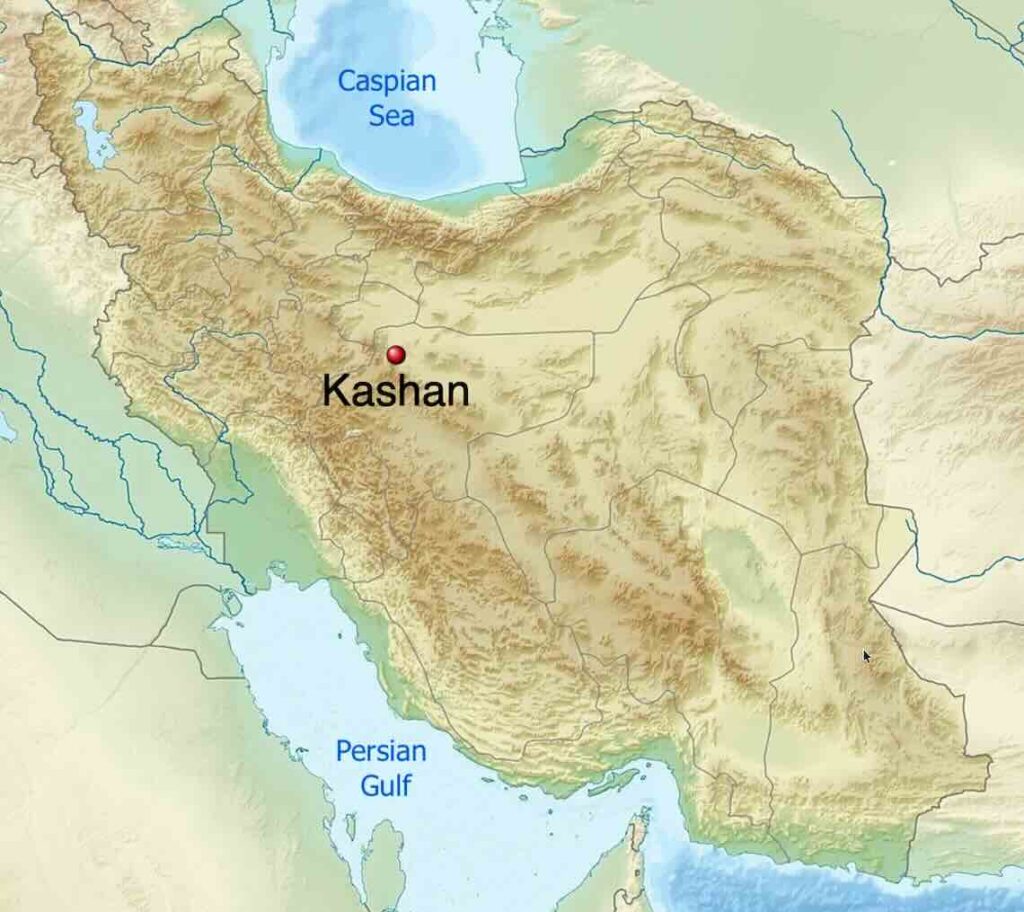
Kashan has one of the most remarkable traditional urban environments in central Iran.
The city developed along an important north-south route and preserved a significant part of its historic urban fabric into the twentieth century. UNESCO describes Kashan’s architecture as closely connected to its arid climate, with courtyard houses, windcatchers, underground water systems and compact urban planning forming an integrated response to the environment.
This is perhaps the most interesting way to understand Kashan.
A traditional Kashan house is not simply a collection of rooms around a beautiful courtyard. The whole building works as a system.
The courtyard creates privacy and shade. Thick walls reduce the effect of the outside heat. Windcatchers help move air through the building. Water and vegetation create cooler spaces. Rooms are positioned according to their seasonal use.
In other words, the architecture responds to the climate instead of fighting it.
This idea makes Kashan particularly relevant today, when architects around the world are searching for low-energy and climate-sensitive ways to design cities.
Kashan’s Historic Houses: Architecture Built Around Life
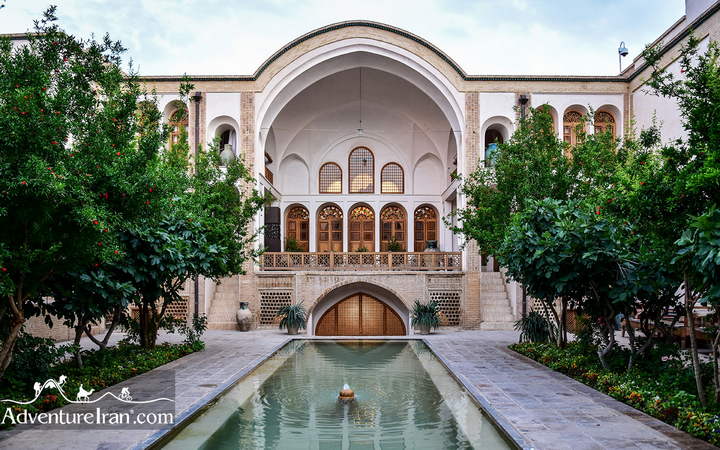
Perhaps the best place to understand Kashan’s architecture is inside its historic houses.
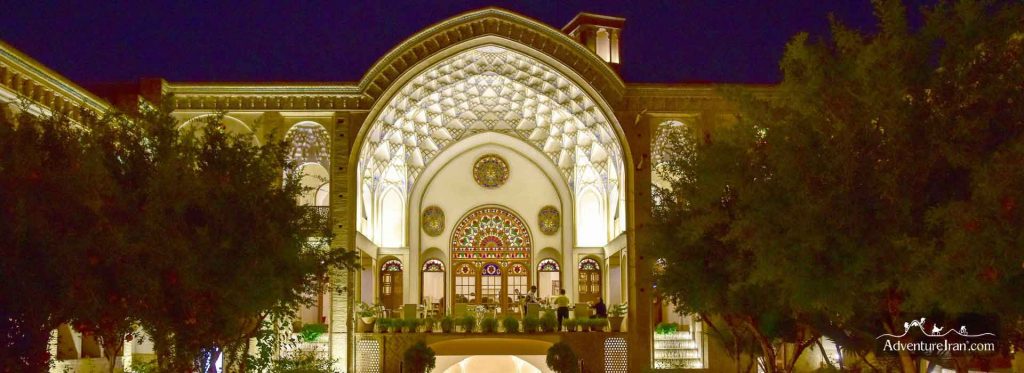
The Tabatabaei House, Borujerdi House, Abbasi House and Ameri House are among the best-known examples.
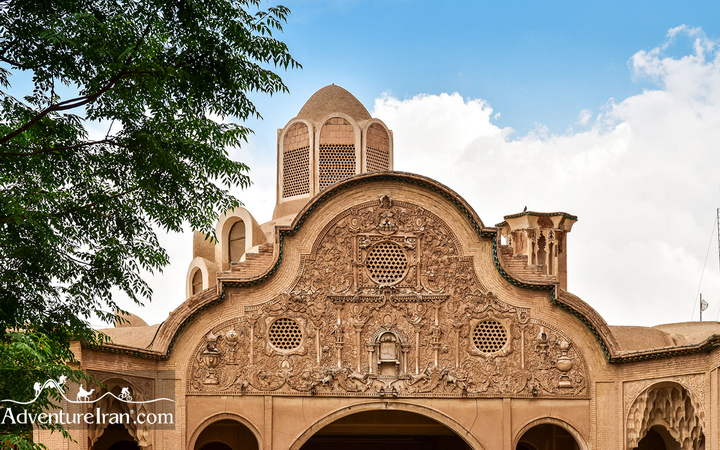
These houses combine courtyards, iwans, rooms, decorated halls, windcatchers, water features, stucco, tilework, mirror work and carefully controlled openings.
The famous Borujerdi House, for example, took many years to construct and involved a large group of craftsmen. Its architectural richness reflects the close relationship between architecture and traditional craftsmanship in Kashan.
This is another reason UNESCO’s designation is significant.
Kashan’s architecture cannot easily be separated from the people who built it.
The building itself is only part of the story. Behind it are generations of knowledge in brickwork, tilemaking, stucco, woodwork, plaster decoration and other traditional skills.
UNESCO specifically identifies this connection between architecture and craftsmanship as part of Kashan’s creative strength.
The Desert Climate Shaped Kashan’s Architecture
Kashan lies on the edge of Iran’s central desert region. Summer temperatures can be severe, while water has always been a precious resource.
Traditional architecture developed in direct response to these conditions.
Instead of opening houses widely toward the street, traditional homes often turn inward toward their courtyards.
Instead of relying entirely on mechanical cooling, architects used windcatchers, shaded spaces, thick earthen walls and carefully designed openings.
Instead of allowing water to disappear underground or run away, traditional water systems brought it into gardens and courtyards where it became part of both the architecture and the microclimate.
These ideas may sound surprisingly modern today.
But in Kashan, they are centuries old.
This is why the city’s architecture is valuable beyond its beauty. It contains practical knowledge about living with a difficult climate.
Fin Garden: Where Water, Nature and Architecture Meet
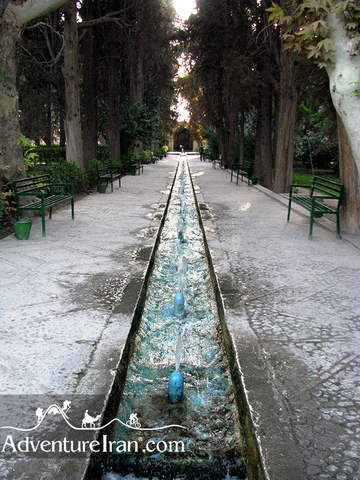
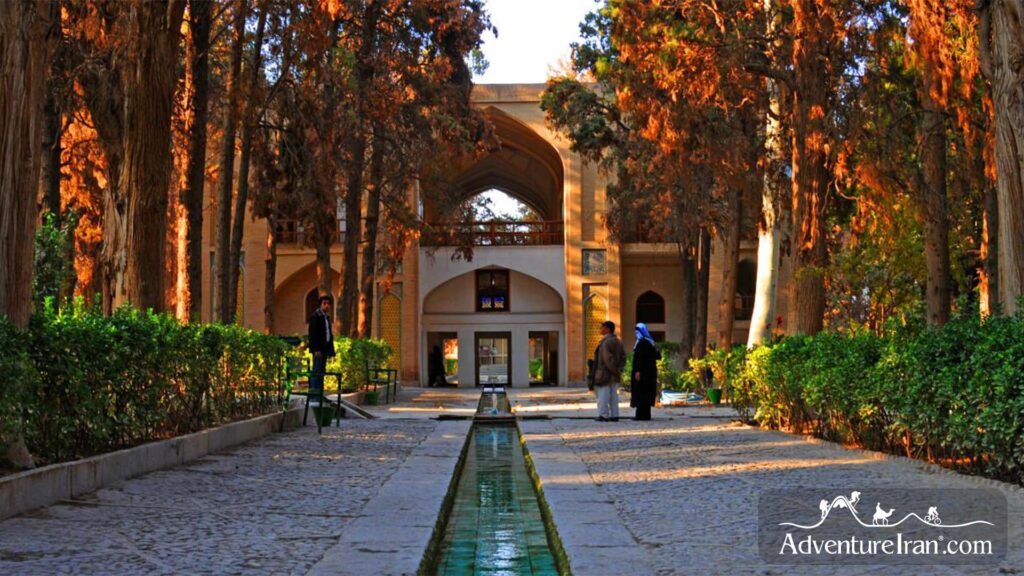
One of Kashan’s most important architectural landmarks is Fin Garden, or Bagh-e Fin.
Fin Garden is part of the UNESCO World Heritage property known as The Persian Garden, inscribed in 2011. It demonstrates the Persian tradition of combining water, vegetation, architecture and geometry to create an ordered garden environment.
In Kashan, this relationship between water and architecture becomes particularly powerful because of the surrounding dry landscape.
The contrast is striking: outside the garden is the arid environment; inside, water moves through channels and pools beneath trees and around pavilions.
Fin Garden therefore helps explain something fundamental about Kashan’s architectural identity.
Architecture in Kashan has always been closely connected with landscape and water.
The UNESCO Creative City designation and Kashan’s existing UNESCO World Heritage heritage are therefore complementary, but they are not the same recognition.
A City Rather Than a Collection of Monuments
One of the most important things about Kashan is that its architectural value does not belong to a single monument.
Walk through the historic quarters and the story becomes much larger.
There are houses, mosques, bathhouses, bazaars, caravanserais, schools, gardens and narrow streets.
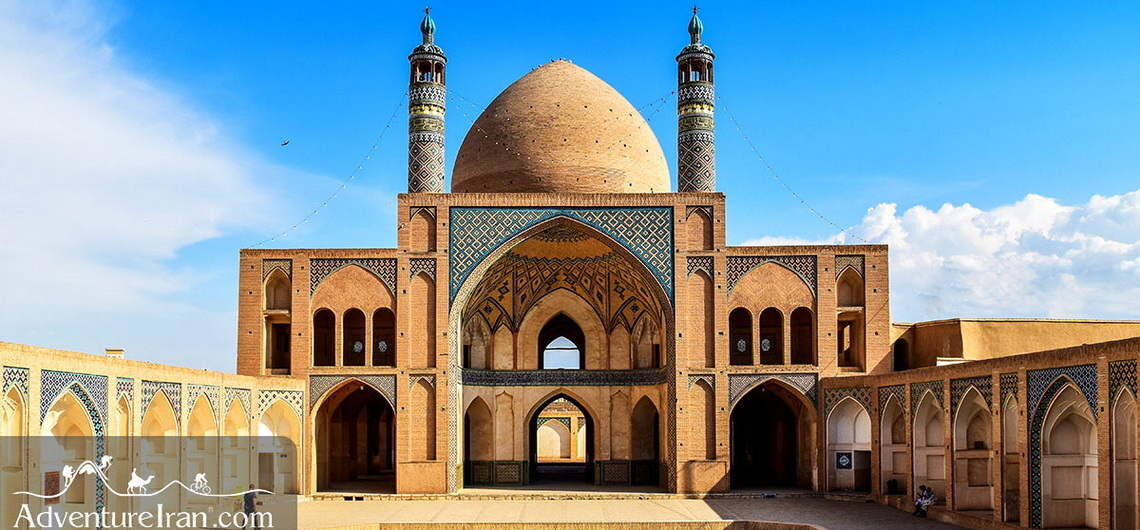
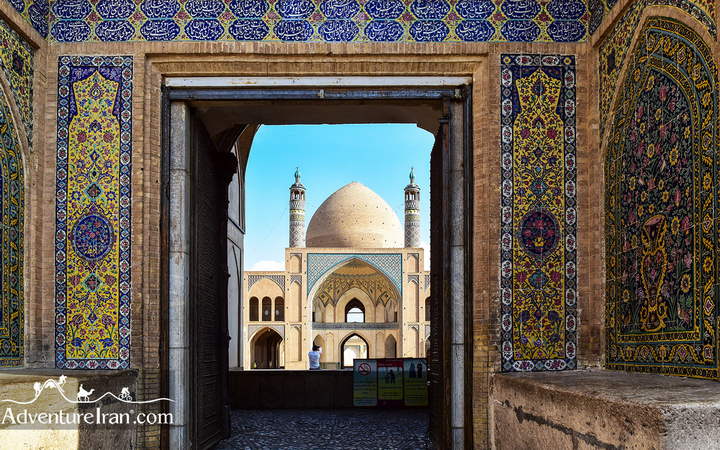
The Agha Bozorg Mosque and Madrasa is one of the city’s most recognizable buildings, with its layered courtyards, brick architecture and relationship between religious and educational spaces.
The Kashan Bazaar tells another part of the story. Its covered passages, vaulted spaces, caravanserai and commercial areas demonstrate how architecture supported trade and social interaction.
The result is an urban environment where architecture was not separated from daily life.
People lived, traded, prayed, studied, worked and socialized within the same architectural system.
That is one reason Kashan deserves to be understood as a living architectural city, rather than simply an open-air museum.
Kashan Compared With Other UNESCO Creative Cities of Architecture
Kashan is particularly interesting when compared with the other four cities selected by UNESCO in 2025.
Kashan and Quito: Architecture Shaped by Climate and Geography
Quito, Ecuador, is located high in the Andes at around 2,850 metres. Its historic centre is one of the best-preserved historic urban areas in Latin America and combines European and indigenous architectural traditions.
Kashan and Quito are very different places, but they share an important principle: architecture developed in response to geography.
Quito adapted to mountains, altitude and earthquakes.
Kashan adapted to heat, dryness and limited water.
Both demonstrate that architecture is not independent of place.
Kashan and Bistrița: Preserving Historic Urban Life
Bistrița in Romania has a very different history. Its identity comes from a medieval urban fabric shaped by Saxon, Romanian, Hungarian, Jewish and Roma communities.
Bistrița’s approach emphasizes restoration, adaptive reuse and bringing historic buildings back into contemporary community life.
Kashan shares this challenge.
The question for both cities is not simply how to preserve old buildings, but how to keep historic architecture connected to the life of the city.
Kashan and Rovaniemi: Two Climates, Two Architectural Answers
Rovaniemi in Finland provides perhaps the most dramatic climatic contrast with Kashan.
Located near the Arctic Circle, Rovaniemi’s architecture has been shaped by extreme northern conditions and its post-war reconstruction. More than 90 percent of the city was destroyed during the Second World War, after which architect Alvar Aalto played a major role in rebuilding the city.
Kashan and Rovaniemi therefore tell two different stories about climate-responsive architecture.
In Kashan, architecture responds to heat, sun and water scarcity.
In Rovaniemi, it responds to cold, snow and Arctic conditions.
Both demonstrate the same fundamental principle:
Good architecture begins by understanding its environment.
Kashan and Lusail: Tradition and the Future
Lusail in Qatar represents another side of architectural creativity. Unlike Kashan’s centuries-old urban fabric, Lusail is a contemporary planned city built around large-scale modern urban development.
Its inclusion alongside Kashan in UNESCO’s new Architecture category is revealing.
The Creative Cities Network is not a competition for the oldest or most beautiful city. It brings together different approaches to architecture and urban development.
Kashan represents accumulated traditional knowledge.
Lusail represents contemporary urban planning and future-oriented development.
Together, they show how broad the idea of architectural creativity can be.
What Makes Kashan Different?
Among the five inaugural UNESCO Creative Cities of Architecture, Kashan has a particularly strong connection between heritage, climate and craftsmanship.
Quito demonstrates the relationship between architecture, heritage and complex geography.
Bistrița emphasizes historic urban regeneration and community participation.
Rovaniemi demonstrates Arctic architecture and post-war urban planning.
Lusail represents contemporary planned urban development.
Kashan brings together something different: a traditional desert city in which architecture, water management, craftsmanship, climate adaptation and social life developed as one interconnected system.
This is what makes Kashan’s recognition especially meaningful for Iran.
From Historic Architecture to Sustainable Architecture
The real opportunity now is to look forward.
UNESCO’s designation gives Kashan an international platform for sharing knowledge with other Creative Cities. UNESCO says Kashan’s priorities include sustainable architecture, the revival of traditional crafts, cross-sector collaboration, international exchange, cultural tourism and community engagement.
This could make Kashan more than a destination for visitors interested in Persian history.
It could become a place where architects, students, researchers, photographers and travellers come to study how traditional architecture responded to environmental challenges.
There is a valuable lesson here for the modern world.
Before air conditioning, before modern insulation and before contemporary sustainability standards, Kashan’s builders were already thinking carefully about shade, airflow, orientation, water and thermal comfort.
Their technology was different.
Their materials were local.
But their problem was remarkably familiar:
How do we create comfortable human spaces without wasting the resources of the environment around us?
Why Visit Kashan for Architecture?
For travellers interested in architecture, Kashan offers something that is difficult to find in many modern cities.
You can experience architectural ideas not only by entering monuments but by walking through the old neighbourhoods.
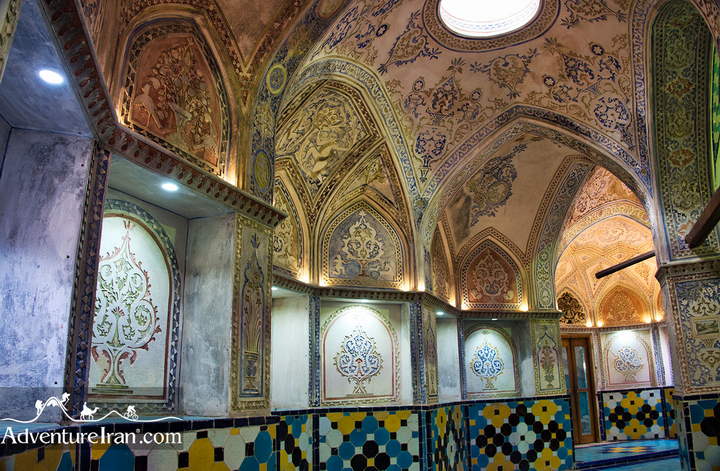
A visit can include the historic houses of Tabatabaei, Borujerdi and Abbasi, Agha Bozorg Mosque, the traditional bazaar, Sultan Amir Ahmad Bathhouse and Fin Garden.
But the most rewarding experience may be simply walking slowly through the old city and paying attention to the details: the changing light, the brick vaults, the courtyards hidden behind simple entrances, the sound of water, the shadows beneath covered passages and the relationship between private houses and public streets.
For photographers, Kashan is particularly rich.
Its architecture changes dramatically throughout the day as sunlight moves across brick walls, courtyards, domes, arches and decorated interiors.
For travellers interested in Iran beyond the famous monuments of Tehran, Isfahan and Shiraz, Kashan offers another way to understand Persian culture: through the architecture of everyday life.

Kashan’s New Chapter
Kashan has been building for centuries.
Its houses were designed for families, its bazaars for merchants, its mosques for communities, its gardens for water and shade, and its streets for movement through the city.
UNESCO’s new designation does not change that history.
Instead, it gives the city a new international framework through which this knowledge can be shared.
Kashan is now officially part of a small group of cities that UNESCO recognizes for architecture as a creative force in urban development.
And perhaps the most important message is this:
Kashan’s architecture is not only something to preserve from the past. It is knowledge that can still speak to the future.
For anyone travelling through Iran, this makes Kashan more than a stop on the classic tourist route.
It makes Kashan a place to look closely at how people have used architecture to live with climate, water, culture and community for generations.
Plan a Visit to Kashan
Kashan can be visited as part of Iran’s classic cultural route between Tehran and Isfahan, or explored as a dedicated cultural and architectural destination.
Adventure Iran offers Iran journeys that include Kashan, its historic houses, Fin Garden, traditional bazaar and other major cultural sites.
Kashan is not only a city of historic houses. It is a living lesson in Persian architecture.
Comments