
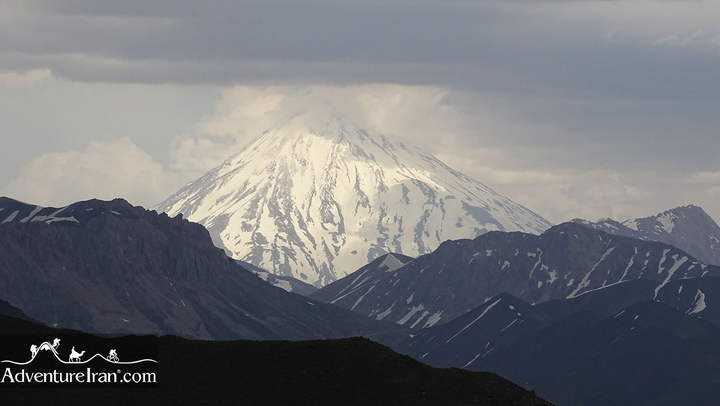
Commemorating Mount Damavand Day
The Myths, Legends & Majesty of Iran’s Highest Mountain
Every year on the 13th of Tir (July 4), Iranians commemorate Mount Damavand Day, honoring the country’s highest peak and one of its most enduring national symbols. More than simply celebrating a mountain, this day recognizes the natural heritage, mythology, literature, and cultural identity that have made Mount Damavand an icon throughout Persian history.
Standing proudly above the Alborz Mountains, Damavand has inspired generations of climbers, poets, artists, and travelers. It represents resilience, freedom, and the timeless connection between nature and Persian civilization.
Today, Mount Damavand Day reminds us that some landscapes are more than geographical landmarks—they become part of a nation’s identity.

Mount Damavand: The Roof of Iran
Towering at 5,610 meters (18,406 feet) above sea level, Mount Damavand is the highest mountain in Iran, the highest volcano in Asia, and the tallest peak in the Middle East.
Located about 70 kilometers northeast of Tehran within the central Alborz Mountain Range, its perfectly symmetrical, snow-covered cone dominates the northern Iranian skyline.
Damavand is also a dormant stratovolcano. Its volcanic origins are still visible through sulfur vents, hot springs, and colorful mineral deposits scattered across its slopes.
For mountaineers around the world, reaching its summit is a remarkable achievement. For Iranians, however, Damavand represents something far greater than altitude—it is a symbol of perseverance, justice, and national pride.

The Mountain of Legends
Few mountains anywhere in the world possess a mythology as rich as Mount Damavand.
Its towering silhouette has inspired countless legends, the most famous preserved in the Shahnameh (The Book of Kings) by the great Persian poet Abu al-Qasim Ferdowsi.
Completed over a thousand years ago, the Shahnameh is the world’s longest epic poem written by a single author. It preserves the myths, heroes, and historical memory of ancient Persia, with Mount Damavand standing at the center of one of its greatest stories.
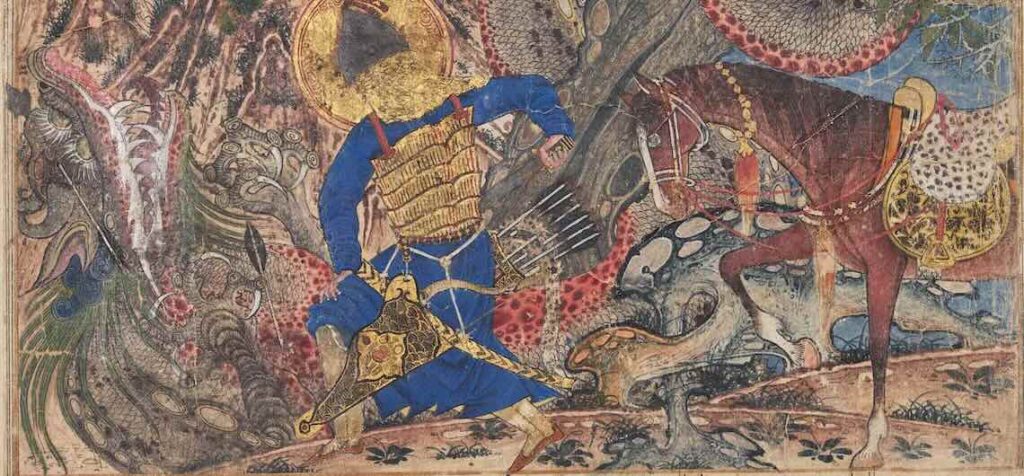
Ferdowsi and the Legend of Zahhak
According to the Shahnameh, the tyrant Zahhak ruled Persia through fear and cruelty.
Having been deceived by evil forces, two serpents grew from his shoulders. Every day they demanded the brains of innocent young people to survive, bringing suffering across the kingdom.
Eventually, the people rose against the tyrant under the leadership of the heroic blacksmith Kaveh, whose leather apron became a banner of freedom.
The young prince Fereydun defeated Zahhak after a legendary struggle.
Instead of executing him, Fereydun chained Zahhak deep within Mount Damavand, where, according to Persian mythology, he remains imprisoned beneath the mountain until the end of time.
For centuries, many believed that the mountain’s occasional rumbling and sulfurous smoke were signs that Zahhak was still struggling against his chains beneath the volcano.
This story transformed Damavand from a remarkable mountain into a powerful symbol of justice triumphing over tyranny.
Damavand in Persian Literature
Mount Damavand has inspired Persian poets for centuries.
Beyond Ferdowsi’s Shahnameh, the mountain became a symbol of endurance and resistance in classical and modern Persian literature.
One of the best-known examples is the celebrated poem “Damavandiyeh” by Malek o-Sho’arā Bahār, who addressed the mountain as a silent guardian watching over Iran through centuries of change.
Today, Damavand continues to inspire writers, painters, photographers, musicians, and filmmakers, remaining one of the most recognizable symbols of Iranian culture.
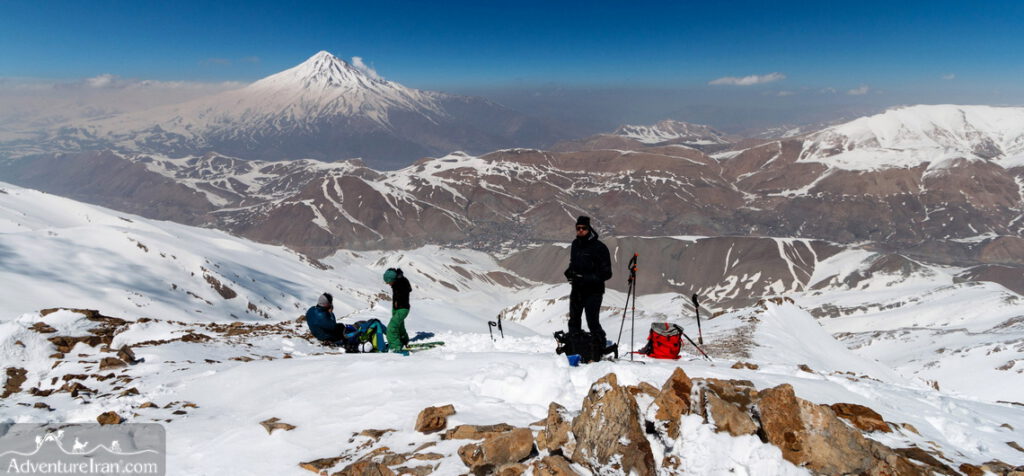
A Sacred Landscape
Long before it became a destination for climbers, Damavand was regarded as a sacred mountain.
Ancient Persian traditions often viewed lofty mountains as places where heaven and earth met. Their snow-covered summits symbolized purity, while volcanic fire represented both creation and immense natural power.
Whether approached through mythology, literature, or history, Damavand has always occupied a unique place in the Iranian imagination.
Nature Around Mount Damavand
The mountain rises within one of Iran’s most spectacular natural environments.
Nearby Lar National Park is famous for:
- Alpine meadows covered with wildflowers in spring
- Crystal-clear rivers and mountain lakes
- Persian ibex and wild sheep
- Golden eagles and other birds of prey
- Spectacular volcanic landscapes
Throughout late spring and summer, the surrounding valleys become one of the country’s finest destinations for hiking, photography, and nature lovers.
Climbing Mount Damavand
Each summer, thousands of mountaineers from Iran and around the world attempt the summit of Damavand.
The southern route is the most popular, while the northern, western, and northeastern routes provide more remote and technically demanding ascents.
Although climbing does not require advanced mountaineering skills during the normal season, the altitude presents a serious challenge. Proper acclimatization, preparation, and experienced local guidance are essential.
Why Mount Damavand Day Matters
Mount Damavand Day is more than a celebration of a mountain.
It is a celebration of Iran’s natural heritage, its ancient stories, and the values that Damavand has represented for generations: resilience, courage, freedom, and hope.
As long as the snow-covered summit watches over the Alborz Mountains, the legends of Ferdowsi and the spirit of Damavand will continue to inspire those who seek adventure, beauty, and a deeper understanding of Persian culture.
Whether you are a climber, a photographer, a nature enthusiast, or a traveler fascinated by history and mythology, Mount Damavand offers an unforgettable experience where nature and legend become one.
At Adventure Iran, we invite you to discover not only Iran’s highest mountain, but also the stories that have made it the beating heart of Persian mythology.
Frequently Asked Questions
When is Mount Damavand Day?
Mount Damavand Day is celebrated annually on 13 Tir in the Iranian calendar, which usually falls on July 4 in the Gregorian calendar.
Why is Mount Damavand important?
Mount Damavand is Iran’s highest mountain and one of the country’s strongest national symbols. It is famous for its natural beauty, volcanic geology, and its central role in Persian mythology.
What is the legend of Mount Damavand?
According to Ferdowsi’s Shahnameh, the tyrant Zahhak was defeated by Fereydun and chained inside Mount Damavand, where he remains imprisoned beneath the mountain.
Can tourists climb Mount Damavand?
Yes. During the summer climbing season, the southern route is accessible to well-prepared hikers with proper acclimatization and guidance.
Comments