

The Grand Bazaar of Isfahan
Qeysarriyeh Bazaar : Heartbeat of Persia’s Timeless Trade
Isfahan Grand Bazaar is one of main attractions of Isfahan city is one of Iran Most Beautiful Bazaar. If you really want to feel Isfahan — not just see it — you need to step inside its Grand Bazaar, known locally as Qeysarriyeh Bazaar. This is the kind of place where time slows down, directions don’t matter, and every turn brings a new surprise.
Entering the bazaar from Naqsh-e Jahan Square, through the magnificent Qeysarriyeh Gate, feels like crossing an invisible border — leaving the grand monuments behind and walking straight into the daily life of the city.
A Bazaar That Breathes History
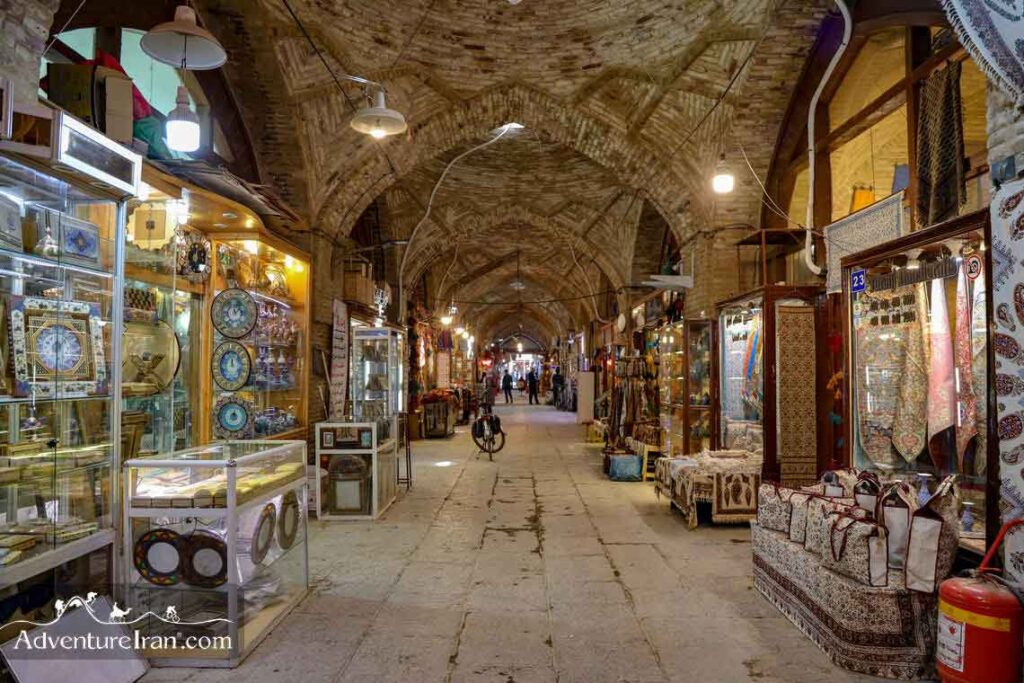
The Grand Bazaar of Isfahan is not a single straight market. It’s a living maze, stretching for kilometers, connecting mosques, old schools, caravanserais, workshops, and hidden courtyards. Some parts are quiet and dim, others full of voices, laughter, and bargaining.
Built and expanded mainly during the Safavid era, when Isfahan was the capital of Persia, this bazaar once welcomed merchants from the Silk Road — from India, Central Asia, the Ottoman lands, and beyond. Today, instead of camels and caravans, you’ll find scooters, handcarts, and shopkeepers who have often inherited their businesses from generations before them.
What You’ll Find Inside
This is not a souvenir market designed only for tourists. Locals still come here to shop, work, drink tea, and meet friends — and that’s exactly what makes it special.
As you wander, you’ll pass:
-
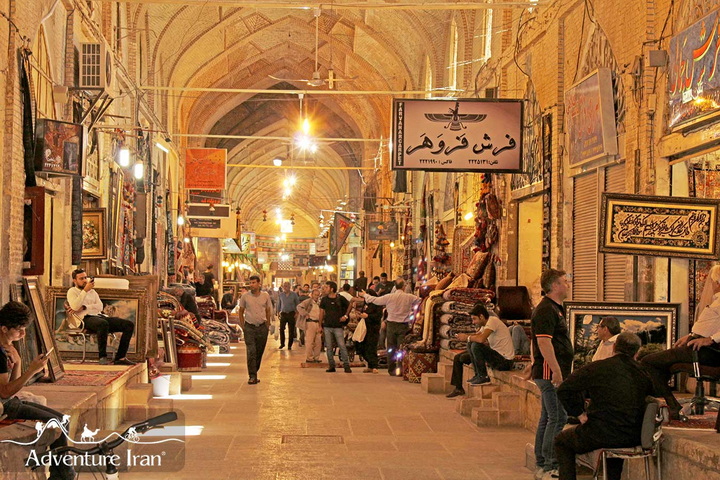
Carpet shops, where sellers patiently explain patterns, stories, and symbols — sometimes more for the joy of conversation than for making a sale.
-
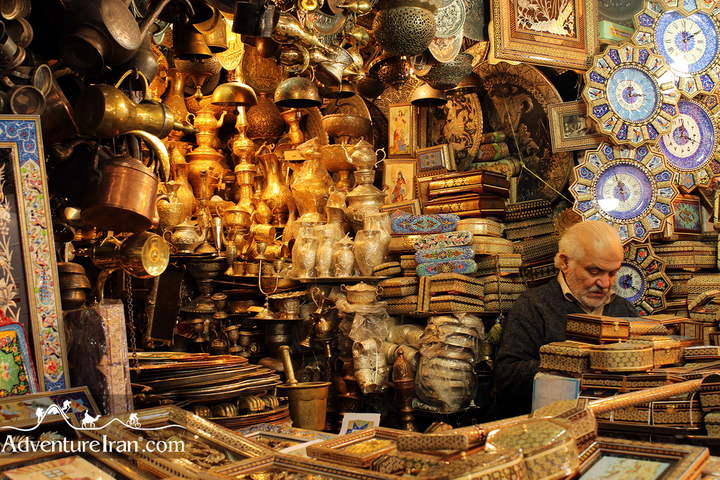
Copper and brass workshops, where the sound of hammering echoes through narrow corridors.
-
Minakari (enamel) artists, painting delicate blue designs by hand.
-
Spice sellers, filling the air with the smell of saffron, cardamom, dried lime, and rose petals.
-
Small shops selling gaz (Isfahan’s famous nougat), perfect for a sweet break.
And somewhere along the way, you’ll likely be invited for tea — because in Iran, hospitality always comes before business.
The Beauty Is in the Details
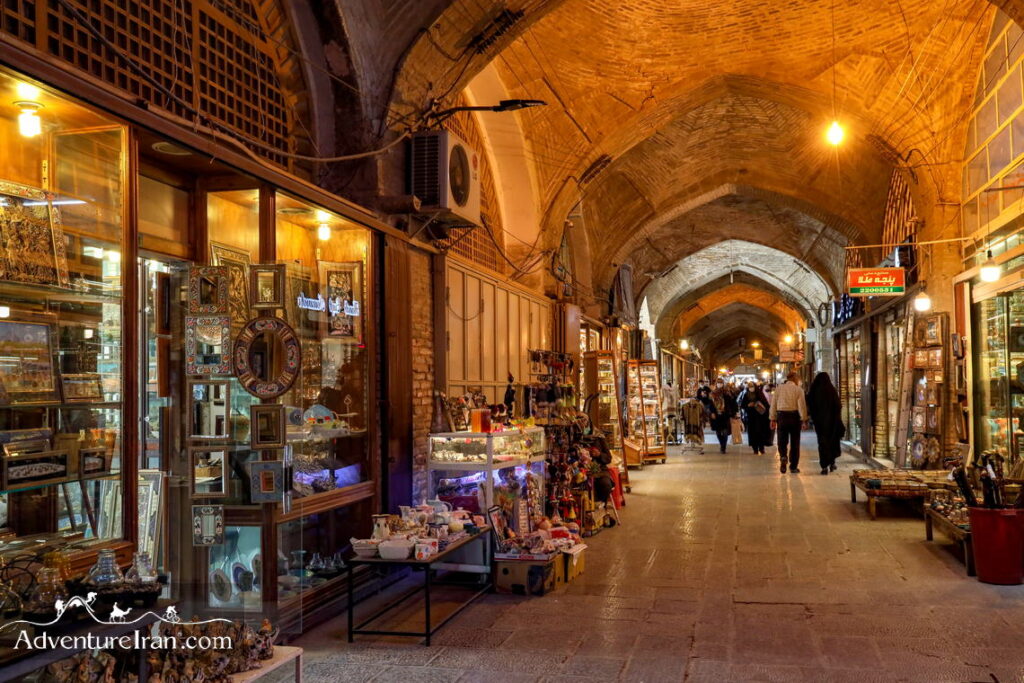
Look up. One of the joys of walking through Qeysarriyeh Bazaar is its architecture. Brick domes filter soft light through small openings, creating beautiful shadows. Some ceilings are decorated, others simple — all of them quietly elegant.
You may suddenly step into a timcheh (a domed trading hall), often more ornate and peaceful than the busy corridors leading to it. These hidden spaces are some of the most photogenic corners of the bazaar.
Getting Lost Is the Best Plan
There is no perfect route here — and that’s the point. The best way to explore Isfahan’s Grand Bazaar is to get lost on purpose. Turn where you’re curious. Follow a smell, a sound, or a shaft of light.
One moment you’re near Naqsh-e Jahan Square, the next you emerge beside an old mosque or a quiet neighborhood far from tourist crowds.
Practical Tips for Visitors
-
Best time to visit: Late morning or mid-afternoon. Mornings are calmer; afternoons feel more alive.
-
Photography: Always ask before photographing people or inside workshops — a smile and a few words go a long way.
-
Buying: Bargaining is normal but friendly. Think of it as a conversation, not a competition.
-
Dress: Comfortable shoes are essential — you’ll walk more than you expect.

Why Qeysarriyeh Bazaar Matters
The Grand Bazaar of Isfahan is not a place you rush through. It’s a place you experience slowly. It tells the story of a city that has always been about trade, culture, craftsmanship, and connection.
For travelers who want more than monuments — who want to understand how a city lives and breathes — Qeysarriyeh Bazaar is Isfahan itself.
Comments