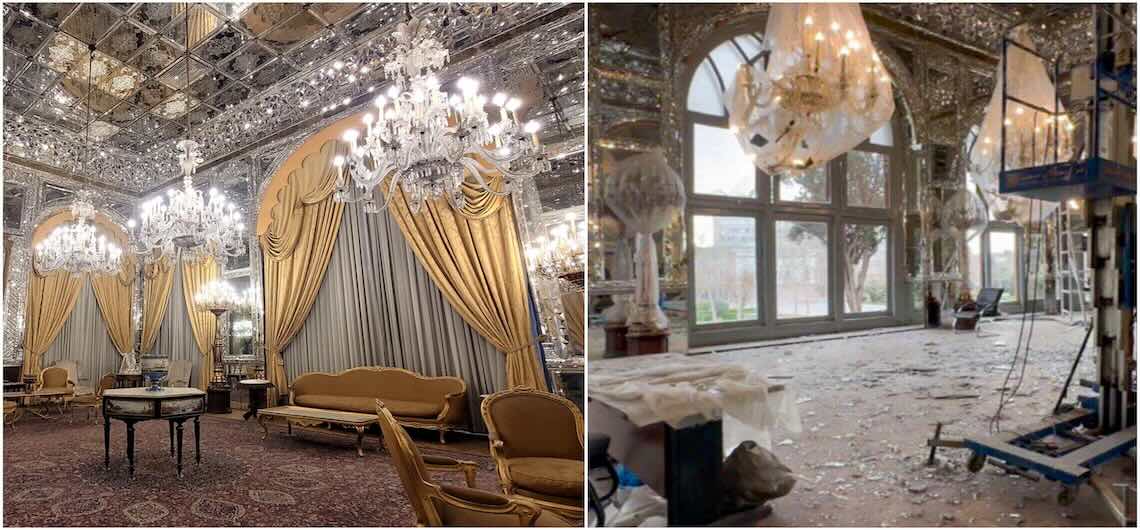
Golestan Palace Damaged: A UNESCO Treasure Under Threat Introduction Iran’s cultural heritage has suffered a devastating blow. On Monday, March 2, 2026, the historic Golestan Palace in Tehran—a jewel of Qajar-era architecture and a UNESCO World Heritage site—was reportedly damaged by debris and the shockwave of an airstrike that hit the nearby Arag Square, located within the buffer zone of the palace complex. This attack marks a dark moment in the ongoing conflict, raising urgent questions about the protection of cultural property under international law. For travelers, historians, and lovers of Persian culture, this is a loss that resonates far beyond Iran’s borders. What Is Golestan Palace? Golestan Palace (Kākh-e Golestān) is one of Tehran’s oldest and most significant historical complexes. Built during the Qajar dynasty** (1789–1925), it served as the official residence of the royal family. The palace is renowned for its: Mirror Hall (Tālār-e Āyneh): A dazzling chamber covered in intricate mirrorwork. Marble Throne (Takht-e Marmar): An ornate throne made of yellow marble from Yazd. Shams-ol-Emāreh: A striking seven-story tower that was Tehran’s first skyscraper. Fountain rooms, museums, and galleries housing Qajar-era art and artifacts. Inscribed on the UNESCO World Heritage List in 2013, Golestan Palace is a masterpiece of Persian architecture and garden design, blending traditional Persian elements with Western influences. What Happened on March 2, 2026? According to official reports from Iran’s Ministry of Cultural Heritage and international media, an airstrike targeted a location in Arag Square, which lies within the buffer zone of the Golestan Palace World Heritage site. The explosion sent a shockwave through the area, and debris struck parts of the palace complex. Initial assessments indicate: The Mirror Hall suffered shattered mirrors and cracked walls. Several windows in the Marble Throne building were blown out. Damage to decorative tiles and ceilings in
Golestan Palace Damaged: A UNESCO Treasure Under Threat Introduction Iran’s cultural heritage has suffered a devastating blow. On Monday, March 2, 2026, the historic Golestan Palace in Tehran—a jewel of Qajar-era architecture and a UNESCO World Heritage site—was reportedly damaged by debris and the shockwave of an airstrike that hit the nearby Arag Square,